











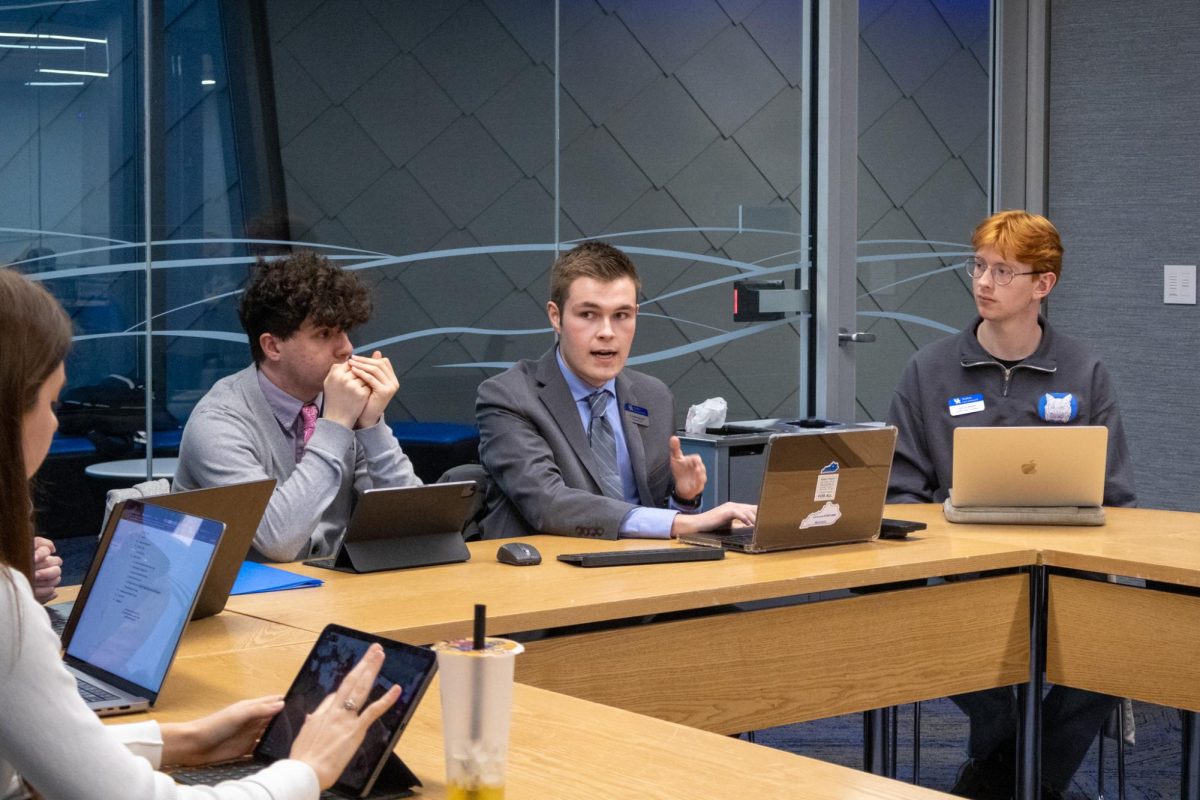
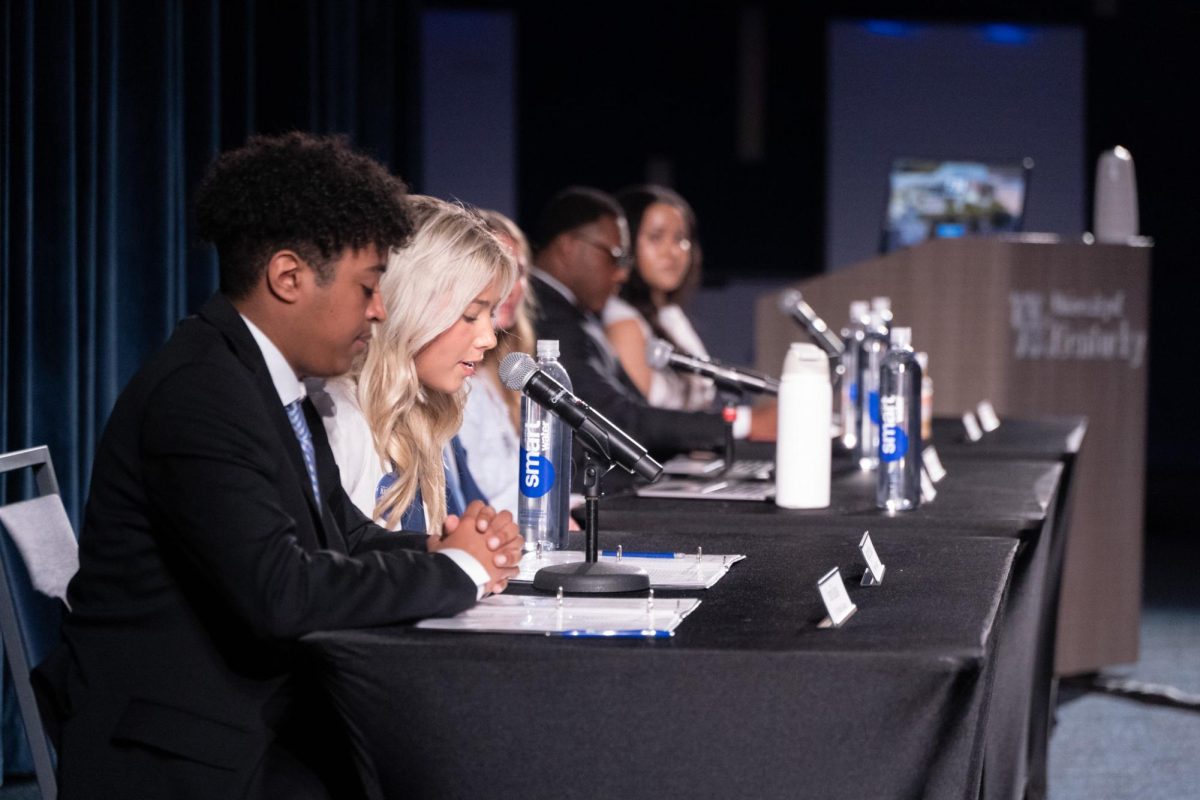





















































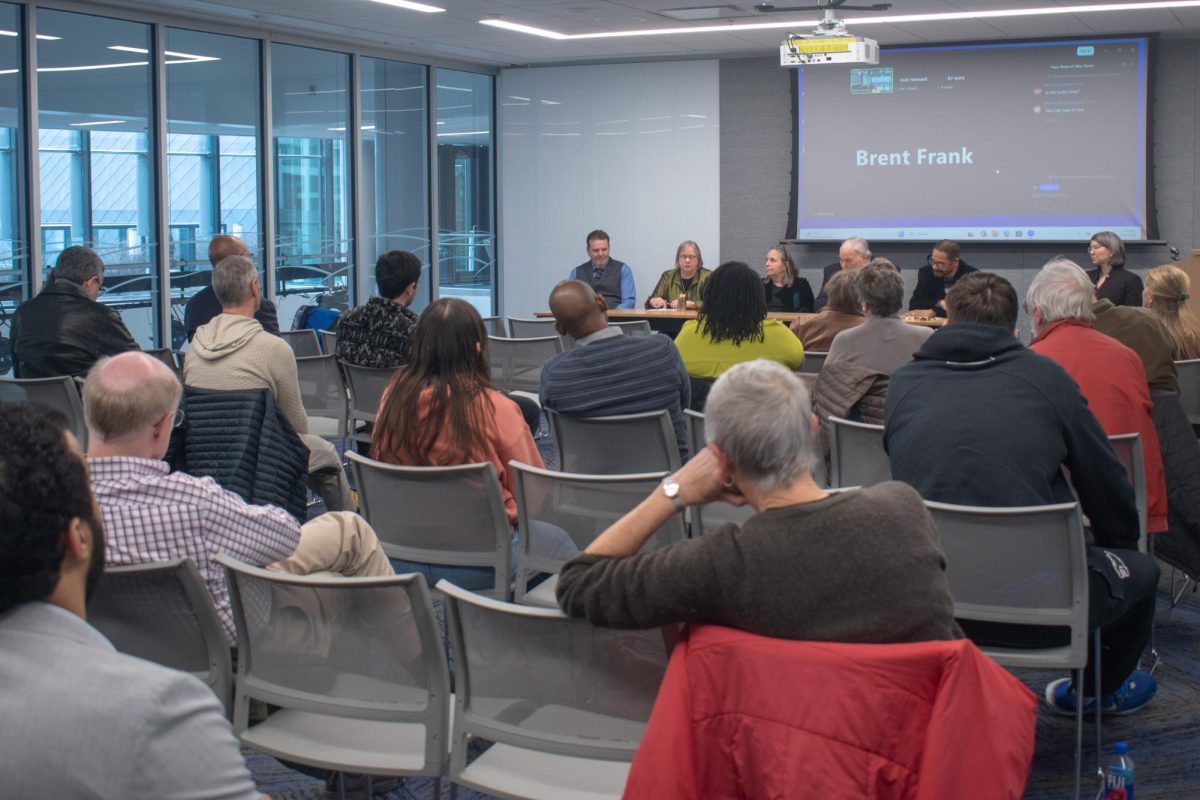
University of Kentucky students and faculty explored the Russia-Ukraine war at a discussion panel, “Four Years of War: Perspectives on Russia and Ukraine in 2026.”
Hosted by UK’s Patterson School of Diplomacy and International Commerce, Department of Modern and Classical Languages, Literatures and Cultures and Department of History, the event took place at the Gatton Student Center on Wednesday, Feb. 25.
According to the Associated Press, Feb. 24 marked four years since Russia invaded Ukraine, launching Europe’s biggest conflict since World War II.
The upper end of estimated military casualties on both sides suggests Russia suffered 1.2 million casualties, including up to 325,000 troop deaths, between February 2022 and December 2025. Ukraine has seen 500,000 to 600,000 military casualties, including up to 140,000 deaths.
In addition to military casualties, 5.9 million Ukrainian civilians have left their country, finding refuge in Europe. Additionally, around 3.7 million Ukrainians who were forced out of their homes have moved elsewhere within the country.
The panel featured Molly Blasing, a Russian studies professor, as the moderator, along with Patterson School professors Gregory Hall and ambassadors Carey Cavanaugh and Robert Farley, history professor Karen Petrone, and Russian studies and folklore professor Jeanmarie Rouhier-Willoughby.
Petrone opened the discussion by explaining how Russian leaders use historical narratives to justify their actions in Ukraine.
“Putin’s justification for the invasion is that there are very many moments in which he invokes certain historical events as part of the reason why Russia ought to control Ukraine,” Petrone said. “Lenin did not create Ukraine. And I think it’s very interesting that all of these different political touch points are being used at the time that the war was started.”
According to Petrone, Russia’s government manipulates historical memory to delegitimize Ukraine’s sovereignty and sway public opinion.
The AP said Victory Day, celebrated on May 9, is Russia’s most important secular holiday, reflecting its wartime sacrifice during World War II, but it’s also used by the Kremlin, the Russian government, to bolster patriotism and regain the superpower prestige it lost when the Soviet Union collapsed in 1991.
When President Vladimir Putin launched the full-scale invasion of Ukraine on Feb. 24, 2022, he justified it by calling for the country’s “demilitarization” and “denazification,” falsely claiming neo-Nazi groups influenced President Volodymyr Zelenskyy.
Putin pointed to Ukraine’s recognition of certain nationalist figures from World War II. These references formed part of the historical narrative Russia used to legitimize its actions.
“Basically claiming that Ukrainians are Nazis, drawing on history in order to create the most damaging view of what Ukraine could be,” Petrone said, “and what’s shocking is that the war between Russia and Ukraine has now lasted longer than the 1,418 days of World War II as it’s counted in Russia … the touchstone for both countries, of what the nature of war is, has been surpassed in length by this war.”
Petrone noted historical interpretation has become a central factor in how each side understands the war and plays a significant role in shaping the narratives surrounding it.
“There are emotional and symbolic weights that these histories carry for both sides, which makes the war not just a territorial conflict, but a clash over narratives and identities,” Petrone said.
According to Farley, the war has evolved, focusing on tactics, technology and the protracted nature of the conflict.
“So the front is not really a front in the sense of two lines colliding with them. There is an area of Ukrainian control. There is an area of Russian control, and these are separated by 15 to 20 miles,” Farley said. “Both sides continue to innovate, and you try to produce new ways of fighting.”
Farley said technology has reshaped modern combat, changing how battles are fought and forcing both sides to adapt.
“Drones, small infantry operations, and electronic warfare have become central to modern combat, shifting away from the large mechanized assaults seen in the early years of the invasion,” Farley said.
Benjamin Velez, a history and international studies student at UK, explained why he decided to attend the event.
“I’ve always been really interested in Russian studies, and right now I’m working on a research project about the Nuremberg Tribunal,” Velez said. “I feel like I’ve learned a lot of good information … there’s a lot of professors I’ve already spoken to before about this and I really love how they are presenting this information.”
Velez reflected on the importance of these discussions for students who want to deepen their understanding of complicated topics.
“It’s very easy to fall into misinformation about these things, especially since it’s such a big political moment,” Velez said. “So having these kinds of informational events really helps people have a more holistic understanding of our current day of politics and international situations.”