































































































Two little hooves begin to peek through, with a nose nestled in between. They’ll sit there for some time, maybe 30 minutes, but then quickly move, rapidly making way for a new foal to take its place in the world.
The front feet have to come first.
If not, the mare and foal are on a fast track to seeing a veterinarian, where they may manually manipulate the foal’s position, or even perform a cesarean section. In those moments, the outcome often depends on the quiet expertise of people like Tanya Johnson, operating in an industry where women stand outnumbered.
For Kentucky’s thoroughbred and racing industry, foaling season is a high-stakes, around-the-clock operation that shapes
the future of multimillion-dollar bloodlines across the state. But within that pressure-filled environment, often misunderstood and rarely recognized women continue to work in a space that remains overwhelmingly male-dominated.
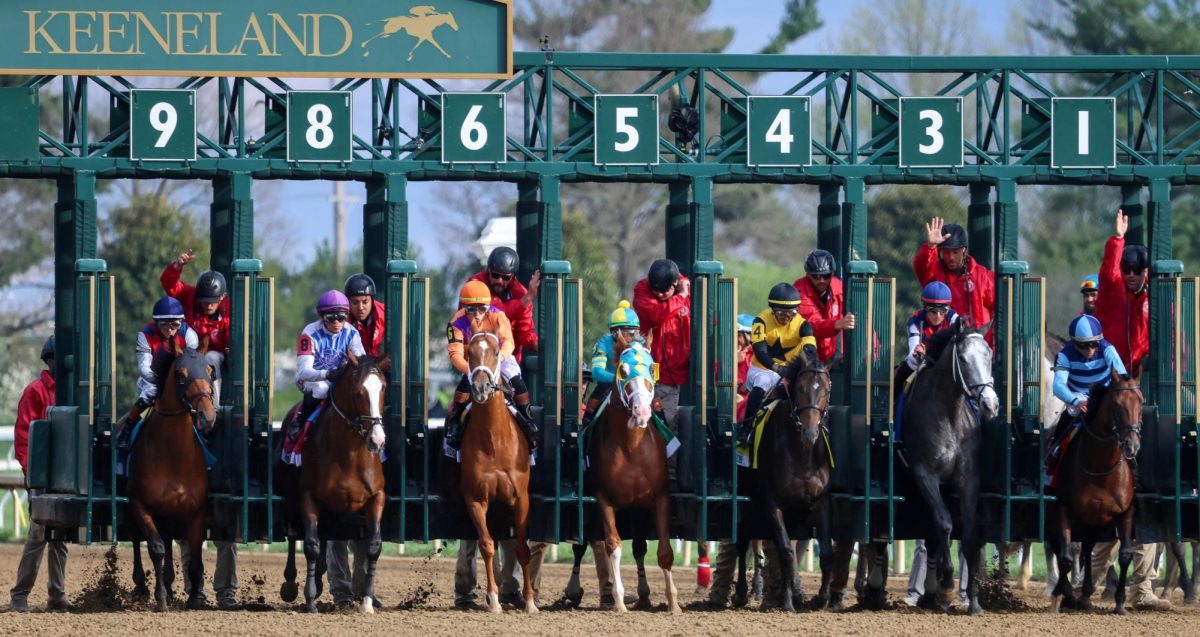
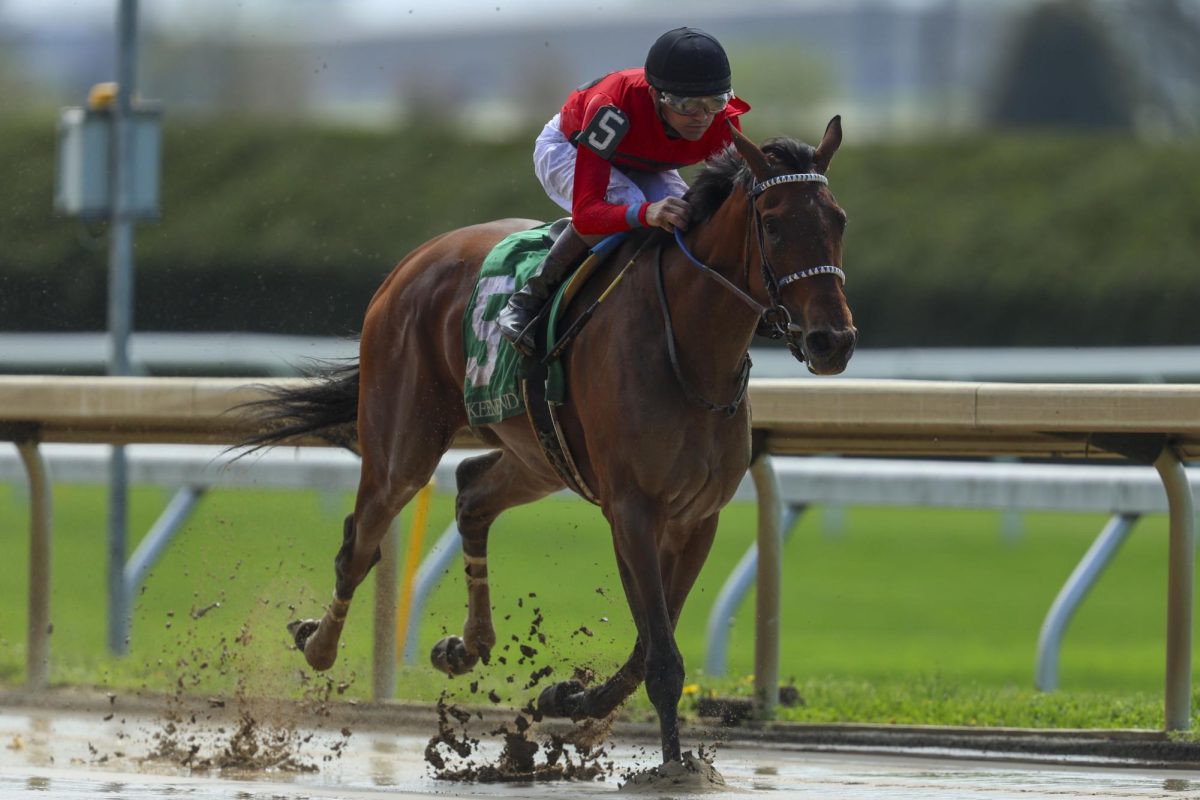
In fact, the Kentucky Derby only just found its first victorious female trainer on May 2, in Cherie DeVaux.
Golden Tempo and jockey Jose Ortiz surged past an 18-horse field to claim the rose garland, marking history in the Run for the Roses. DeVaux is also the second female trainer to win any Triple Crown race (second to Jena Atonucci in the 2023 Belmont Stakes), but she’s even the first female trainer to be featured in The Derby since Vicki Oliver in 2021.
As it turns out, women don’t often appear at the forefront of this world.
“I think it’s fantastic. She obviously is a great trainer and had a lot of confidence in her horse,” Johnson said regarding DeVaux’s win. “Am I surprised that she won? No. She had just as much chance as everyone else did. What is surprising is how shocked everyone was. People need to start getting used to that.”
On the farm
Moonlight filters through the old wood of the barn as Chris and Natalio Hilario hurry to one of the foaling barn’s 14 stalls.
The guys’ main focus of getting there before labor is truly in full swing.
Natalio usually takes hold of nights, while Chris, his son (and this spring, his nephew Fonsi), steps in during the day. Gravity works for the foal during birth, but against the workers’ mission. Crisp 35-degree weather nips during the night. Wind sighs through the rafters and shuffling hooves maintain most of the noise, disrupted only by the announcement of a foal coming into the world.
In the barn where the Hilarios spend most of their time, everything comes down to one moment: a successful delivery. Too often, it tends to slip out of control. And if the guys see a 5-foot-2 woman with a top knot make her way in, they truly know that things are not going to plan.
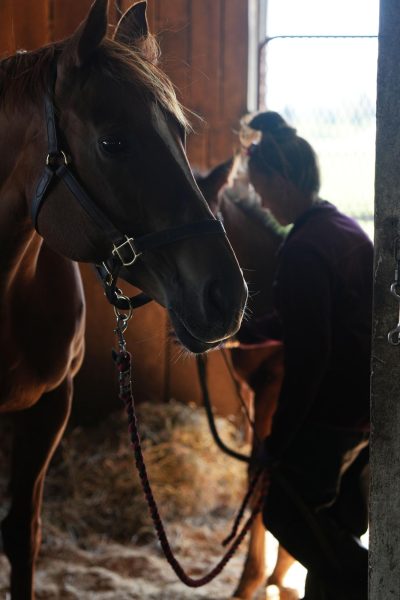
Mornings at Red Gables Stud farm officially start around 7 a.m. – unofficially, much of the work comes to fruition at night. Johnson never got into the industry for the money, or for the eminence; passion and care are what drive her to her farm every day, and are what drove her to the United States in the first place. The industry itself supports 1.74 million full-time equivalent jobs nationwide, with the racing sector only accounting for 250,000 of those roles, meaning roughly 85.6% of it drives the work behind the scenes. Johnson’s farm only fills four of those roles, including herself, yet works in conjunction with many others to help bring life to the very horses that drive an important realm of Kentucky’s economical, cultural and social world.
And of those four roles, only one is held by a woman.
It isn’t Johnson’s fault that she’s the only female under her own employment – it’s simply an industry not predominantly made up of women.
“It’s a man’s world, for sure, in this industry, so you kind of get forgotten about,” Johnson says. “Which is good and bad.”
The good can be attributed to the fact that she can fly somewhat under the radar, avoiding trouble and expectations in the cutthroat industry. Johnson claims the industry to be “fickle,” where if you have one bad year, you’re liable to be done. Horses are expensive, and gambling on 30 to 35 births each year is quite the risk.
The bad, however, manifests as quieter, more everyday inequities that women face while producing the same work as the men in the industry.
“Going to Keeneland and selling horses, we might not be given the best spot, or the nicer barn,” Johnson says. “But we’re used to it.”
Johnson has found power in numbers on her own, though. The breeder started a consignment with friend Kelli Cross, and uses female veterinarians (among other counterparts) to keep her business running smoothly.
One of Johnson’s veterinarians, Katie Trivett, has seen it before too – the quiet ways that the industry holds bias against women.
“For the entire time that I’ve ever been in the vet field in general, not even just the horse field, there has always been, especially in large animal, this double standard of the client that only wants the male veterinarian,” Trivett said.
“But specifically within the horse industry, and the racing industry as well, working on the backside, or doing track work or veterinary track work, there’s kind of a boys club, almost, that is kind of hard to break into. And everyone will tell you – anybody that’s in the industry – that you kind of have to have tough skin if you want to do it as a female, which is true to a point.”
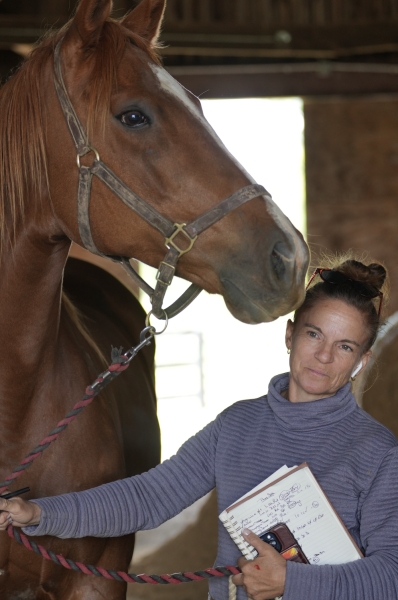
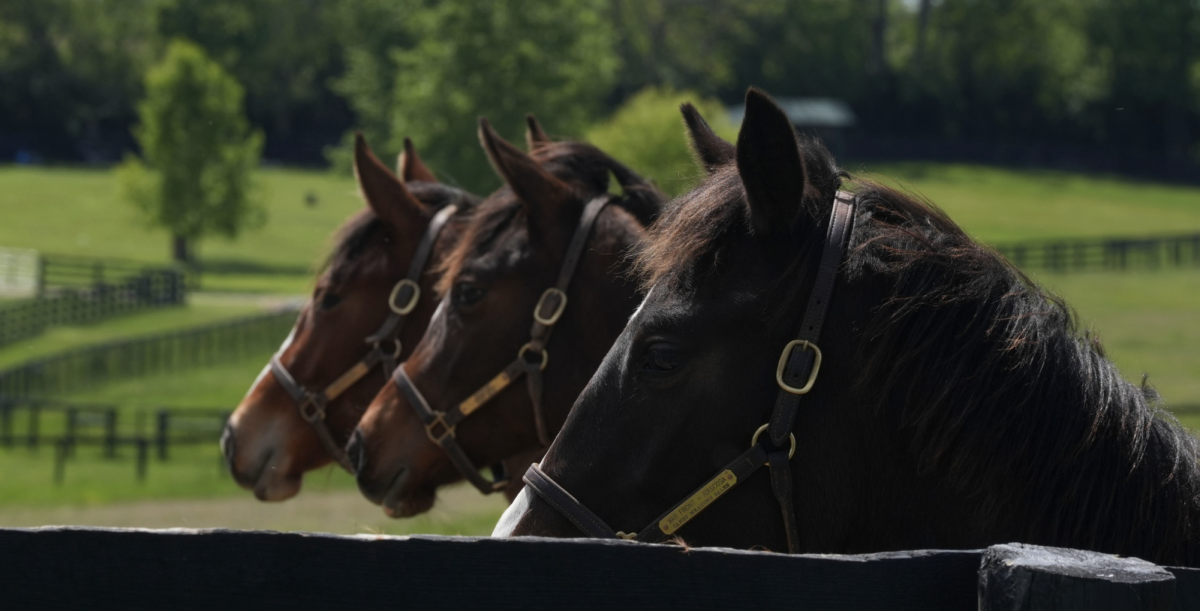
barn and into the fields in Lexington, Ky. Photo by Sydney Cox
The farm is fully operational year-round, with the hardest of the months landing from January through May each year. These months completely consist of births, breeding and checkups, and it’s all hands in for these months to operate to the standard that Johnson has for her stables. Wishful thinking hopes for the new foals to come into the world during the day, but the mare’s internal clock typically rings in the middle of the night.
With her crew, Johnson isn’t typically needed in the late parts of the night. The Hilarios live on the farm, and know that they must be ready for a foaling to begin. Johnson keeps an eye on the horses through cameras, however, and will come to the farm whenever things begin to go sideways.
And it is easy for the foaling to go awry – the foal must be in a specific position to contribute to a safe birth.
The front feet have to come first.
Every birth is a gamble for Johnson – or anyone in the breeding industry – but the unforgiving nature of her field of work is always worth it when things do go according to plan.
The other months, which are the summer months through December, are slightly calmer, but still require work to be done.
Foals are, hopefully, not being born past June or July, and now Johnson’s work is cut out to raising her new foals for a year.
The work resets the following January, where the yearlings that she has raised [foals that she went on to raise for the remainder of the calendar year] have, at this point, been sold at auction or have gone to the training facility to learn how to be a racehorse. She now starts tending to new foals and prepping new mares to breed.
December is as close to a month off as she gets, but Johnson has felt the continuous, hard work of the industry for the past 30 years.
Britain to Bluegrass: Across the pond
Johnson was born and raised in England, where she lived until she eventually moved at the age of 19 to the United States. She didn’t come from a horse background, but her mom put her in horse riding lessons at six years old, and she never looked back.
“In England, you can leave school legally at 16 or 18, and I obviously chose to leave at 16,” Johnson reflected. “My father’s only request was that I went to college for something – he didn’t care what it was – so I found an equine science course … and did that.”
“Now, part of this course was it was three years, and the middle year was a work experience here, and they had connections all over the world. Now, I had not had any experience with racing thoroughbreds at all, … once I started learning about it in the breeding side and the pedigrees, it was just something that was fascinating to me.”
With this, Johnson learned about Kentucky and decided that it was the place for her.
Making seven dollars an hour was the dream for Johnson, where she was paid minimum wage to do the entire scope of farm work for the year that she was in Kentucky. She didn’t have any intention of coming back to the Bluegrass State, but once she finished school, she tore her ACL and broke her tibia getting off of a horse.
“They told me I was never allowed to ride again,” Johnson said. “I was like, ‘Dude, that’s my job – I mean, what am I gonna do?”
She eventually got back on a horse 18 months later – against the surgeon’s orders – in order to get past the mental block she knew she had developed against riding.
Things then snowballed when a job opened up back in Kentucky, where she returned, and worked for seven years with her then-boss, Pat Costello.
In 2007, Johnson went on to open her own farm a few years after having her first child, and around the time of her second. She always knew that she really wanted to be a mom, and the only way it could be manageable was with a farm of her own.
“It’s the hardest thing to do in this industry for a woman, … and I wanted to be able to take my kids to school and pick them up, so that’s when I decided to start my own farm.”
Was it difficult? Yes.
However, overtime hours crammed into long weeks did not take away from the fact that it was completely worth it to Johnson to be involved in her kids’ lives.
Behind the scenes
Being a woman in the industry isn’t the only thing that forces the breeder to fly under the radar – the entire industry itself is backed by people like Johnson.
Whenever someone breeds a horse, Johnson is the one that takes care of it for an entire year before it returns to be trained. If that horse wins, trainers and owners are the people attributed to the success.
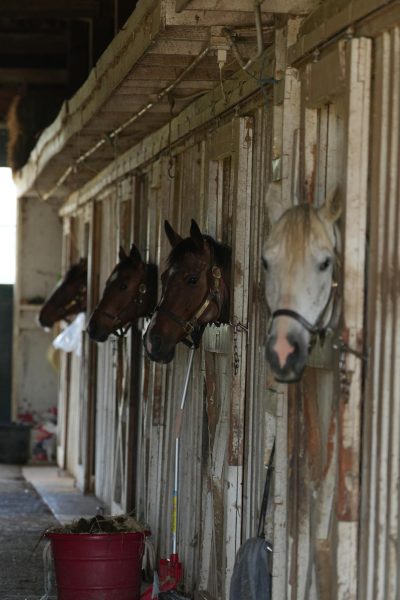
Even for those in the spotlight, women rarely find themselves positioned above men.
Following her Derby win, DeVaux reflected on what it meant to be the marker of the historical moment.
“I consider myself a horse trainer, and I just happen to be a female,” DeVaux told the Today Show. “It’s quite an honor to be the first female trainer to win the Kentucky Derby.”
“I’m just, I’m glad that I could be a representative of all women everywhere, that we can do anything to set our minds to.”
With this, it’s hard to imagine that even more women operate quietly within the industry – people like Johnson.
“Well, how about the person that gave this thing life, … and raised it for the first year of its life? We get zero recognition.”
Although she doesn’t do it for the recognition, many people in the state don’t realize how much of the industry is backed by those who go unseen.
“You know, most everything behind closed doors doesn’t get, you know, seen,” Chris said about his behind-the-scenes efforts. “We’re the ones that basically start everything that leads to racing, which it’s fine. Some people care about it more than I do, … I do it for the love of the horses, so it doesn’t matter.”
In all though, Johnson knows that her job, despite the challenges, is completely worth it.
“What would I say to someone going into this industry? You better love it, because it is hard and it’s cutthroat, and it’s not the most rewarding. But when it does reward you, it truly does.”