
















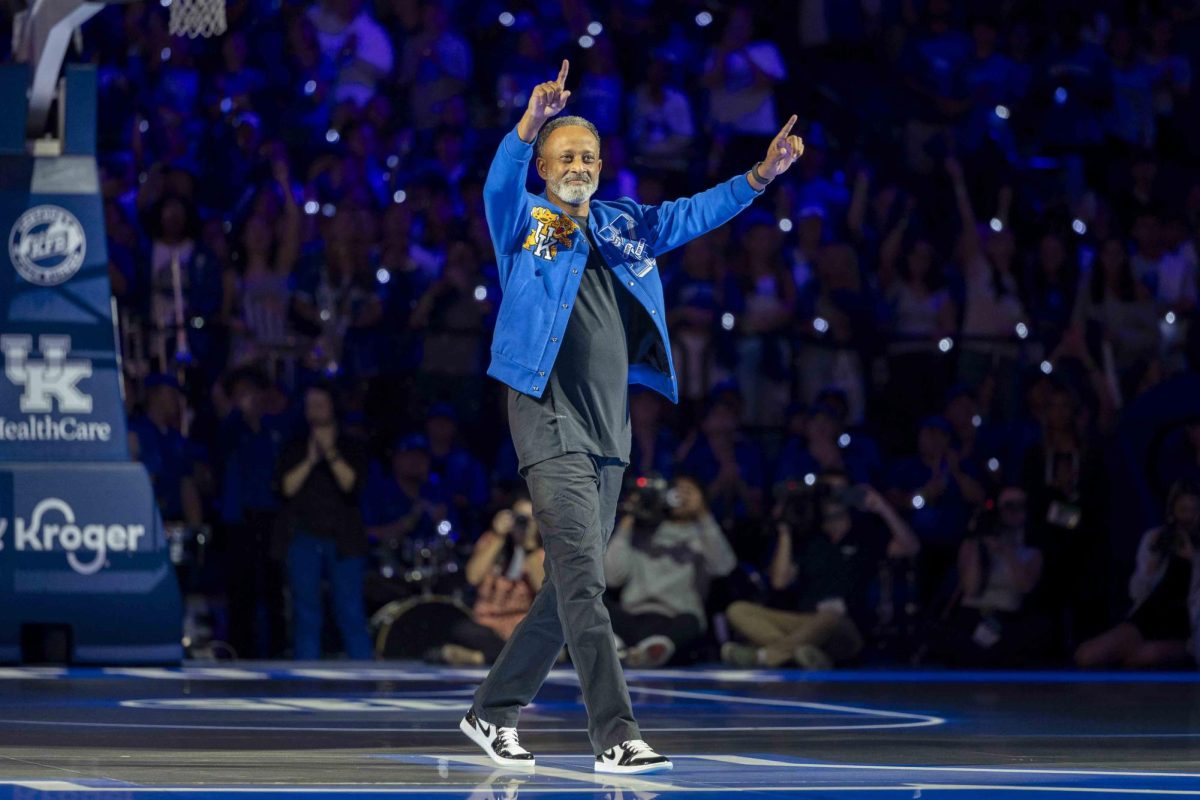
































































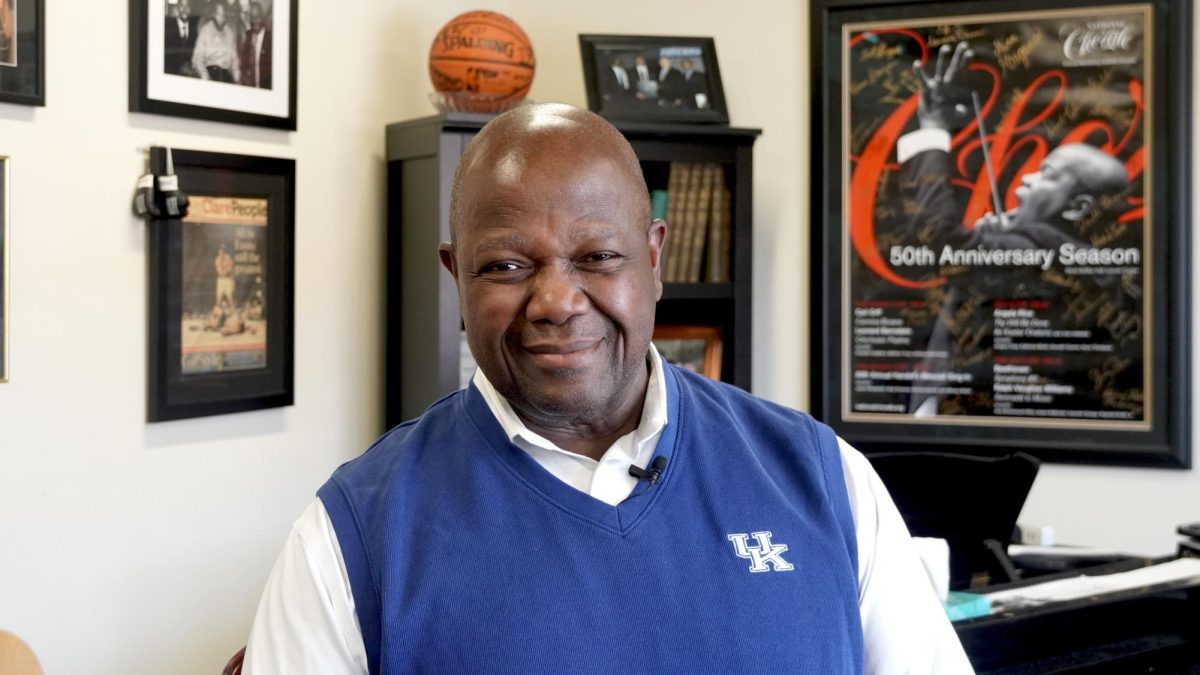





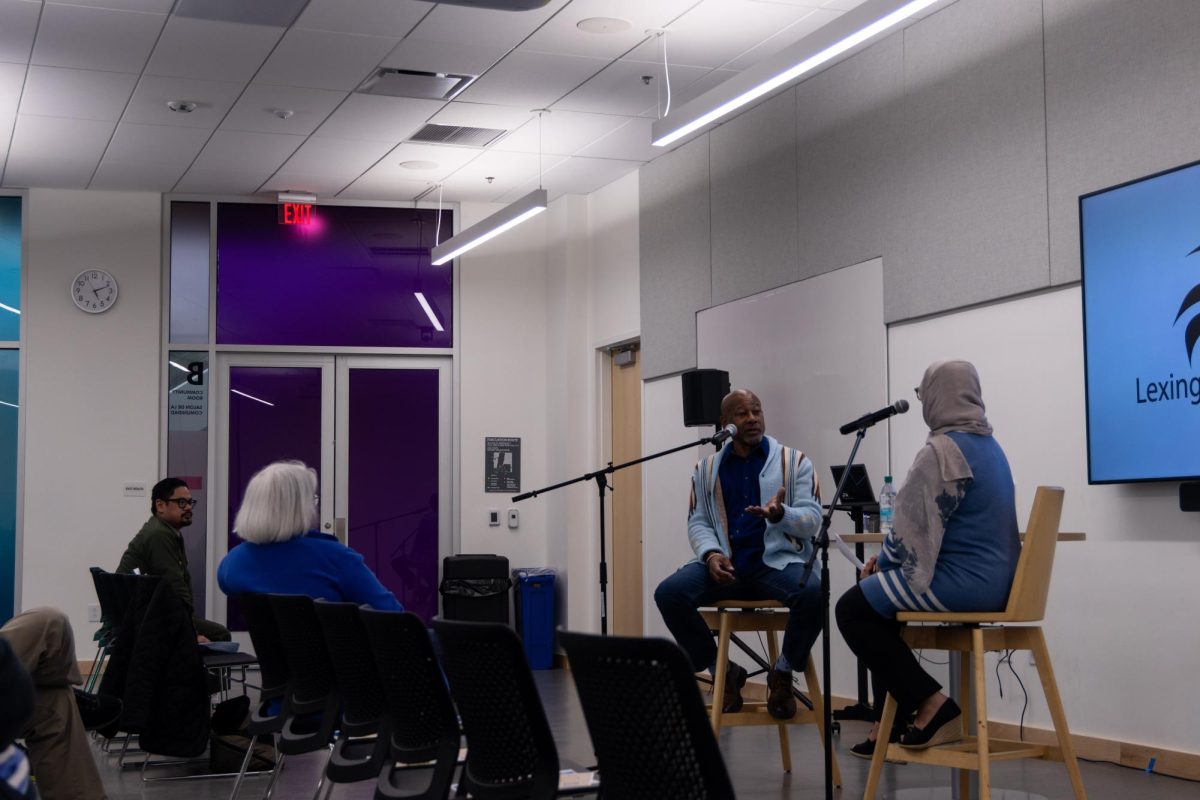
Former Kentucky Poet Laureate and University of Kentucky professor Frank X Walker led a discussion on his storytelling and journey as a writer at the Lexington Public Library Marksbury Family Branch on Thursday, Feb 12.
Walker discussed his memories of growing up, representation in storytelling and his advice to beginner writers as part of a series of author talks the Lexington Public Library is hosting.
Event organizer and collection services manager Mariam Addarrat said the author talks are meant to connect the Lexington community with authors and enhance the reading experience by featuring local Kentucky authors and allowing the audience to learn from and interact with them.
“As the library, we want to cultivate a community that is creative, a community that is engaged with the written word,” Addarrat said. “When you get to interview an author you admire, you feel inspired yourself; you get an insight into his creative process and what affected his journey into becoming one of the most prolific poets in our region.”
According to Walker’s biography on his website, he co-founded the Affrilachian Poets Collective and has won multiple poetry and literary excellence awards for his work. Walker is the first African American writer to be named Kentucky Poet Laureate.
Walker said he grew up with seven sisters in Danville, Kentucky, and because his family did not own a television, Walker would often read books, relying on a bookmobile that came every Saturday.
As his love for stories grew, Walker said he read through the entire African American section at his library, which then took up only two shelves at the bottom of a shelf.
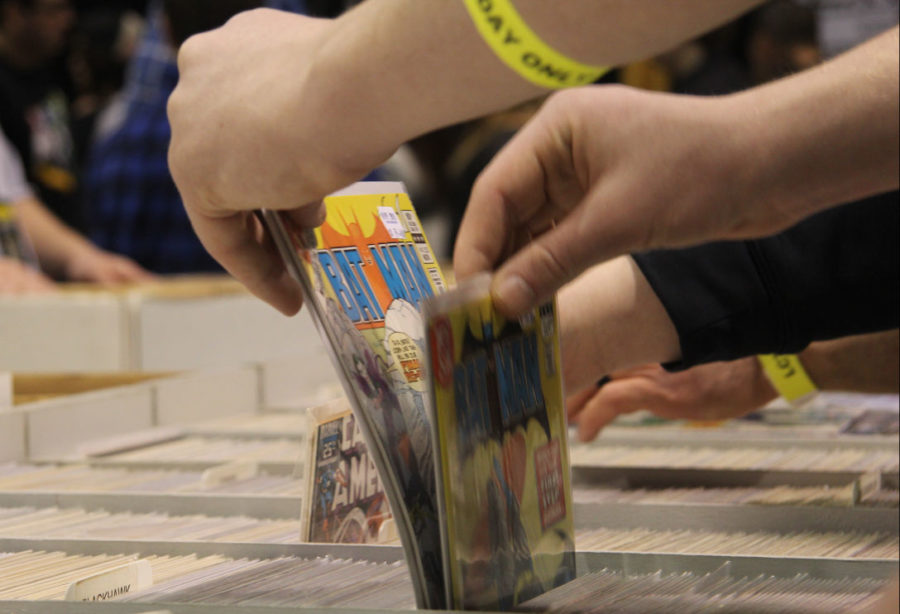
“When I was a kid, I was hungry for stories about people who looked like me,” Walker said. “It was comic books that first told me I existed; I’d see a face on the cover, a face like mine. Like Black Panther, Luke Cage, The Falcon.”
Walker said at the time he never imagined he could be a writer, as he did not know any other people of color who were writers. When he took his first creative writing class in high school, though, he said his teacher told him he had a gift for words.
During his time as a student at UK, Walker said he was part of a group of writers. Walker came up with the word “Affrilachia” when he went to an event advertising itself as having the best writers from Appalachia. When African American poet Nikky Finney was added to the event, Walker said the name was changed to remove Appalachia from the title.
“I went to a dictionary that evening and I looked up the definition in 1991 of Appalachian, and it said ‘White residents of the mountainous regions of Appalachia,’” Walker said. “I immediately felt the kind of othering that happened by being rendered invisible in that one definition.”
Walker said coining the term “Affrilachia” gave him and his writer friends a space for people who were not included in that dictionary definition. He said his group made him feel welcome on a campus during a time he said was an unwelcoming space.
“I came to UK in 1979 as a freshman, and in the space of one semester, I heard the N-word more times in those four or five months than I had heard it my entire life,” Walker said. “It forced or encouraged people of color to be closer together, to hold each other up.”
Walker said he saw his writing group and the people who would go to the Martin Luther King Center form a familial space and close bonds that lasted far beyond college, that to this day surrounds him and his family with writing and art.
When writing his 2004 book “Buffalo Dance,” Walker said he was learning to write about history and how to tell the story of the Lewis and Clark expedition from the perspective of Clark’s slave, York.
He said he later learned while he included the voice of York, who was previously left out of writings in history, he learned he failed to include the voice of his wife or mother, leading him to include more female voices in the second book.
Walker said from his experience writing, he found the ability to tell other people’s stories through learning to tell his own.
“The hardest thing for writers to know, in my opinion, is to know what their own voice sounds like, to know what their own story is,” Walker said. “I think every young person should be in conversation with the oldest person in their family. They should be asking about the people they’ve never met.”
The ability to read and listen to those stories, Walker said, not only keeps a family’s story alive but helps writers find their voice.
Adult education language learning coordinator Angelique Bell said she knew Walker since she was a teenager and came to the event to support him. She said what Walker said about knowing family stories resonated with her.
“I always wanted to know more about my family’s history,” Bell said. “It actually reminded me that I need to be even more conscientious of spending time with relatives … I have a great aunt who just turned 98 in December. There are things that I still want to learn about her parents, my great-grandparents.”
Addarrat said Walker’s poems resonated with her because she saw a connection between them and the poetry her father enjoyed reading.
“I made that connection as giving a voice to the voiceless, telling the stories of the oppressed,” Addarrat said. “I started reading (Walker’s) work even more because it really helped me make that connection to the community in Lexington and in Kentucky in general.”
At the end of the discussion, Walker read aloud three unpublished poems and held a Q&A session with the audience.
Addarrat said the full discussion was recorded for the Lexington Public Library’s “Turning the Page” podcast.