





















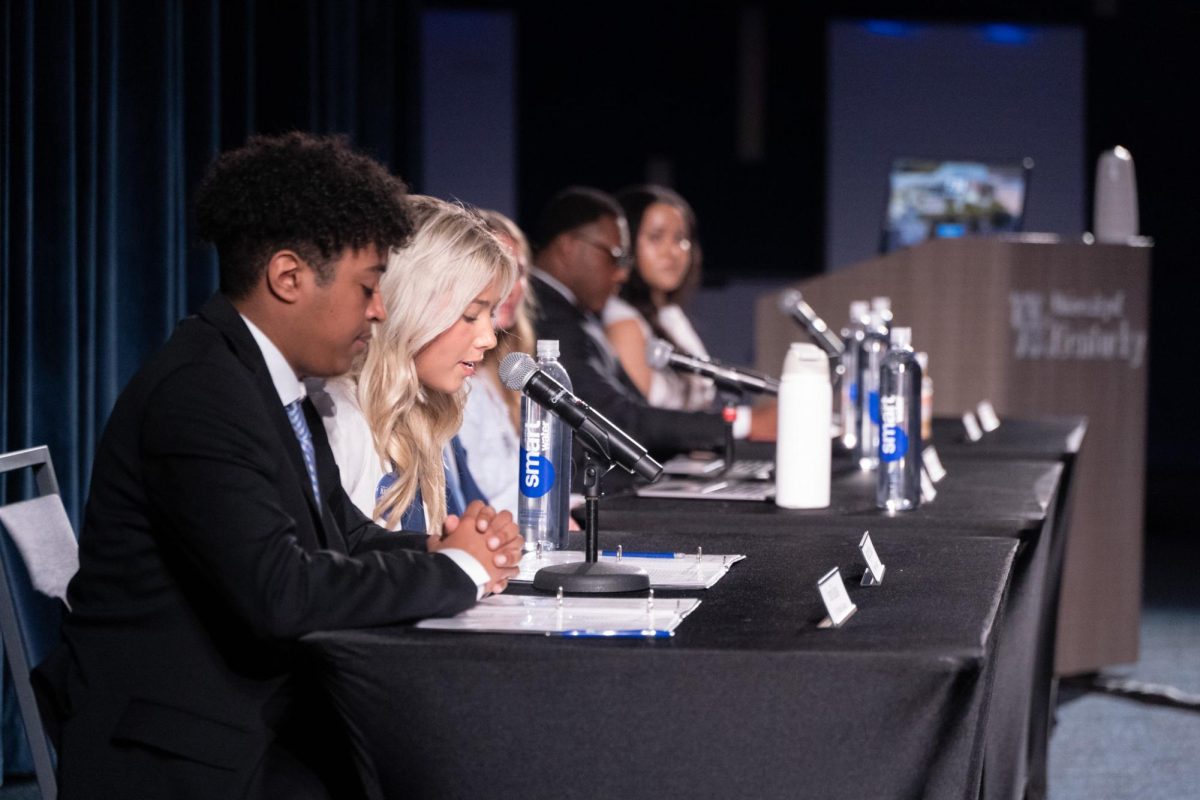













































































































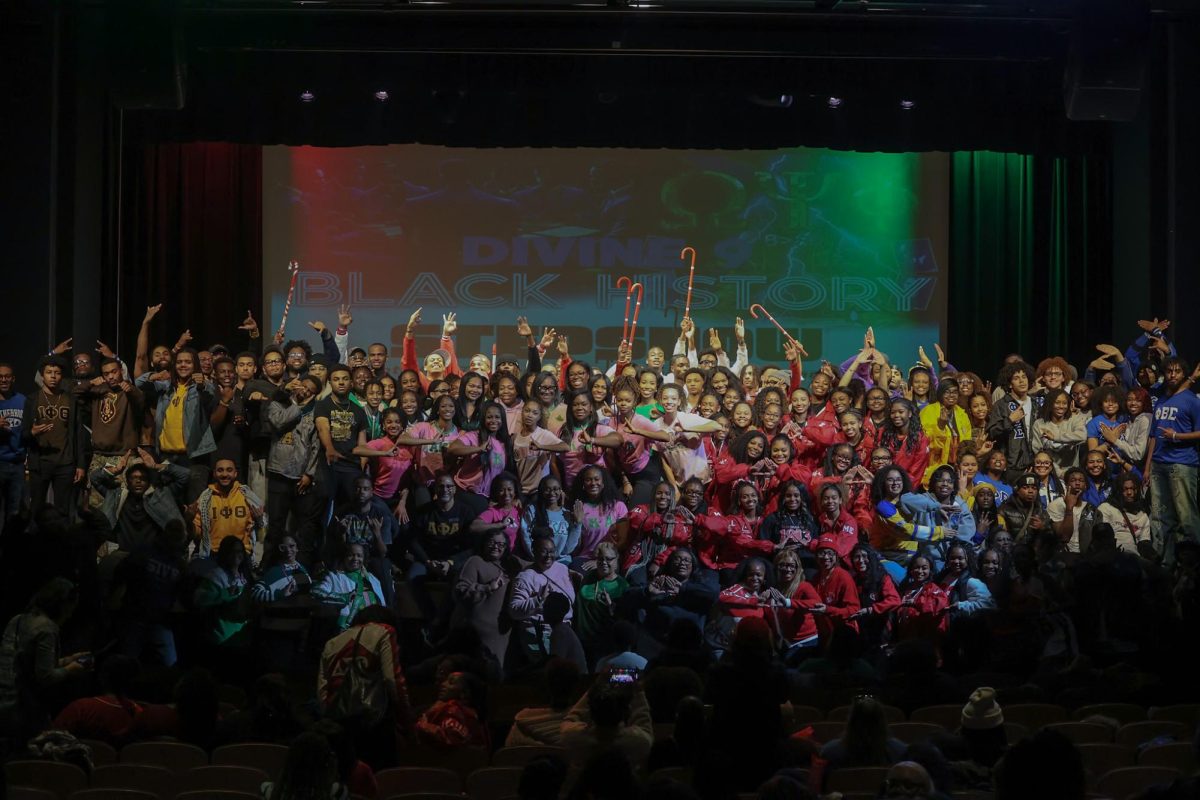
Members of the National Pan-Hellenic Council (NPHC), also known as the Divine Nine (D9), performed in a step show for Black History Month.
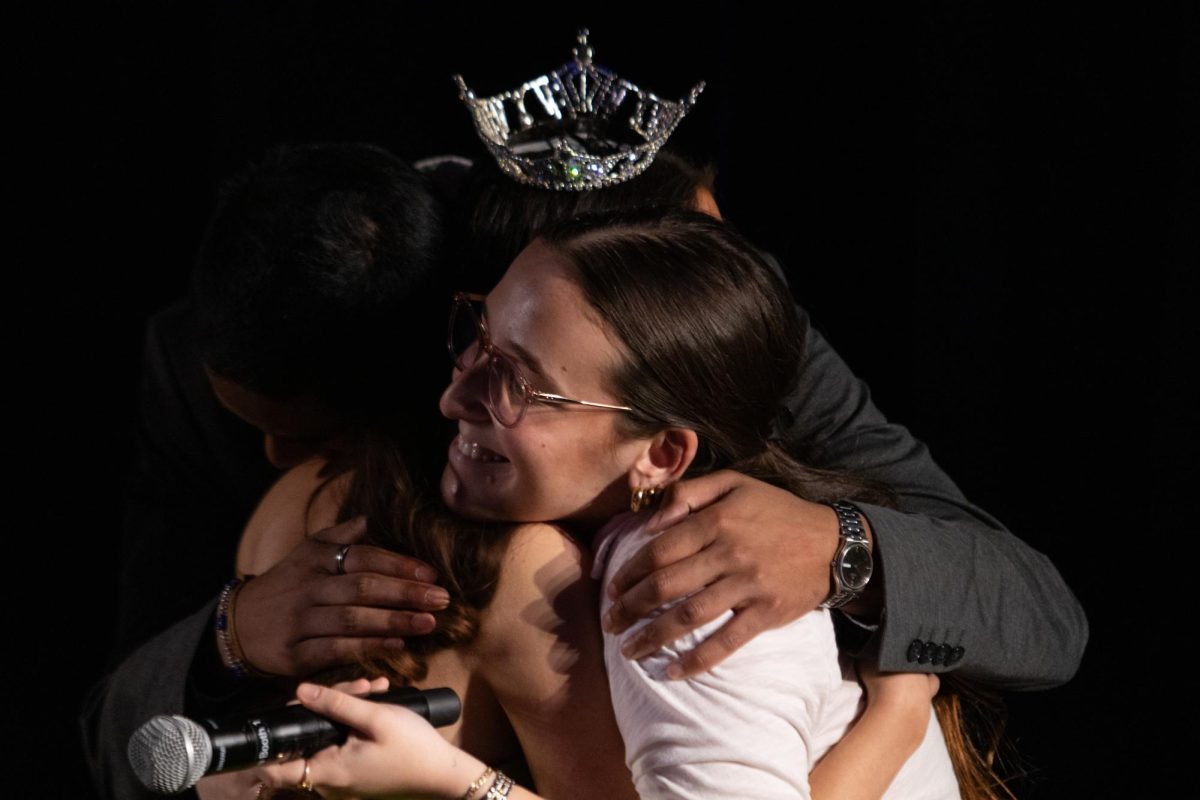
On Feb. 7, 19 groups representing the University of Kentucky’s NPHC came together to present a step show at the Historic Lyric Theater & Cultural Arts Center.
The D9 is the nickname for the nine sororities and fraternities that make up the NPHC, according to the NHPC’s website.
Each performance featured members of the undergraduate chapters showcasing stepping, chants and songs that told the history of their sorority or fraternity. The crowd responded with cheers, call-outs of encouragement and dancing.
Each group was first introduced by a graduate member of their sorority or fraternity who spoke of their D9 organization’s history and impact in American Black culture.
Eugene Renner, a senior economics major at UK and member of the Kappa Tau chapter of Kappa Alpha Psi Fraternity, Inc., said what he wants people to take away from the performance.
“We’re black, we’re successful. We can come together, plan an event and perform, and put on a show for everybody,” Renner said.
For Renner, Black History Month carries a lot of significance due to his parent’s story of coming to the US, and how he said he gets to continue their legacy.
“It means everything. I mean, my parents, they immigrated here from Africa back in the late ‘90s,” Renner said. “They came here for college, so just the fact that they can come to this country and be able to get an education on the same level as everybody else, I think that’s amazing.”
Renner said his chapter represents the D9 not only at the UK, but in the state of Kentucky as well.
Buchi Ajaezu, a senior double major in psychology and neuroscience at UK and a member of the Iota Sigma Chapter of Alpha Kappa Alpha Sorority, Inc., said Black History Month means a lot, especially with the state of the world right now. Ajaezu said people should remember community is important despite history’s tragedies.
“It’s still important to still combine with our community and still be able to connect on levels even when people don’t wanna see that, because that’s how we stick together and that’s how we push forward and persevere,” Ajaezu said.
Zakalia Redd, a sophomore double major in political science and psychology at UK, as well as a member of the Mu Epsilon chapter of Delta Sigma Theta Sorority, Inc., said her sorority’s 22 founders are who inspire her.
“They were in front of the women’s march, and it was like, it was very pivotal for our people. It was very important. It showed that, even as black people, but also women, they weren’t afraid,” Redd said. “I think that just shows how far we’ve come as people.”
Redd said what it is like to be a part of an organization like the D9 that has a long, meaningful history.
“I think it’s just important to remember over the years … every person has a purpose, and throughout our sorority and throughout time, we’re all gonna make an impact for that era, but it’s gonna continue to blossom and grow into something else that you can look back on and be proud of,” Redd said.
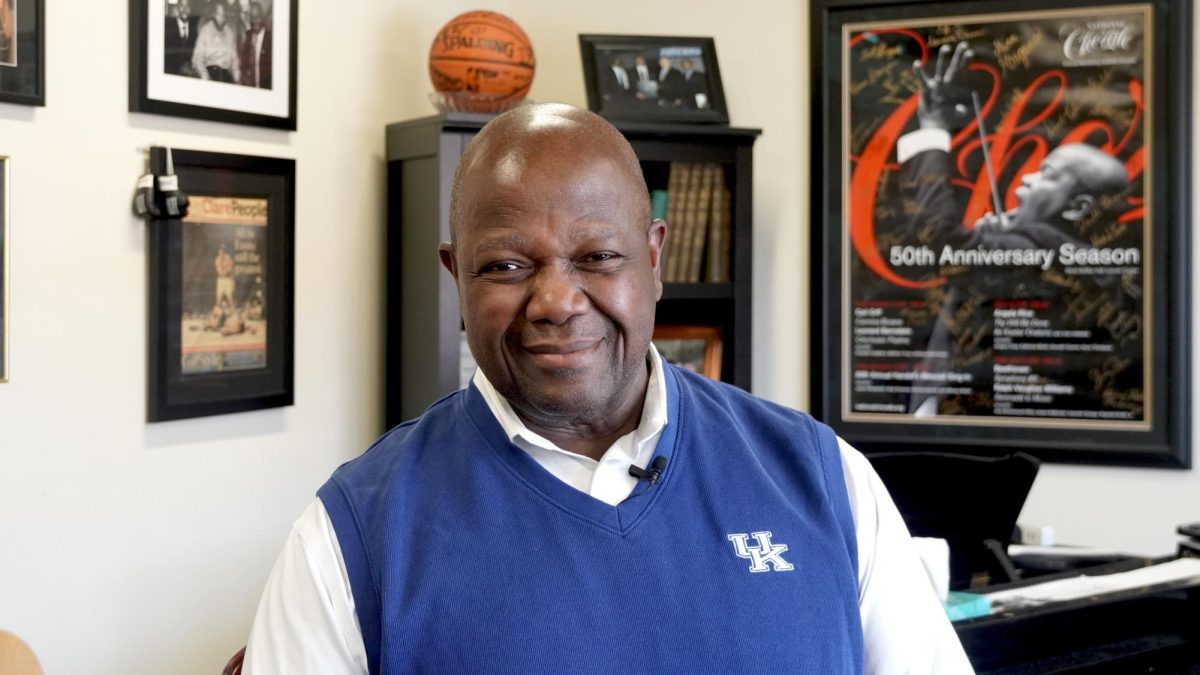
Christian Adair, executive director of the Historic Lyric Theater & Cultural Arts Center, a member of Alpha Phi Alpha Fraternity and graduate of UK, said of the center’s history and meaning for the Black community.
“We’re a historic theater, where all the greats from the ‘40s, ‘50s and ‘60s performed, because it was the only safe place that black people could perform,” Adair said. “That history and that culture and that significance drew me to come here … because we’re still a platform for the future …When you think about the Lyric, you think a place of love, of diversity, of equity, inclusion, of culture, of history, of people, of everyone coming together.”
Adair said what Black History Month means to him and the importance of recognizing the Black people who have made our country.
“It means American history. When you think about the people that actually built this country without being paid for it, without being compensated, without being acknowledged,” Adair said. “We celebrate the contributions, ‘cause we’re often left out of history books.”