














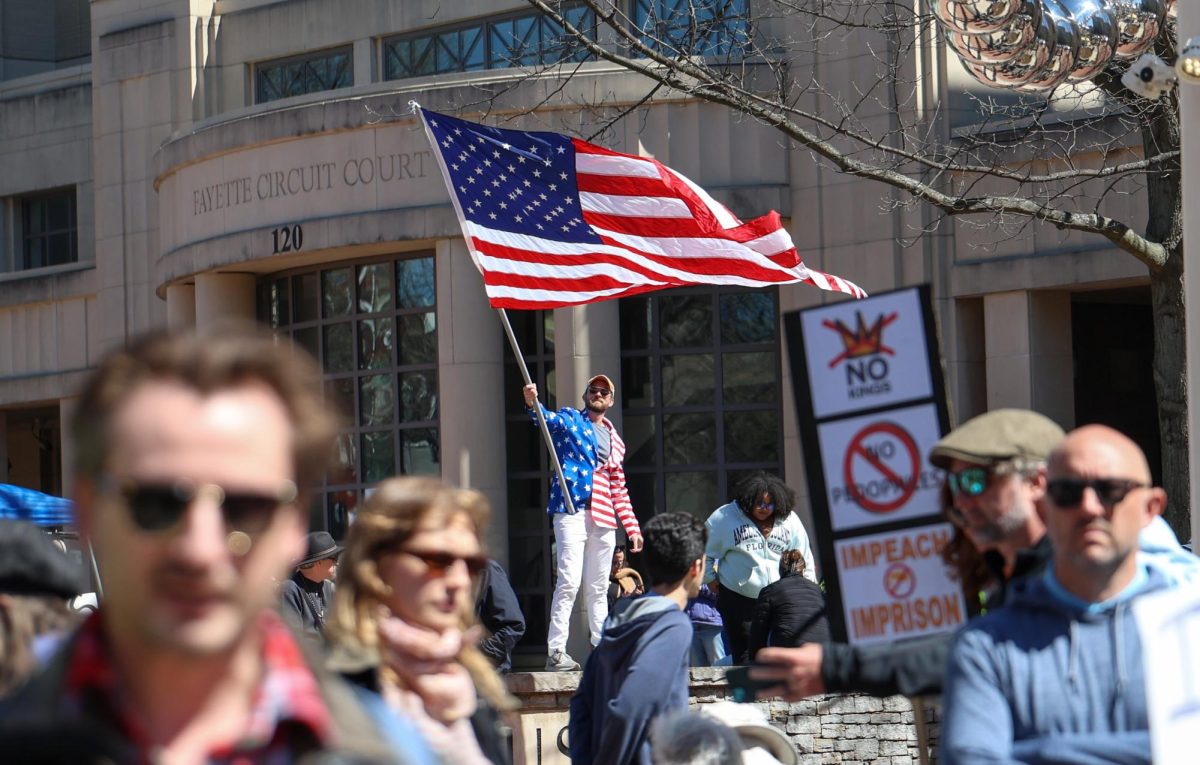






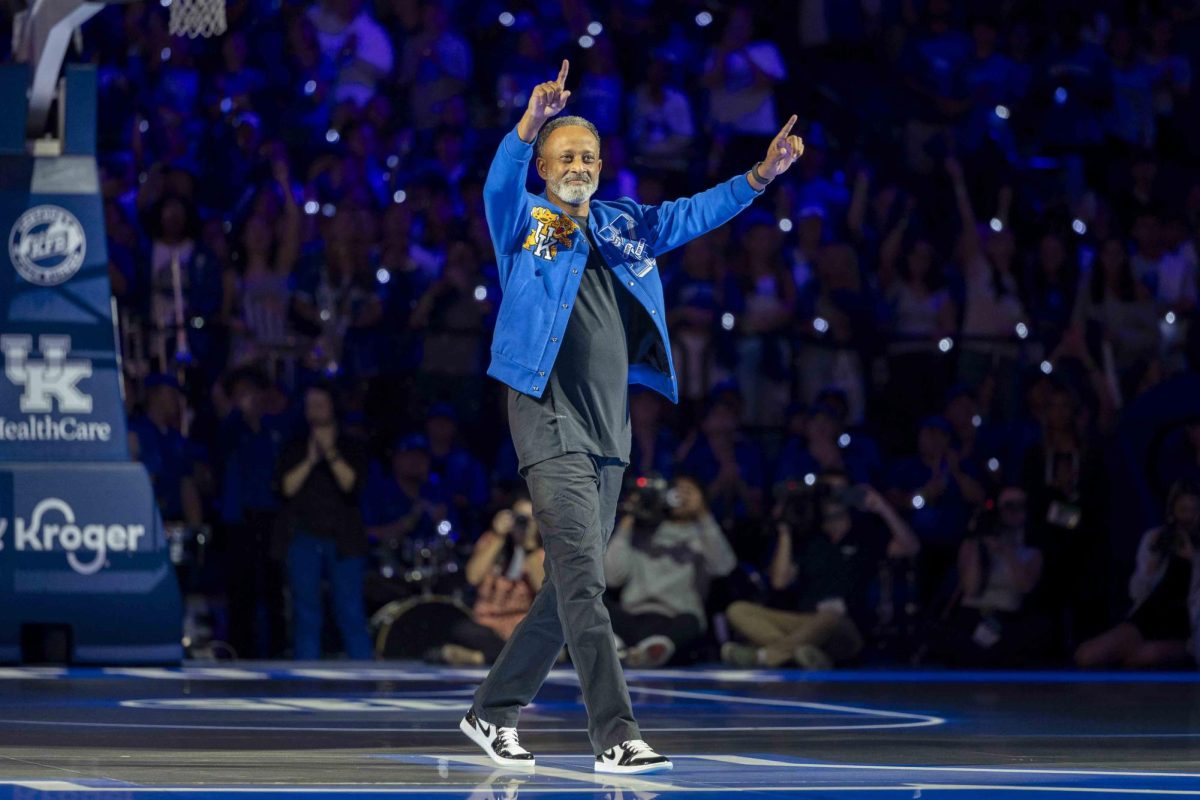





















































































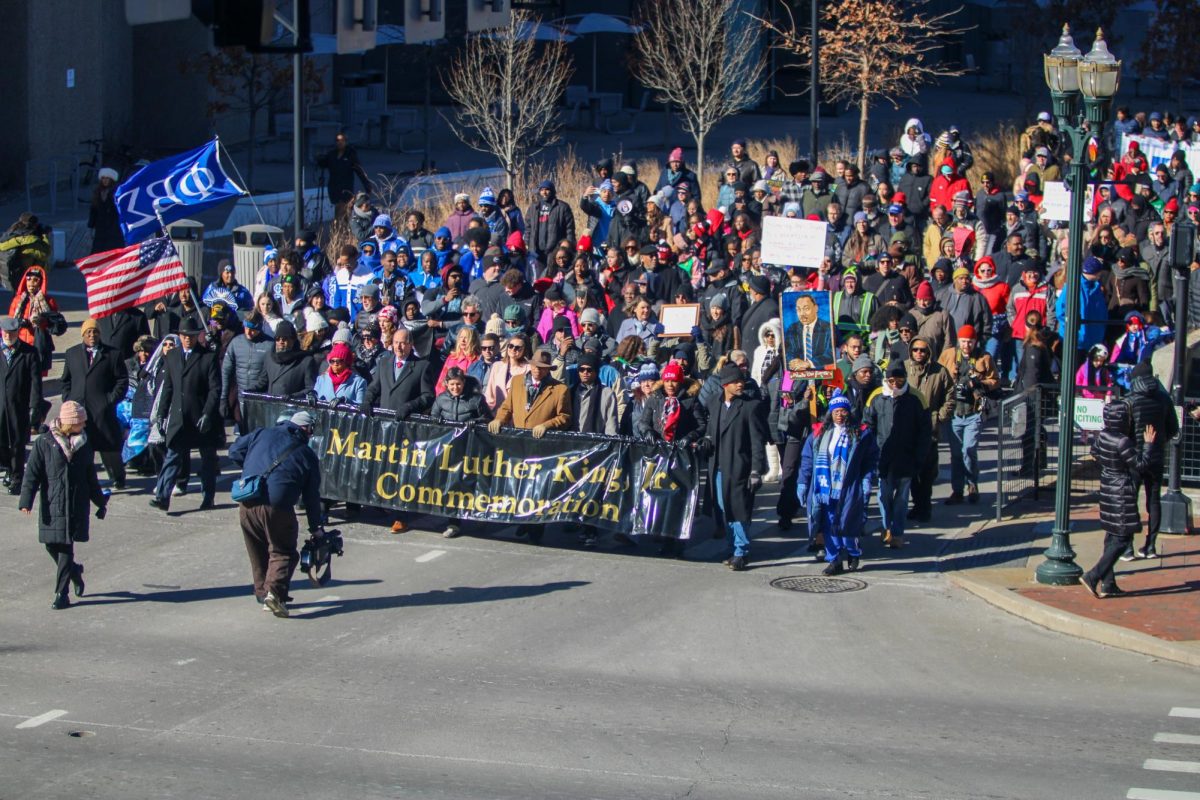
The Lexington community marched and reflected on Martin Luther King Jr.’s legacy at the Central Bank Center, sponsored by the Bluegrass Community Foundation, on Monday, Jan. 19.
The march and program featured keynote speaker Rev. Devon J. Crawford with remarks from other artists and speakers.
Rev. Crawford focused on an “interdisciplinary approach” to civil rights, disseminating information on public health, voting and the importance of community.
A tribute to Kentuckian Moneta Sleet Jr., a photographer for MLK Jr., was presented by Chester Grundy. Photographs from Sleet’s life and work during the Civil Rights Movement were displayed in the event lobby.
Attendees such as Max Hester, a Stanford resident who held a sign reading “LOVE One Another,” returned to the event for a second year, also to commemorate the life and work of others.
“I came last year. A good, good friend of mine, I met at work, Patrick J. Mitchell, was the photographer for this event for years,” Hester said. “And he died the September before last year’s march, so I came in memory of him.”
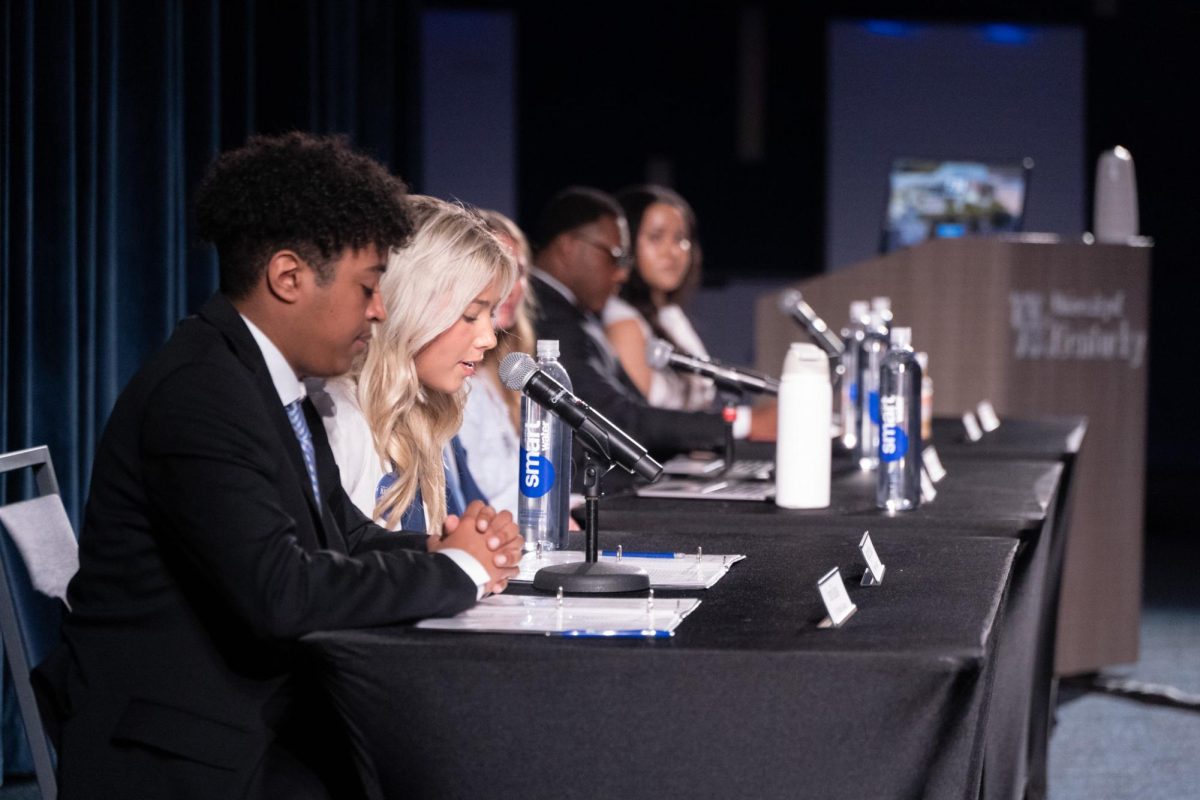
To continue on the legacy of MLK Jr., and inspirations like him, one focus of the program was a scholarship presentation by Dr. Greg Feeney, President and CEO of the Bluegrass Community and Technical College.
High school seniors planning to attend BCTC or Kentucky State University are eligible to apply for Annual MLK Student Scholarships, providing one year of free tuition starting in fall 2026, according to the BGCF website.
For Lexington resident and attendee Leonard Vaughn, “respecting the people before us” and having a sense of continuity are essential parts of why he celebrates Martin Luther King Jr. Day.
“It’s (celebrating) an expression of how far we’ve come as a people, and how much our people went through back in Martin Luther King’s day, marching and just trying to get us simple rights,” Vaughn said. “Just to be able to get out and celebrate something that’s been so great for America.”
Likewise, Hester said Martin Luther King Jr. Day is relevant to today’s America in terms of diversity.
“It’s so important, I think, especially in this current political world we’re living in, to give each of us an opportunity to be able to simply march together,” Hester said. “And (to) have the diversity that our country’s represented by the folks who’ve just finished marching in that march, that’s important to me.”