




















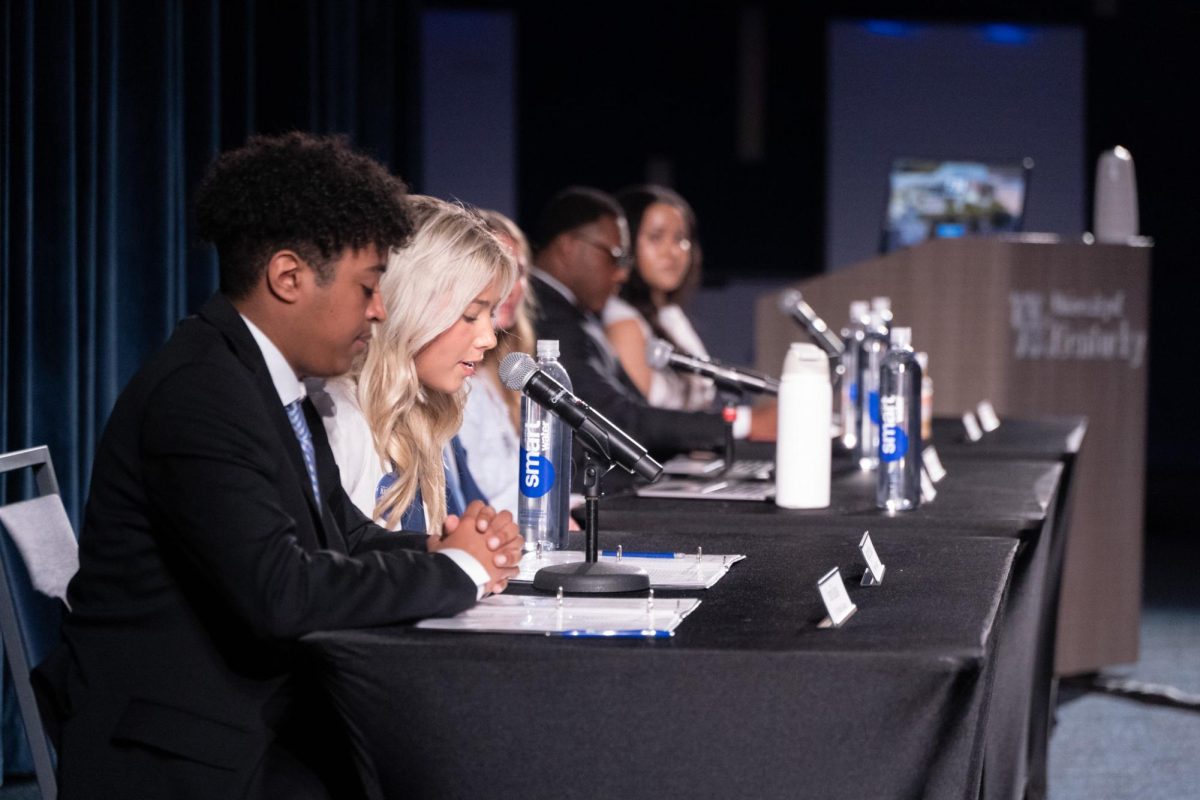











































































































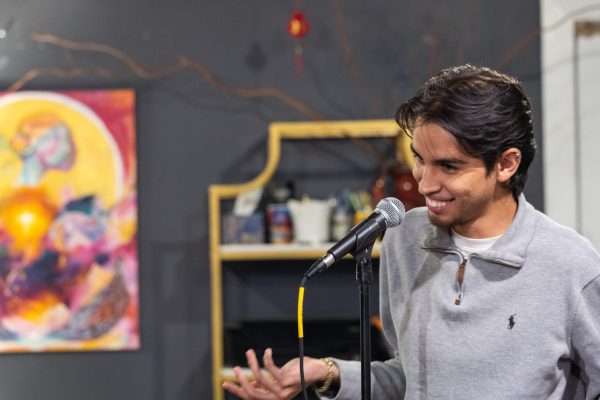
Holding a phone in one hand and the microphone in the other, Gael Diaz stands before the crowd, ready to speak.
With a steady breath, he read his final poem of the night.
“The other day, when the police sirens light up the street, a guy laughed and said they’re coming for Mexicans,” Diaz said. “Like the sound of the sirens could read my skin, like the light knew my name better than I do.”
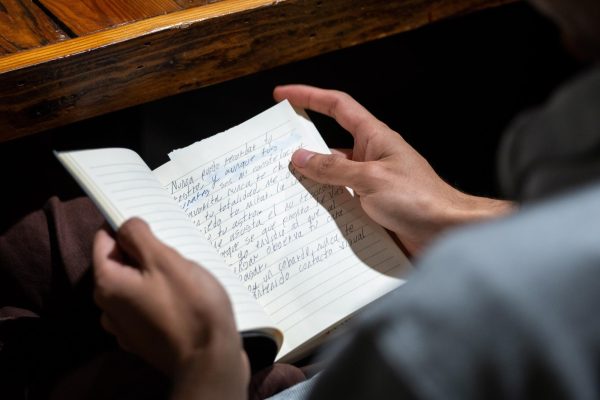
As he read off a dimly lit phone screen, Diaz looked at the small audience and spoke from an experience he knew too well.
According to Diaz, he created “La Voz,” a monthly open-mic night where students share their poetry in both English and Spanish.
Many students feel more connected to their native language, Diaz said, which is why he created the event to let them express themselves and share their experiences with a crowd that truly understands them.
“It was really, really cool, feeling like you belong to a community or in a space,” Diaz said.
As his poem came to a close, Diaz looked back up at the crowd as applause echoed across the small room.
“What they don’t know is that every slur that they throw only tightens my strength, it sharpens my mouth and reminds me of who I am because I’m not their punch bag,” Diaz said. “I’m not their stereotype, not their made-up monster.”
‘What are you doing here’
As a child, Diaz remembers a house full of family, running around with cousins, aunts, uncles and grandparents each day.
Friends and family regularly overflowed his home in Chihuahua, Mexico, for monthly, if not daily, events.
However, that all changed when he was 15, after his mom got a job in Georgetown, Ky., changing his life.
“It’s weird, growing up with all my cousins, and now the only time I see them is like, oh, maybe on an Instagram story, or they send me a DM,” Diaz said. “So it’s not like I’m growing up, growing up with them anymore. I’m just looking at them grow up.”
Echoes of conversations enveloped him as signs in a foreign language leap off the wall, overwhelming Diaz with confusion as he navigated his first few months in Kentucky.
Bits and pieces of English lingered in Diaz’s brain from his childhood education, with Texas being just over the border from Mexico.
Diaz said he was taught a small amount of English while in school, but it was nothing compared to what he learned when he moved to Kentucky.
“I wasn’t able to keep a conversation with someone, so I used to hang out a lot with all the other kids that were also migrating from different Latin American countries,” Diaz said. “I didn’t really get to meet the rest of my class because of that.”
Every day was a constant back-and-forth battle between English and Spanish, leaving Diaz mentally drained at the end of each day and ready to fall asleep as soon as he got home.
As he navigated the unfamiliar hallways of the new school, Diaz hurried from class to class, often getting lost during his first week.
One day that same week, on his way to physical education class, Diaz mistakenly wandered into the wrong gym because he couldn’t read the directions.
“The coach came in, and he was like, ‘What are you doing here?’” Diaz said. “‘Can someone tell him? Someone speak Spanish?’ Because I was in an all-women’s class, and I didn’t know because I was in the wrong room.”
Navigating between the two languages was hard, Diaz said, saying it felt weird hearing conversations in English echo all around him whenever he set foot in public.
“And now it’s the opposite, like when I go to the Mexican store, or some place that is more Latino populated,” Diaz said. “I feel at home when I speak, when I hear people speaking in Spanish, maybe, or I see signs in Spanish.”
‘Two different personalities, one for each language’
As he walked through his newfound community, Diaz said he felt stuck, one foot still clinging to his native language and family in Mexico, the other trying to adapt to a new language: English.
As a student at Scott County High School, Diaz was one of six students in the school’s English as a Second Language program.
“I was able to do … my assignments, I mean, with Google Translate or something,” Diaz said. “So professors were like, Oh, well, you’re really smart. I want to take you to AP classes or something. But do you think you’re gonna be fine with the English level that you speak? So I miss a lot of opportunities.”
Diaz was in ESL classes for two years, learning both conversational and academic English as well as working on his pronunciation.
As his first year of ESL classes wrapped and the second began, Diaz said he transitioned from student to “Unofficial TA (teacher’s assistant),” translating for his fellow students.
Still, pronunciation remained unclear in his mind, Diaz said.
“It’s like, I don’t know, playing a game. No, you don’t have the word, so you just maybe you just change the entire sentence to don’t use the word or to try to describe it to someone,” Diaz said. “It’s just weird, no, because your brain is thinking of the concept, but you don’t have the word in the language that you’re trying to speak.”
As a student at UK, Diaz said he often finds himself lost in class if he stops paying attention for even a moment.
While this may be common in his English-led classes, Diaz said in his Spanish classes, this confusion ceases to exist.
Sentence structure varies between the two languages, Diaz said, which often made him hesitant to engage in English conversations, as he lacked many English phrases beyond academic ones.
“I might be very shy when I’m speaking English, but not when I speak Spanish,” Diaz said. “So it’s like … having two different personalities, one for each language.”
Often when speaking in English, Diaz said his mind runs rampant, overthinking each word in fear of a stutter or stumble.
Diaz said it’s exhausting jumping back and forth between the two languages, with his confidence shaking when he forgets a word in English.
“I get really anxious, because it’s like, Oh, I know this, but I just can’t express it,” Diaz said. “Or I just get mad because at this point I feel like I should have that vocabulary, especially having the opportunity to attend college.”
‘That makes us feel like we belong’
Before he was a student at UK, Diaz went to Bluegrass Community and Technical College.
Both at his high school and at BCTC, Diaz noticed diversity ebbing from the seams of the school, with kids from all walks of life attending.
Every time thoughts of not fitting overwhelmed his mind, Diaz said he could look around him and know he was where he needed to be.
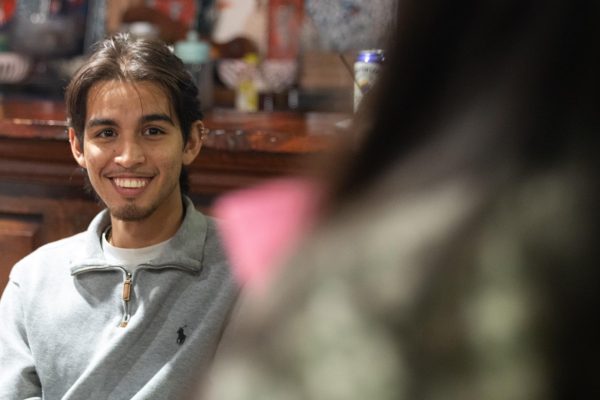
“There’s also many communities that share some things, or we have in common that we are immigrants,” Diaz said. “No one feels like they belong. So that makes us feel like we belong.”
When he first moved to Kentucky, Diaz said he wouldn’t have adapted as well without interpreters.
“I was in the same place, and I know how it feels being in a different country, don’t understanding anything,” Diaz said. “I think it’s really important to help them, because it could be … really, really frustrating.
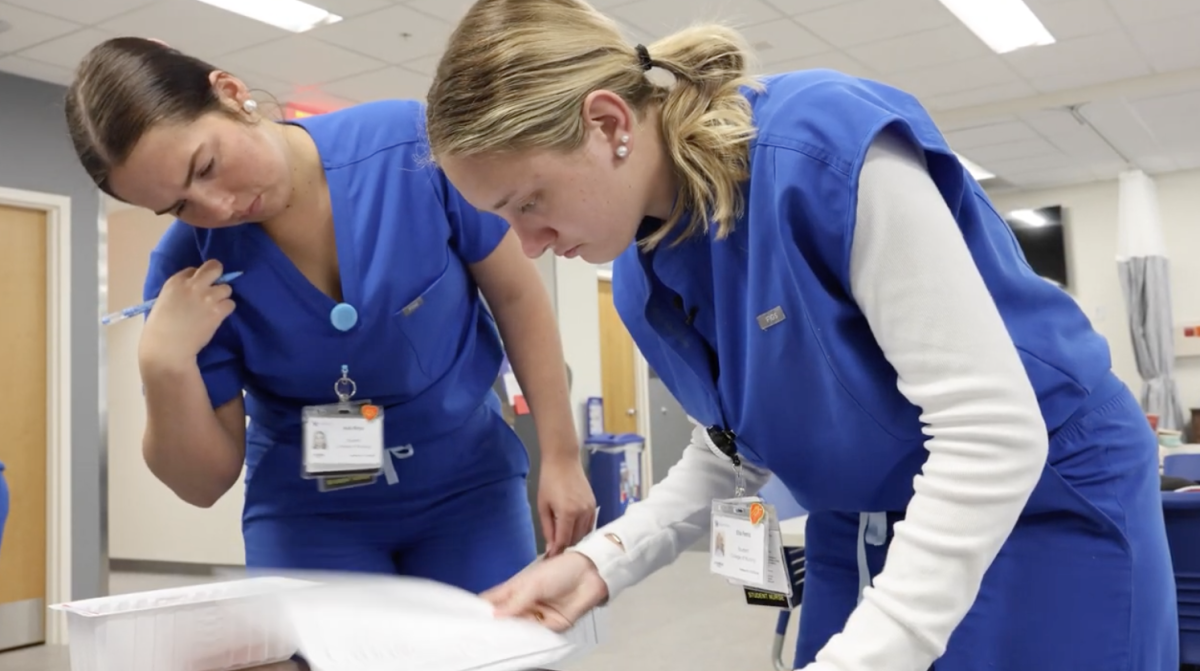
Now, Diaz has lived in Kentucky for six years, saying he goes to health clinics or to events such as the Latino festival and La Voz to help others who have had similar experiences to his.
From his unique position, Diaz said he gets to communicate with people from many different backgrounds and let them know they matter and have a place in Kentucky.
“That’s the way I felt the first couple years I was here, I didn’t feel like I belong, and no one cared about what I have to say,” Diaz said. “So I’m trying to improve that for other people.”