





























































































































Twenty-two men stand in a line bowing their heads. One man holds a hand to his chest, another has his arms at his sides.
Women follow suit, lining up behind the men, bowing their heads in prayer. The sun has just set.
In front of both lines stands one man leading the Maghrib “sunset” prayer, the fourth of five obligatory daily prayers for Muslims.
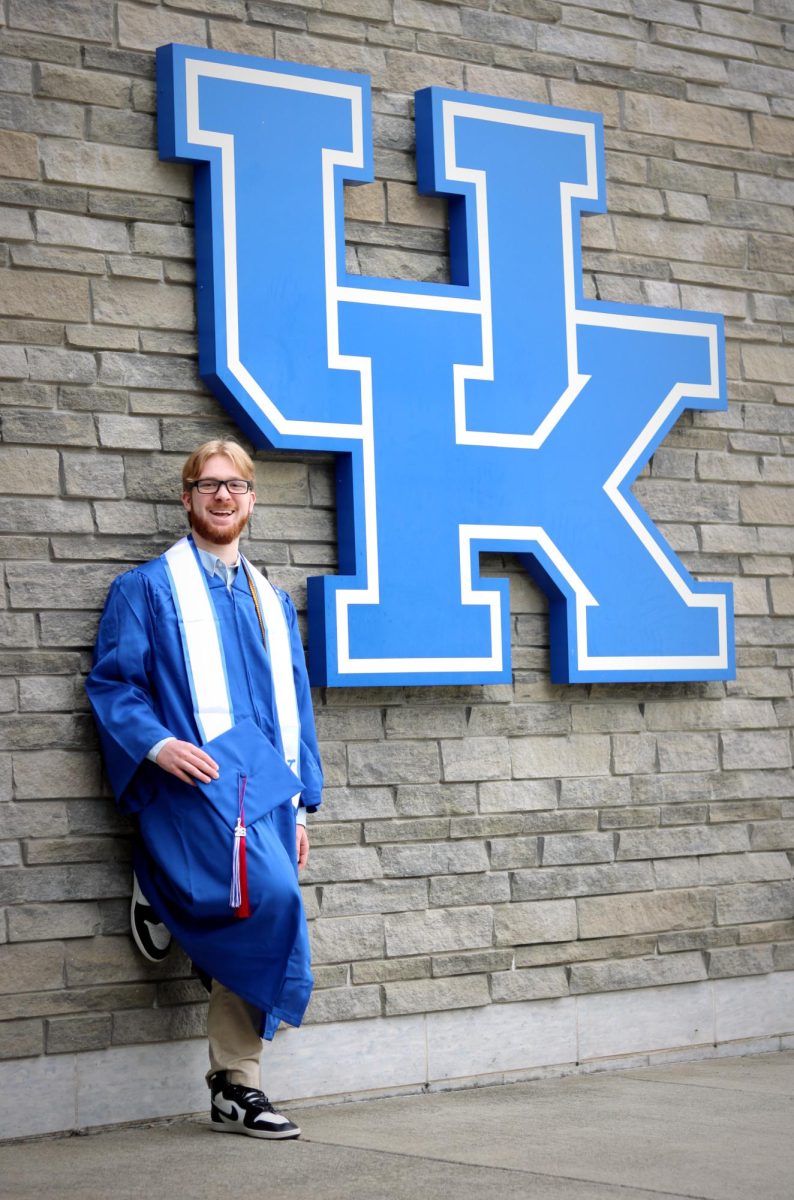
Among the line of men is Adam Agoub.
Agoub stands shoulder to shoulder with the men as the prayer continues, marking transition from day to night.
“If you have the intent of pleasing, you know God, your Creator and following the example of the Prophet Muhammad, peace be upon him,” Agoub said. “Your goal is to just live your life, embody what it means to be Muslim and be kind and just be a positive light.”
‘It takes a village’
The son of immigrant parents, Agoub said he was raised to understand he has opportunities not every child is as lucky to have.
At 12 years old, Agoub’s mother emigrated from Libya to her new home in Lexington. As she showed up to school day after day, his mother was the only girl in every classroom to wear a head scarf.

According to Agoub, being a Muslim girl in Lexington, Kentucky placed a target on his mother’s back at a very young age.
However, Agoub said, through all her hardship, she placed her ultimate faith in God, surrendering all fears, mental conflicts and challenges to her faith.
Agoub said he has and will always look up to the ways in which his mother has given everything to God and in turn, what she has given to their family.
For Agoub, realizing his parents would have felt lucky to encounter his day-to-day struggles at 20 years old in comparison to the hurdles they faced before leaving their home to pursue a better life shifted his mindset.
The sacrifices made and strife endured to give Agoub and his brothers the life they have, he said, is something he never lets his appreciation dwindle for. Remembering what he has as a direct result of his parents’ strength makes his obstacles seem less intimidating.

“I want them to look at me and know that they did good, because at the end of the day, I don’t think I’m there yet, and I’m not satisfied,” Agoub said. “But as long as I can wake up and be given the opportunity to try and achieve that satisfaction, then I’m forever grateful to them and forever grateful to God.”
Besides Agoub’s parents serving as his inspiration and the catalysts for his drive, he said he also had a large, strong Libyan community in his corner that supported and watched him grow up.
Comparing his younger life to the phrase, “it takes a village,” Agoub said he was raised by a community, and those people are who made him the man he is today.
‘Intent and excellence’
Born in a predominantly non-Muslim area in Lexington, Agoub said Muslims tend to conform to traditions and behaviors of the people that surround them, whether it be conscious or subconscious.
According to Agoub, many Muslims born in the United States embark on a “journey” of what being Muslim means to them and how it structures their lives.
Agoub said he realized he was not where he wanted to be as a “young Muslim man” when he was a senior in high school.
As Agoub continued to grow his relationship with God and come into his identity as a Muslim, the notion of excellence began to resonate with him more and more each day. For him, his religion is now what sits at the core of his life.
“It is what shapes us. That’s no stretch to say that,” Agoub said. “It is what makes me.”
Agoub said he now incorporates the standard of excellence Muslims are held to in his everyday life, whether it is making each prayer every day, respecting the boundaries of those he encounters, minding his manners or just being “overall pleasant.”
“Perfection itself is something that you may never arrive at, but something that is rewarded just as great as the deed itself is the intention of that deed in our religion,” Agoub said. “Intent and excellence and being just as good of a person as you can be are all so important to us.”
For Agoub, excellence is not a singular box on a check list or a one-time goal, but a constant reminder that there is more to be done.
“At the end of the day, what we all strive for is excellence in everything we do,” Agoub said. “It’s what’s mandated by us to God.”
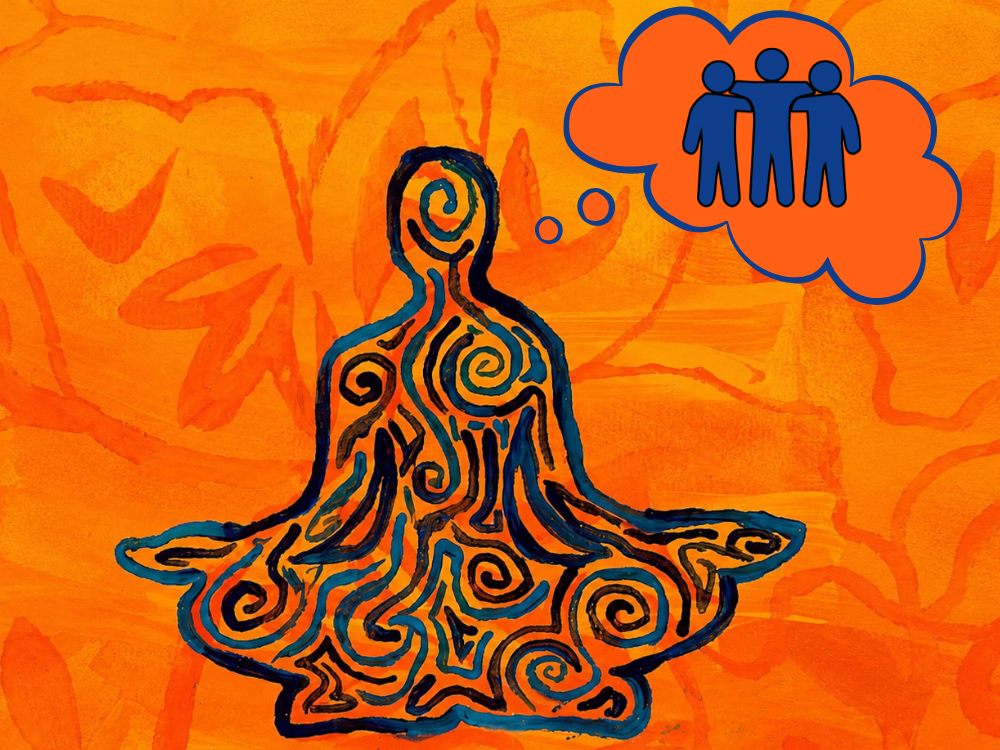
Fostering connections through faith
According to Agoub, the community that brought him to Muslim Student Association (MSA) in the first place is what led to him taking on the role of president.
For Agoub, seeing past presidents and executive board members contribute a piece of themselves into the pool that is MSA resonated with him and encouraged him to pursue a similar path.

“Speaking with pure honesty, it’s something I think about every day,” Agoub said.
Agoub once again recalled the end of his senior year of high school, a time when he said he was in need of something that would give him the space to grow in his religion.
As he finished high school and entered college in the fall of 2022, Agoub said MSA members gave him an environment that fostered growth. However, although growth was encouraged, Agoub said there was never any negative weight put on his shoulders to push him to grow.
Over the years, Agoub continuously put effort into going to dinner, attending events, playing sports and just all around having fun with his fellow members.
But most of all, Agoub put effort into making his religion the center of everything, saying once he did so, everything naturally fell into place.

“I think then I really understood what it meant,” Agoub said. “Like nobody ever really sat down and told me what it (MSA) could do for me. I just came into it on my own.”
According to Agoub, being Muslim is not about any one specific thing or any one specific trait, saying an example often referenced in his religion is the Prophet Muhammad and the kindness and openness he exhibited.
For Agoub, seeing people he respects and connects with embody what it means to be Muslim makes him want to practice the religion more and strive for better.
As someone who highly values keeping an ear open and extending a hand, Agoub said he encourages students to come up to him to create and foster new connections.
“Just because you’re not Muslim doesn’t mean that we’re going to turn you away. That’s something that I refuse to do,” Agoub said. “Because at the end of the day, I’m going to connect with you on a personal level first.”