












































































































As a sea of eager 4-year-olds lined up in a classroom, their teacher grabbed a pen and wrote down their favorite foods.
Words like pizza, ice cream and mac and cheese filled the list, but when it was finally Eugene Renner’s turn, he said, “Domoda.”
Unlike the rest of the children whose foods she wrote down with ease, Renner’s teacher did not know how to spell his.
The next time Renner’s mom picked him up from school, the teacher asked her a single question: How to spell Domoda.
“I kind of figured out I was different from the rest in preschool,” Renner said. “That was my first experience of me not knowing that . . . I’m a little bit different from the rest.”
This moment, although now a simple funny memory of Renner’s, served as something that would forever impact the way he viewed his identity.
A motto to live by
Growing up as the only Black kid in a mostly white neighborhood, Renner said his home life and social life were two completely different worlds.
“Because of the area that I lived in, the Black students would be bused from the city,” Renner said. “But obviously I didn’t really get to spend that much time with them outside of school because they would go back to the city and I would just be there in the suburbs with the white people.”
Although his friends lived in a house where they could yell and speak freely with their parents, Renner’s reality was much different.
At home, Renner lived with rules and expectations set for him by his parents. He could only consume certain online content, had strict screen time limits and had to participate in school, doing homework or practicing a sport of his choice.
However, the most important of these rules was the motto “respect your elders.” To Renner, living by this motto meant he would forever have a close bond with the generations that came before him.
“Even to this day, they (Renner’s parents) always talk about it,” Renner said. “Because they’re getting older and they want the cousins and nephews and nieces to be able to keep the traditions going.”
‘The home of dreams’
Both of Renners’ parents immigrated from Gambia to Kansas City, Mo., for college at the University of Missouri-Kansas City, each working multiple jobs just to afford college and give a better life to their children.
According to Renner, his uncle lived with his parents in the area as well. The three carpooled to school, work and everything in between.
“In the beginning, they had a very tight community,” Renner said. “They didn’t really have a college experience per se, just ‘cause the only thing they were here for was to get their education and just try and survive.”
In Gambia, Renner’s parents received an elementary through high school education. Wanting to explore their opportunities after high school, Renner said the two moved to the United States to expand their horizons.
“America is the home of dreams,” Renner said. “Everybody wants to live their American dreams.”
For the longest time, Renner said he was unaware of his parents’ story. He knew they immigrated from Gambia, but nothing past that.
Although hearing his parents’ story was not a shock to Renner, he said it was the catalyst that motivated him to give his life his all to show his appreciation for his parents and all their hard work.
“Hearing bits and pieces of their story just pushed me to work 10 times harder,” Renner said. “I know that they want me and my little sisters to be 10 times better than they were.”
Small, but mighty
After all the support from his family and hard work throughout his childhood and teenage years, Renner enrolled at the University of Kentucky.
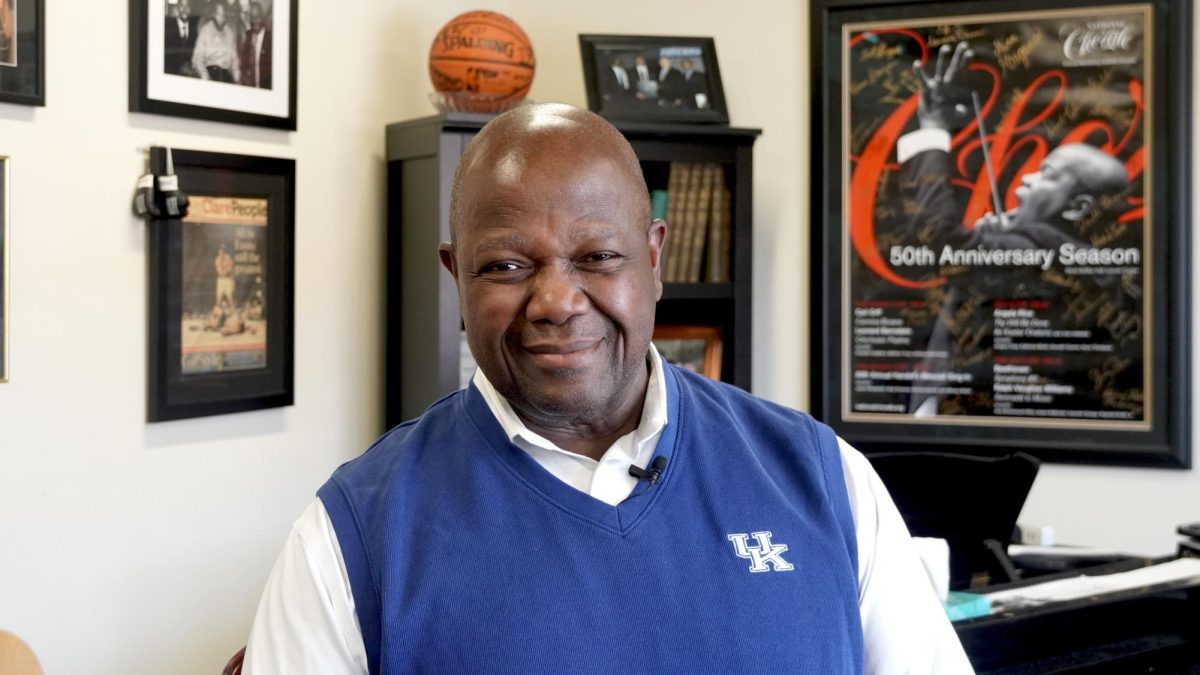
“I first started in the MLK Center in the student center,” the senior economics major said. “That was kind of my first outlet in terms of finding people that looked like me on this big campus.”
After that, Renner started searching high and low for other organizations on campus where he could connect with other students like him, his search eventually leading him to the African Student Association (ASA).
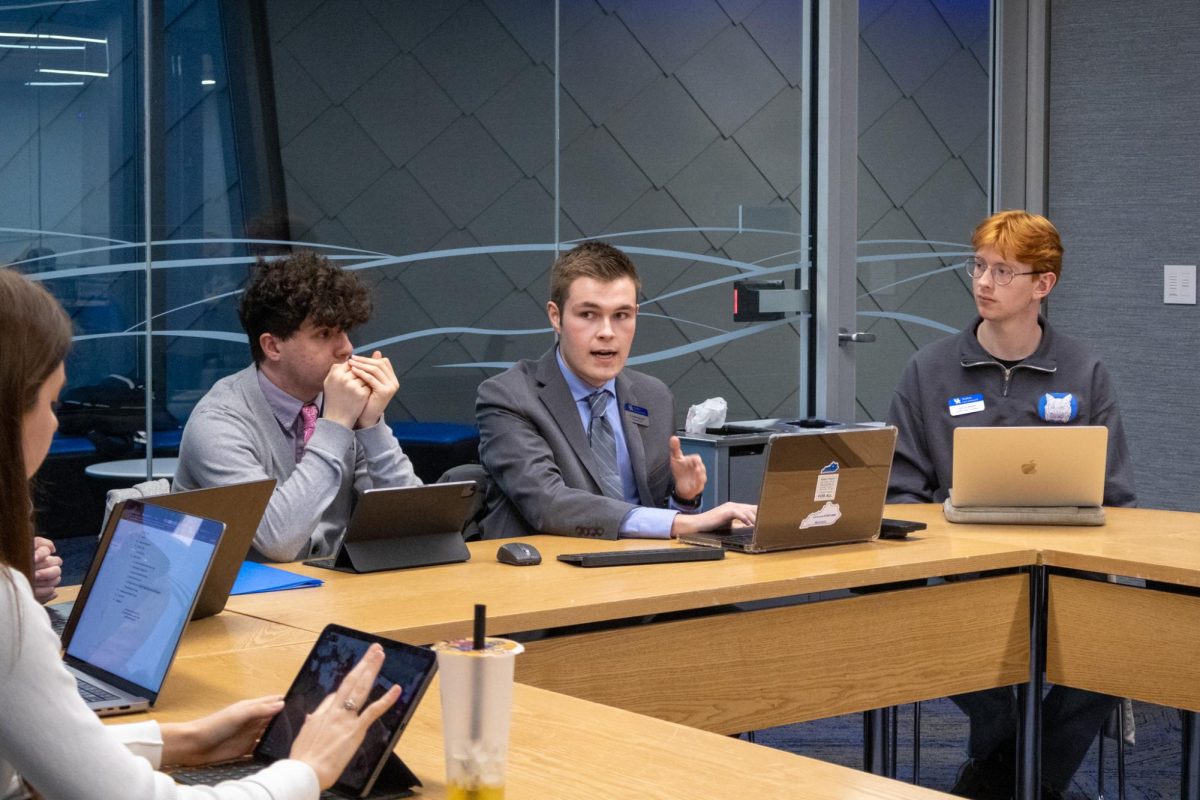
From the moment he discovered ASA, Renner said he fell in love with it. The club quickly became a major part of his college career, eventually even leading to his current role as president of the organization.
“I love being able to support people, give people a space that they can be their true, authentic selves without being looked at weird or judged,” Renner said. “And also not forget who they are or where they came from.”
Now as a senior, Renner said he hopes to leave his impact on UK’s campus through ASA and let future generations know there is a place on campus for them to find a community of people who look like them.
“Everybody is doing things, they’re going places,” Renner said. “We want to be able to show that the African population is small, but we’re mighty as well.”