







































































































Leaning over, whispering to his friend, Dan Wu asked, “Where did this crowd come from?”
In a quick whisper, his friend responded with something that would impact him in ways he never could have anticipated: “People have been waiting for this.”
Wu was only expecting friends and those personally invited to attend the first “Get HAAPI” celebration, an event he helped organize to honor Asian American Pacific Islander Heritage Month.
As the room they were in began to fill with eager eyes and hearts, Wu was puzzled. He questioned why and how so many people attended.
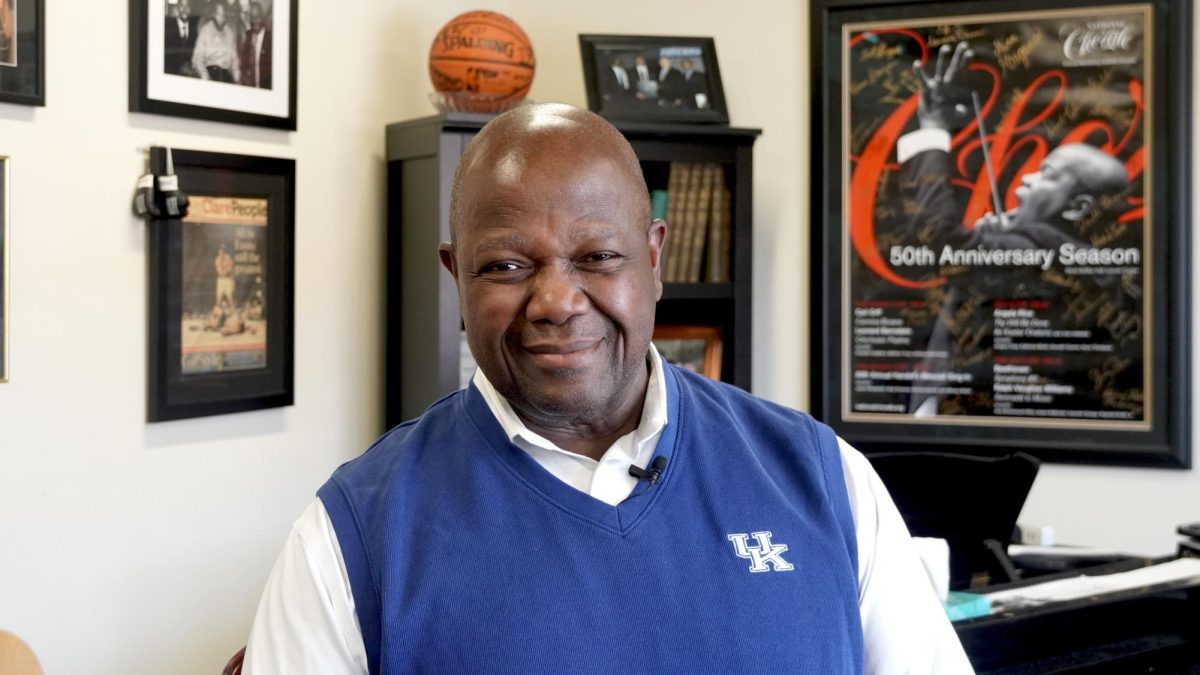
The need for representation has been a focal point in Wu’s life. From immigrating to the United States from China at just eight years old, to becoming an activist and Lexington’s vice mayor, Wu has long advocated for immigrants and Asian Americans.
“Forced to grow up a little bit faster”
Wu’s upbringing fueled his passion and understanding of the world, giving him a perspective other young people could relate to.
As a child, Wu translated forms such as medical bills for his parents, often taking on burdens and responsibilities meant for adults.
“I don’t remember how I felt about it, but reflecting on it, a lot of immigrant kids had the experience that I did,” Wu said. ”You’re kind of forced to grow up a little bit faster.”
After experiencing language barrier issues firsthand, Wu said he understands the importance of language access and strives to increase resources for both translation and cultural competency.
Despite emigrating from China as a child, Wu said he was unable to officially obtain citizenship until he was 20.
“That was back when there was a path to citizenship,” Wu said. “All the people today who are saying, ‘Well, you can come here if you do it the right way.’ There’s basically no right way.”
While some may describe the U.S. immigration system as broken, Wu said the word does not truly encompass the purpose of the system.
For the system to be broken, Wu said, it would have to have been built to work in the first place. However, this was not the case. According to Wu, the system was designed to exclude people and to keep people out.
“My parents and I would not be on the same path that we were in the ‘80s if we came here today,” Wu said.
Although he faced his own set of challenges when transitioning to life in the U.S., overall, Wu said he had a good life and upbringing.
However, Wu knew his parents’ experience was much more stressful, having to navigate adult responsibilities such as insurance, finding work and purchasing a car.
Having a family to provide for, Wu’s parents broke stereotypes typically associated with Asian immigrant parents, he said
“Somehow I dodged that, somehow I missed it,” Wu said. “They were not that way at all.”
As a child and teenager, Wu did not take part in activities or conform to the behavior he said was commonly expected of young Asians.
“I was not an ‘A’ student, I was not in the chess club, did not play violin . . . didn’t do all the stereotypical things,” Wu said. “I mean, they let me major in art in college, for God sakes.”
“Holding both cultures”
Confronting and defining his own understanding of racial identity, Wu said he challenged the stereotypes and narrow roles often imposed on Asian Americans.
While technically a first-generation immigrant, Wu said he identifies more closely with his second-generation counterparts, having spent much of his childhood and formative years in the U.S. with foreign-born parents.
Finding himself in a “nebulous, sort of Asian American space,” Wu described himself as a “third-culture kid” straddling two worlds, with one foot rooted in Chinese culture and the other foot rooted in his American upbringing.
“It’s this third space of holding both cultures, and I think it’s a really, really interesting space to be in,” Wu said.
Upon moving to San Francisco, Calif., after college, Wu said he found a community in this “third space.” Finally being able to embrace his identity, he was able to find a sense of belonging amongst people with similar experiences.
However, Wu said his identity, along with other Asian Americans, was often manipulated through the “minority myth,” ultimately dividing people of color.
According to Wu, the model minority myth paints Asian Americans as a “good minority,” separating their backgrounds from other minorities’ struggles.
“Our identity has been weaponized by white supremacy to say, ‘Well, we’re not racist, look at these nonwhite folks. They’re doing just fine. How come they’re doing fine? Is it because they’re better? They’re harder working?” Wu said.
Becoming more prevalent in the 1970s to 1980s, Wu said the model minority myth only further hurts people of color.
“The most powerful weapon that white supremacy has is pitting folks against each other,” Wu said. “If they can divide us into bad minorities and good minorities, then we’re fighting each other and not paying attention to the structural things that force us into this place.”
“This place is also mine”
Wu’s lived experiences served as a catalyst long before he was an elected official, stepping into a larger advocacy role in 2019 when he created “Belong Lex.”
A “hearts and minds campaign,” “Belong Lex” focuses on reminding people that Lexington is home to immigrants and refugees, according to Wu.
Wu said he was inspired to begin the campaign after the 2016 presidential election, when he said he realized he had to do something on a local level.
“A certain presidential candidate came down an escalator and said the most horrible things about immigrants,” Wu said. “That really kind of sunk into my head.”
So, as the negative narrative around immigration became more prevalent on the national stage, “Belong Lex” was born, using colorful signs and messaging to combat harmful sentiments.
“Belong Lex’s” slogan, “IMMIGRANTS & REFUGEES BELONG HERE,” was entirely intentional, according to Wu, who wanted the wording to reflect the fact that immigrants and refugees deserve to be in Lexington.
Originally, when coming up with the campaign’s slogan, the first draft, “immigrants and refugees welcome here,” was not enough, according to Wu.
“When you say the word ‘welcome,’ what you’re saying is, ‘This is my home. This is my home, but I’m allowing you to come in,’” Wu said. “When you say the word ‘belong,’ that means this place is also mine. It is your place, and it’s my place. I don’t have to ask you for permission. I belong here.”
Wu said the project served not only as a mirror for people like himself, but as a window for others to look into and realize the importance of immigrants and refugees in the community.
Whether it be a coworker, teacher or business owner, Wu said he wants people to see that immigrants are everywhere and belong in Lexington.
“Belong Lex’s” slogan can now be seen on yard signs decorating people’s lawns and on banners adorning the windows of prominent Lexington buildings, such as the Carnegie Center for Literacy & Learning, Wu said.
“Don’t limit yourself”
Activism is not the only passion of Wu’s, though. In fact, the vice mayor’s diplomatic career did not begin until 2022, when he first ran in the Lexington city council race and won.
Before becoming vice mayor, Wu was a chef, previously owning the restaurant Atomic Ramen.
Wu’s cooking even took him to reality television, where he participated in season five of the competitive cooking show MasterChef.
Wu also opened and ran a video store while living in New York after graduating from college, simply because he said he liked movies.
“It’s been a very weird, winding, nonsensical sort of career path, in a way,” Wu said.
According to Wu, his journey, filled with changes and uncertainty, shows that people do not have to have everything in their lives meticulously planned or figured out.
“I’m here to tell people: You can change your mind at any moment, you can pivot, you can turn, you can learn new things at any given moment,” Wu said. “Don’t limit yourself. Go, go where you need to go.”