






















































































































































A panel of guest speakers gathered at Lexington, Ky.’s Lyric Theatre to explore the cultural legacy of playwright August Wilson, setting the stage for a live production of his memoir the following night.
Wilson was a playwright known for putting African American stories into the theater world.
The event took place on Friday, Sept.12, and featured discussions of the value of including Wilson’s work in educational settings and the upcoming production of “How I Learned What I Learned.”
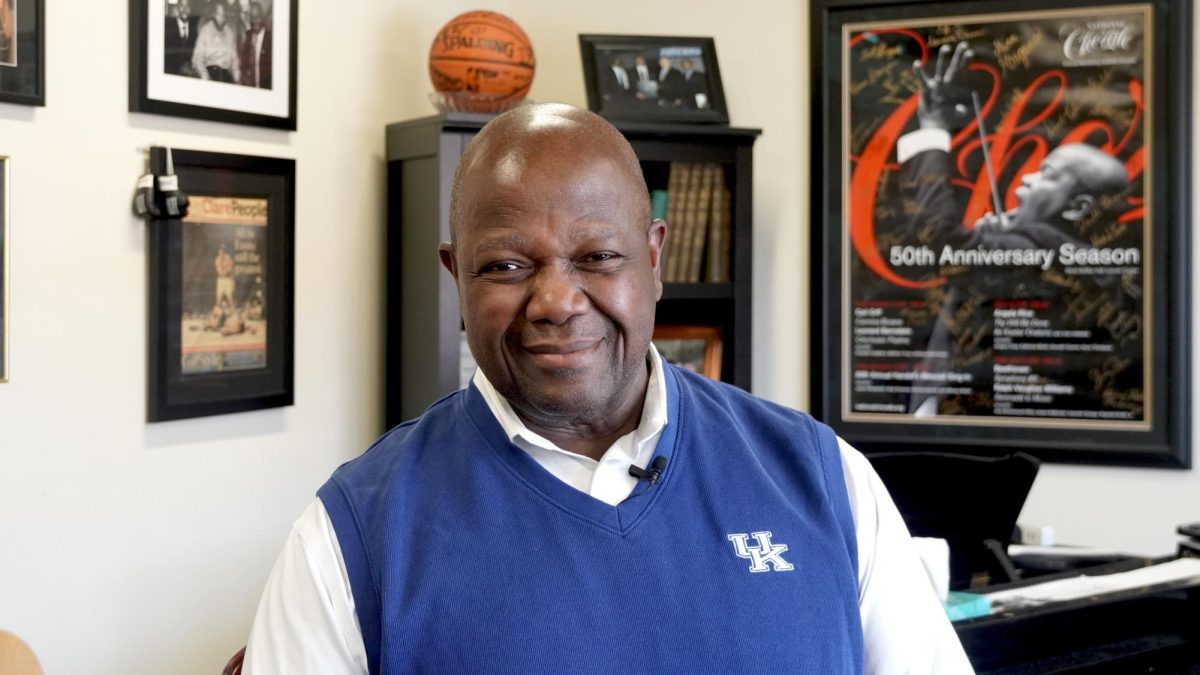
Frank X Walker, professor at the University of Kentucky and former Kentucky Poet Laureate, moderated the panel. He said the event was originally intended to celebrate Wilson’s birthday, but it ended up being transformed into an educational event.
“This particular event is targeted at educators hoping to get them more interested in potentially teaching August Wilson’s work and life in their classrooms,” Walker said.
Wilson’s works show the lives of African American characters and the histories that can be paired with them, said Walker. He died in 2005, according to Walker.
According to Walker, the play goes through the story of Wilson’s life and the obstacles he faced, such as dropping out of school, struggling through life and surviving it, and using those experiences to make art.
“I think you learn the importance of perseverance, you would learn the importance of understanding that whatever struggles you might experience as an individual,” Walker said, “That however bitter they are when you experience them, that may be something you can use as fodder later on for your art.”
Jeremy Gillette, assistant professor of acting at UK and star of the performance, said he is playing Wilson in the performance of the one-man play and memoir “How I Learned What I Learned.”
“So it takes us back to the fetal stages of Freddie Kittles (August Wilson’s given name).” Gillette said, “That’s when the name wasn’t fashionable, but that is where the stories were developed. That is where beauty was created, down in the soil, down in the dirt.”
One of the biggest ways Wilson was able to impact Gillette was by bringing African Americans to the stage. While he was in school, there weren’t a lot of characters that represented his experiences in theater, according to Gillette.

“It means that all the work that I’ve been working on for all this time has led me to this moment, that this moment has not been built over a period of days or weeks.” Gillette said, “It is really a decade worth of pouring into my heart, myself, my vision, and aligning it with others who have some of the same passion for August Wilson to spread the word of his work.”
Walker felt represented by Wilson’s works, too. One of his favorite plays by Wilson is “Fences” due to the father-son dynamic, as he is a father and a son himself, and being able to see them go through their journeys and obstacles is moving for him.
“We were inspired by the fact that he was writing about lives that our lives fit into, and regular people,” Walker said, “I would say his work gave me permission to continue telling my own family story, and the quality of it helped me set a standard of excellence.”
The performance will take place on Saturday, Sept. 13, at 7:30 p.m. The production also took place on Wednesday, Sept. 10 and Thursday, Sept. 11, for high school students in the region and UK students, according to Walker.
Sandra G. Shannon, professor emerita in the English Department at Howard University, said she was close to Wilson and hopes this production will show people his works are worth studying.
“Having observed how passionate he was in writing 10 place and finishing it,” Shannon said, “It sort of became contagious to me to realize that I had a purpose and I had a mission as a scholar, to make sure that his works got into classrooms, and I did so through my publications.”
According to Shannon, his works demonstrate the building blocks of presenting African American stories on stage and she believes they teach empathy and understanding.
“One of the prevalent things was that we need to know our history,” Shannon said, “That we cannot go forward unless we go back and at least acknowledge from whence we came. That’s a thread that sort of runs throughout all of his work.”