

















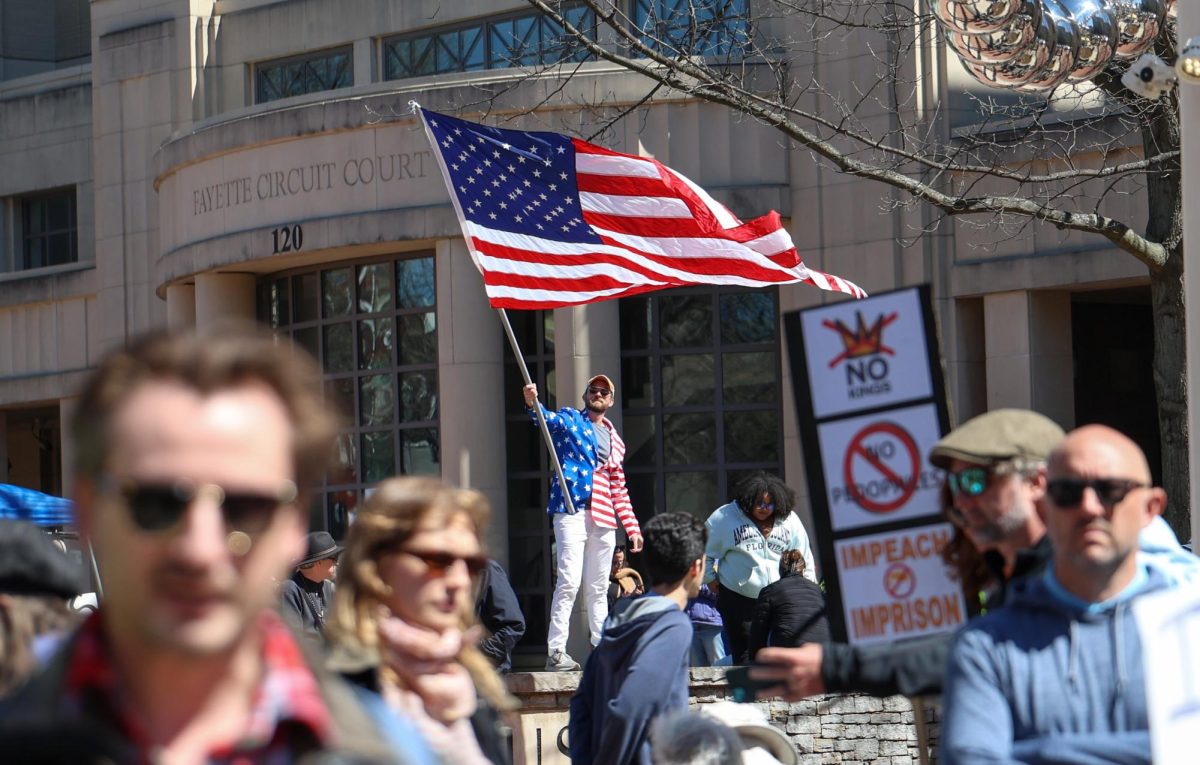


























































































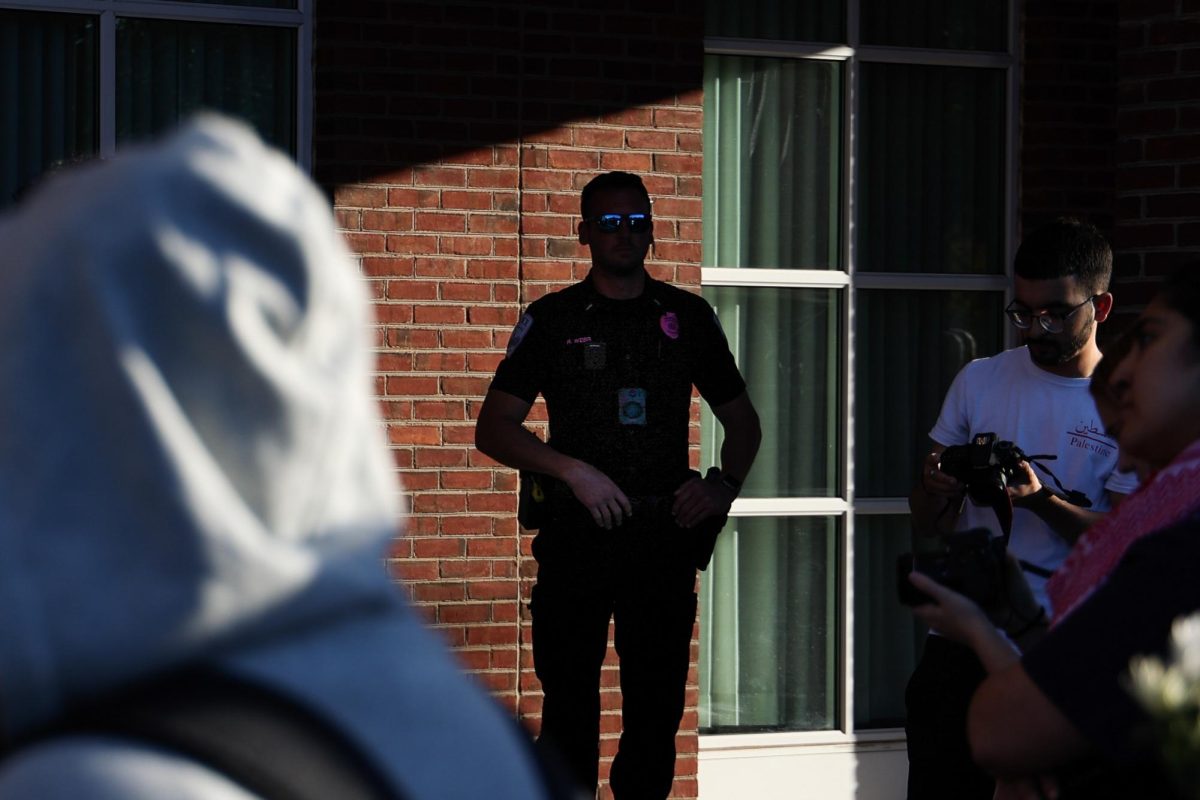




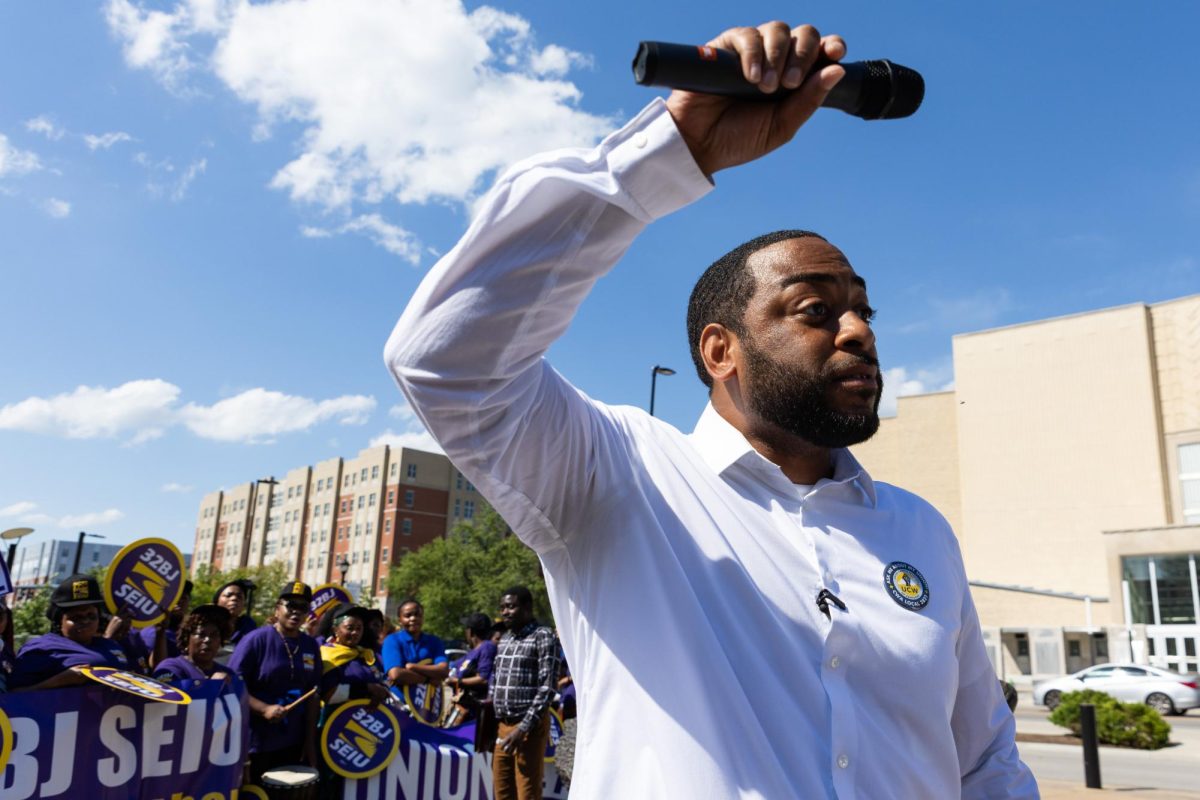





























Over 100 people gathered at the Fayette County District Court to honor the passing of Civil Rights leader John Lewis through a peaceful protest and silent march.
On Thursday, July 17, nationwide protests commemorated the fifth anniversary of the death of John Lewis, who died in 2020 at the age of 80 after being diagnosed with pancreatic cancer.
The “Good Trouble: Lives On” event sought to inspire a new generation of activists to speak out against injustices caused by the Trump administration, following in Lewis’ footsteps during the civil rights movement, according to Peaceful Bluegrass Resistance president Craig Blair.
“Something we’re seeing with this administration right now, they are just gleefully dehumanizing people, putting people in cages,” Blair said. “It’s that type of dehumanizing behavior that we want to highlight.”
The event, organized by the Peaceful Bluegrass Resistance and the Kentucky Action Coalition, featured a silent march stretching across downtown Lexington, live music and a series of speakers, including Lexington NAACP president Whit Whitaker and Bryan Station High School teacher Rian Davis.
John Lewis was a congressman and one of the Big Six civil rights activists who led over 600 protesters in the Bloody Sunday march in Selma, Alabama, according to the Associated Press.
Blair said Lewis was a valuable role model for all activists, having worked side by side with Martin Luther King Jr. to establish a nonviolent form of resistance, calling it “good trouble.”
According to Blair, good trouble is about respectfully calling out civil injustices. In light of the Trump administration’s actions towards immigrants through the United States Immigration and Customs Enforcement, he said it is essential to speak up civilly.
“When you see something, stand up, but do it in a way that’s respectful,” Blair said. “We feel like we’re the humanity to their dehumanizing efforts.”
According to Blair, the “Good Trouble: Lives on” protest was created not only to fight back against the government, but to let locals know they are not alone and can take action.
“If you’re sitting there and you’re seeing the atrocities that this administration is committing … there’s no reason to feel hopeless,” Blair said. “You can always come out, take action, and right now, that action is protesting and organizing.”
Speaker and president of the Lexington NAACP, Whit Whitaker, said following Lewis’ blueprint of good trouble means never staying silent in the face of adversity.
According to Whitaker, necessary trouble, such as protests or speaking up to those in power, is what creates change in a society, and Lewis was a foundational voice in creating that ideal.
“He (Lewis) encourages everybody to understand that good trouble is a good thing,” Whitaker said. “Look at what we do as necessary trouble and good trouble to create change in this country and create change to improve and better this democracy and make this country a much better place.”
Speaker and lead organizer for Kentuckians for the Commonwealth, Tayna Fogle, said that watching John Lewis continue to fight for years despite society constantly beating him down inspired her to take a stand and not give up on herself.
Fogle said she was incarcerated for 10 years and believed she would never amount to anything after her release. However, after seeing figures like Lewis, she said she recognized her mission to help ex-felons thrive and become integral members of society.
“I looked at the struggle and what he was willing to endure, the beatings and even being thrown in jail,” Fogle said. “I’m like, that is what I want to do because it’s to show our children and our grandchildren the struggle and the fight is worth it.”
According to Fogle, now is the time for change, and she hopes to create a better world for her grandchildren and great-grandchildren.
“I’m watching history unfold, and nothing is going to stop us, even when they pass these terrible policies and put terrible things into the legislative system,” Fogle said. “It still won’t stop us, we will not be silenced, and we won’t turn back.”