











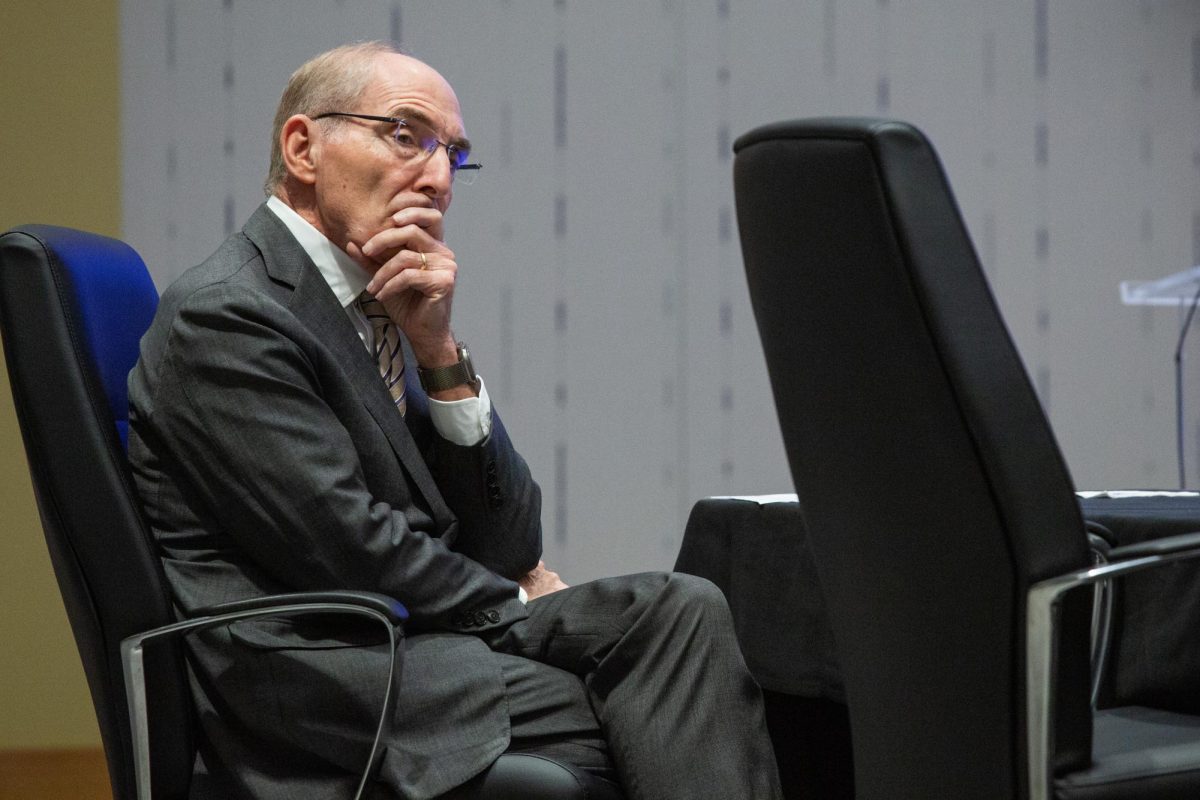





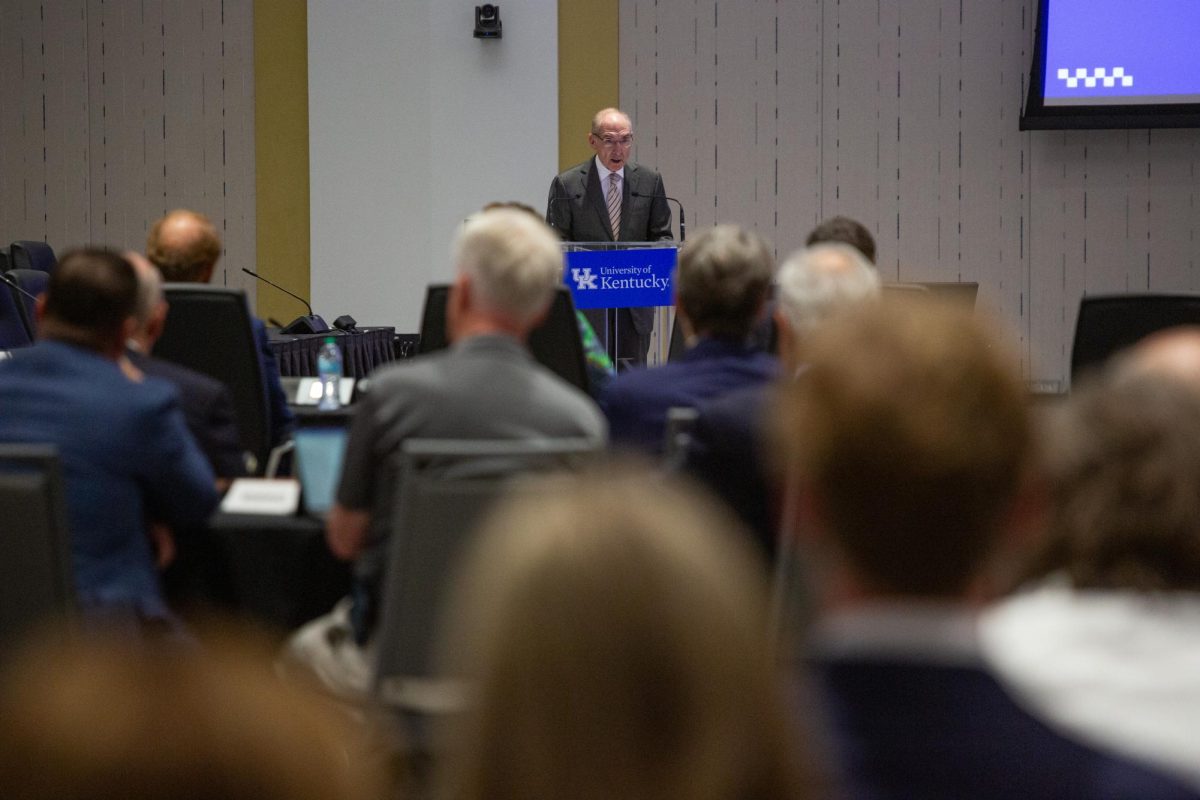

































































































University of Kentucky Provost Robert DiPaola shared the circumstances behind the decision to appoint the new dean for the J. David Rosenberg College of Law during the Board of Trustees committee meetings.
After going through the meeting’s agenda, DiPaola gave a presentation on the choice to pick Gregory F. Van Tatenhove to be dean of the College of Law at the Academic and Student Affairs Committee Meeting on Thursday, April 23.
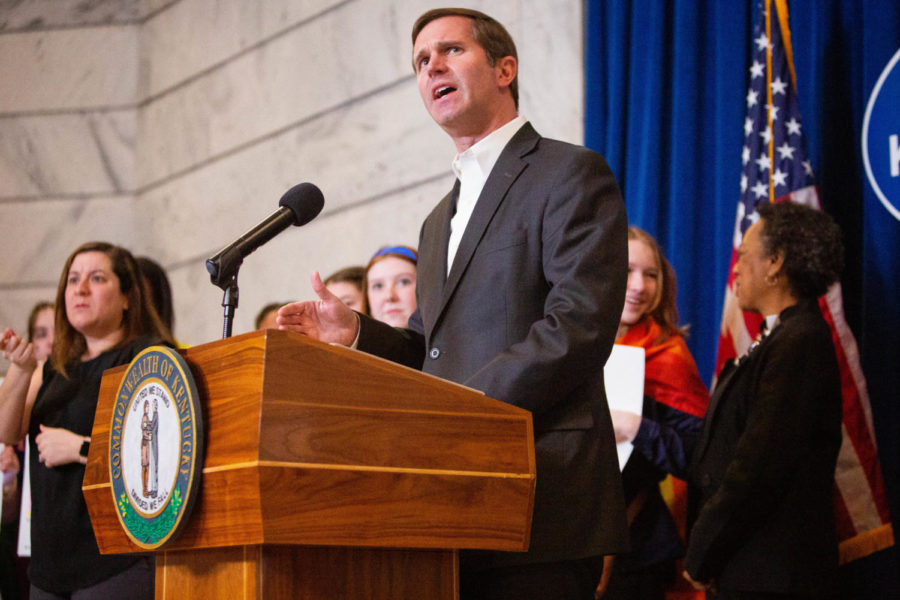
On April 21, Gov. Andy Beshear criticized Van Tatenhove’s appointment, citing concerns that Van Tatenhove was not recommended by law school faculty and that “partisan and undue outside influence” played a role in the appointment, according to former Kentucky Kernel reporting.
In his presentation, DiPaola outlined the search process for an upcoming dean of any college within UK.
According to DiPaola’s presentation, the dean search process unfolds over 119 to 187 days and takes place through four stages.
“How we select academic leadership at the University of Kentucky … is a consistent, institution-wide process we use to ensure rigor, fairness and accountability,” DiPaola said. “We don’t just go through the whole process and then wait til the end and then synthesize it. There is back and forth input all along the process.”
The process of selecting a dean adheres to three main principles, DiPaola said: To adhere to the integrity of the process, the needs of the institution and the responsibility to prepare graduates.
DiPaola’s presentation said Van Tatenhove’s appointment process began on Aug. 25, 2025, and input from multiple groups regarding the candidate was received all throughout the process.
A search advisory committee is formed whenever a college is seeking a new dean, DiPaola said. The committee for the College of Law contained seven faculty members, two staff members, two co-chairs, two students and one alumni.
“That group was set up so that they have balance in terms of representation, and I keep coming back to them,” DiPaola said. “We can do due diligence, even along the process.”
After a number of interviews, DiPaola said a public forum is held so that all groups can give feedback and any concerns can be expressed. Afterward, the candidate’s references and social media are checked.
DiPaola said he heard there were concerns about Van Tatenhove, those concerns being that Van Tatenhove was “not an academic” and his qualifications may raise issues with the American Bar Association’s (ABA) law school accreditation standards.
Due to the concerns, DiPaola said he contacted 10 College of Law faculty members to understand their concerns and whether they would support Tatenhove should he become dean.
Citing ABA standards, DiPaola said the three main concerns were that Van Tatenhove may not have enough academic credentials to receive tenure, that the faculty was meaningfully involved in the selection process and that the faculty objected to Van Tatenhove’s appointment.
DiPaola said he received a letter from two College of Law faculty members stating a majority of the faculty had the same concerns over Van Tatenhove, DiPaola said the concerns were addressed.
“Sometimes (faculty) agree, sometimes they don’t agree, but they have input. Every bit of input was considered very seriously, including enough that when there were some concerns we did more due diligence in the process to really sort it out,” DiPaola said. “Their concerns were addressed.”
DiPaola said Van Tatenhove’s appointment is in compliance with ABA standards because many allow for exceptions during “extraordinary circumstances,” which DiPaola believes exist in the College of Law.
DiPaola cited budgetary pressures and rising costs as part of the circumstances the College of Law is facing.
“I think we know that the general funds we receive at the University of Kentucky have not gone up, if anything they’ve gone down. We don’t expect them to go up, we need to prepare,” DiPaola said. “It’s really important to have someone who has the executive skills to bring people together and navigate that.”
Additionally, DiPaola said the College of Law has to navigate how artificial intelligence is changing the legal profession. He said Van Tatenhove has the executive skills to handle it, along with the ability to bring in financial support for the College of Law.
“I can tell you we have a consistent process. It’s rigorous, consistent and compliant,” DiPaola said. “The established process was followed with meaningful faculty involvement and meaningful involvement by many other groups … the decision reflects the moment the institution and college is in. Financial, workforce, technological and reputational pressures place the college at a critical inflection point.”
DiPaola said he is confident that Van Tatenhove will get the support of the faculty in the College of Law.
Van Tatenhove said he has been more focused on his work than any controversy from the recent statements made by Beshear.
“I’ve been in public life a long time, there’s always a lot of noise around public positions,” Van Tatenhove said. “I’ve had great conversations so far with faculty who had strong disagreement in what they thought was the best profile for the university, but they’ve been instructive.”
Beshear raised concerns about Van Tatenhove’s connections to Republicans and partisan influence in the selection process.
“My job descriptions include the requirement that I stay out of partisan politics and I’ve adhered to that carefully,” Van Tatenhove said. “I don’t think deans ought to be viewed as partisan, they speak for the university community, the College of Law community, which includes folks from a lot of different backgrounds so my goal is to build relationships with everybody.”
DiPaola said to the best of his knowledge, no donors have contacted UK since Van Tatenhove’s appointment.