




























































































































































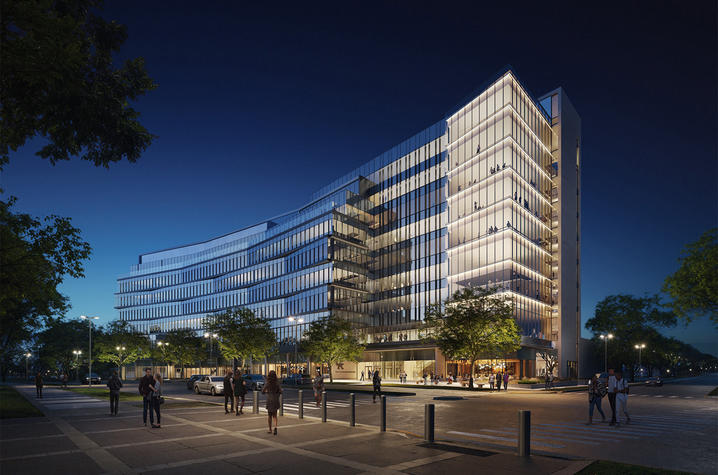
Construction of the Michael D. Rankin MD Health Education Building, opening in late 2026 or early 2027, aims to nearly double enrollment capacity in health care-related colleges, Robert S. DiPaola said.
According to DiPaola, the University of Kentucky’s co-executive vice president for health affairs, the Health Education Building’s facilities are expected to bring the following enrollment increases:
- The College of Health Sciences, 30%
- College of Medicine, 44%
- College of Nursing, approximately double in capacity
- College of Public Health, about 50%
The Health Education Building will consolidate the colleges of Public Health, Nursing, Medicine, Health Sciences and the Center for Interprofessional and Community Health Education to South Campus, according to DiPaola.
More than 7,600 students at UK were enrolled in health-related colleges in 2025, according to UKNow.
“What this is going to allow for the College of Medicine, Nursing, Public Health and Health Sciences, not only are they in the same building, but that building is co-located near the cancer center, the hospital and near some of the other medical-related facilities, and even one of the research buildings,” DiPaola said.
According to DiPaola, the aim of consolidating UK’s healthcare colleges next to the hospitals is to create a sort of medical district on campus.
DiPaola said this addition is important for training and makes it easier for students to have classes and work at the hospital.
These increases, additions in construction and the consolidation of health care colleges to South Campus are for the purpose of advancing health care provisions in Kentucky.
Part of these major renovations to South Campus will include the Albert B. Chandler Hospital, which would expand on the block ranging from University Drive to Hospital Drive, according to Kevin Locke, UK’s associate vice president of planning, design and construction.
“We’re trying to do things to help our partners throughout the state, well, our partners also include other hospitals that need health care workers,” DiPaola said. “We will get to the point of literally doubling the number of nurses that we train each year so that we can help with that pipeline as well.”
Detailed below is what the Health Education Building itself will include, according to DiPaola:
- Smaller classrooms built for group work
- Multidisciplinary conference rooms
- Atrium/relaxation areas
- Simulated classrooms
- Offices of deans and instructors
DiPaola said the Health Education Building allows for a more efficient delivery of educational programs to other campuses, prioritizing opportunities for students to practice health care in-state and representing different strategies for helping Kentucky.
“A great example of that is the rural Physician Leadership Program in Morehead,” DiPaola said. “And what we’re seeing is the students that tend to graduate from there, or I should say, the students that graduate from there, tend to want to do their residency there and have a greater likelihood of even practicing in more rural regions.”