




















































































The University of Kentucky has declined to publicly release specific reasons for flagging individual organizations during an Office for Civil Rights investigation, a decision that has drawn criticism from faculty, a media attorney and community partners.
UK publicly released a list of 1,249 flagged organizations on Dec. 9, but did not include descriptions of those relationships or explanations for why each was selected, despite an Office for Civil Rights reporting requirement calling for that information to be submitted within 60 days of the resolution agreement.
The report said UK flagged organizations for “cancellation/deeper review” if their names/former names referenced protected identities, their public materials or programming suggested identity-based participation/preferences, or their leadership, employment, training or DEI-related activities appeared to limit eligibility based on race or other protected characteristics.
However, the report did not specify which criteria any individual organization met.
Ashley Smith, founder of Black Soil KY, UK alum and partner of the College of Agriculture for nearly eight years, said that despite numerous attempts via emails and an open records request, she has not been able to determine exactly why Black Soil was flagged.
“So I want to see what other justifications they’re being able to lift up to continue identifying, like, ‘Hey, you know, this is why we’ve put you on the list,’” Smith said. “So we’ve asked, and they cannot give a reason why they’ve placed us on the list. The word Black is not illegal.”
Had UK released the description of its relationship with Black Soil as requested by the OCR, she said she may have been able to answer this question.
The Office for Civil Rights report publicized by UK partially omits “Reporting Requirement 1” of the OCR resolution agreement, which explicitly calls for the report to include:
- Descriptions of each listed organization
- The nature and purpose of every partnership or membership
- Whether the university intends to discontinue each one and, if not, an explanation for continuing the relationship
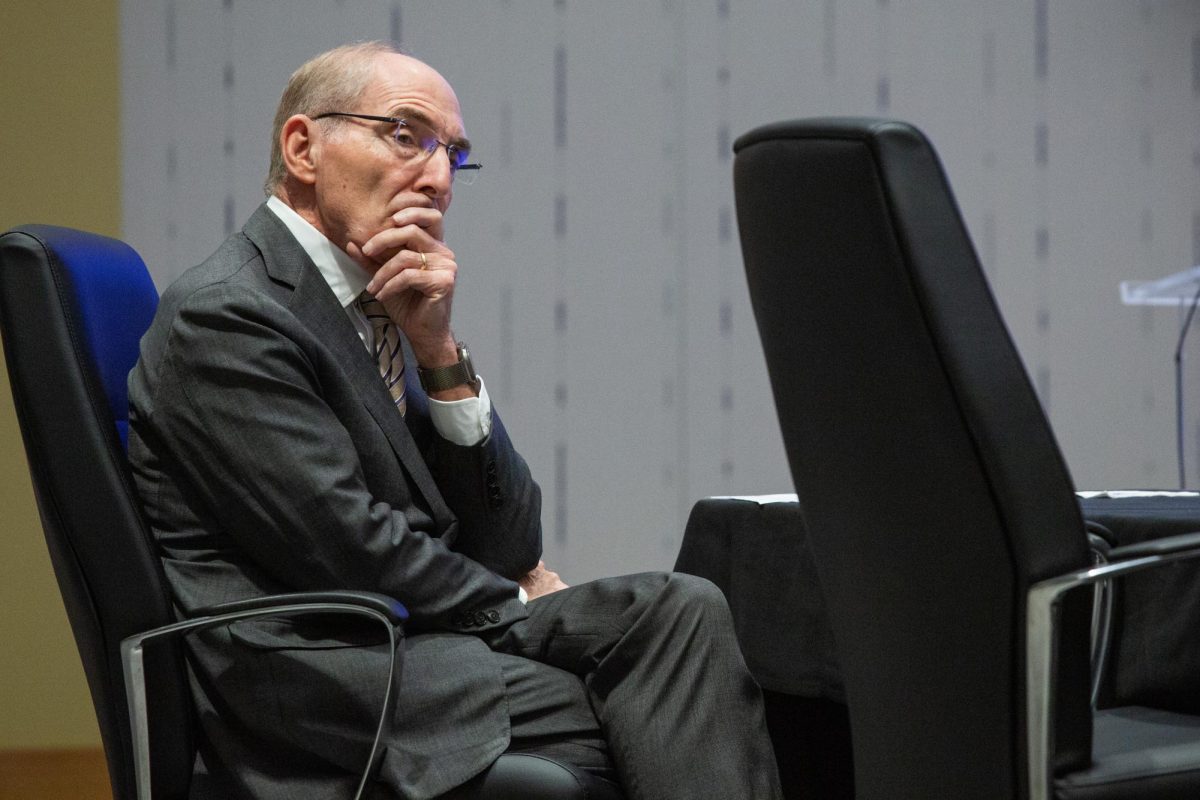
The report shared with the campus community by UK President Eli Capilouto provides only a list of the organizations’ names and statuses.
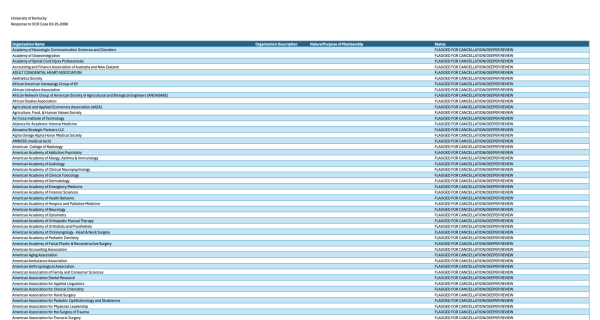
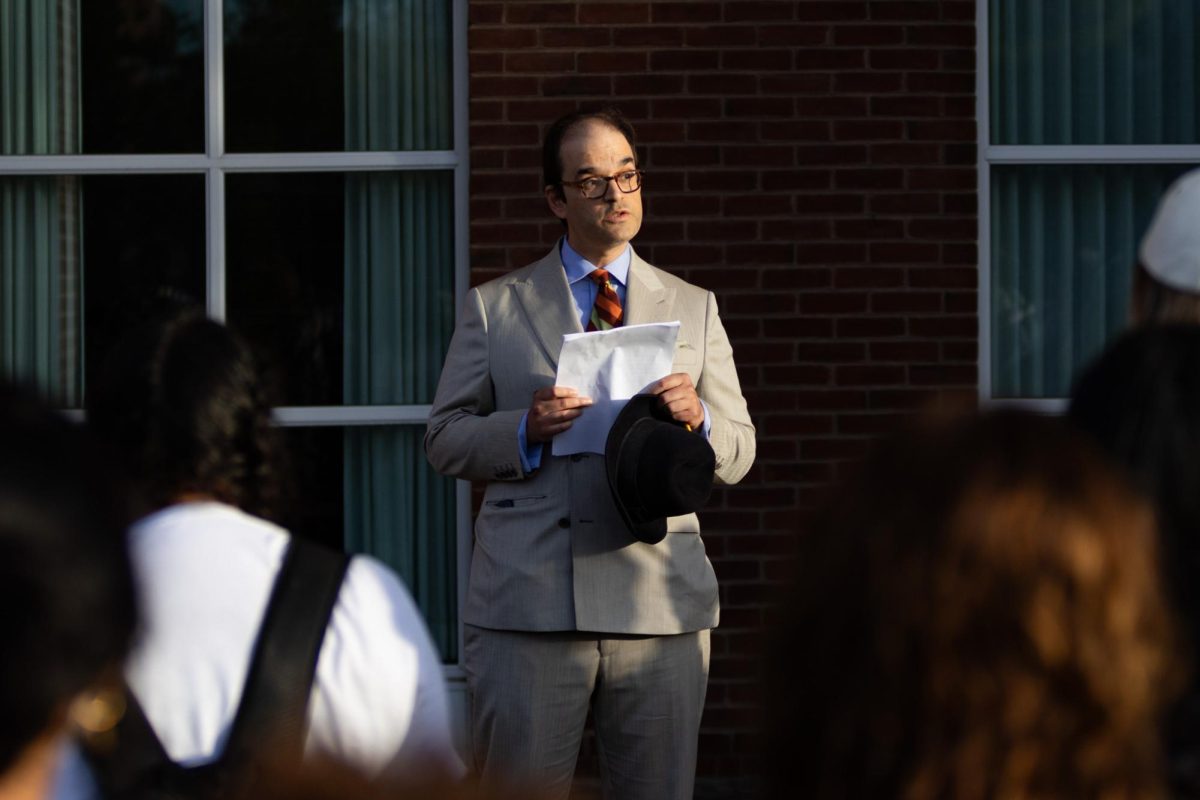
Hayward Wilkirson, executive director of flagged local organization The Kentucky Theatre, noted the potential consequence for UK not communicating reasons for relationship termination with financial partners, saying it could be grounds for legal action.
“For us, it would be a cultural impact. For some entities, it could represent real financial harm, which is actionable,” Wilkirson said, “And someone may say, ‘You’re causing financial harm. We want full discovery. We don’t know what parameters you’re using that now mean we cannot be in a business relationship with you.’”
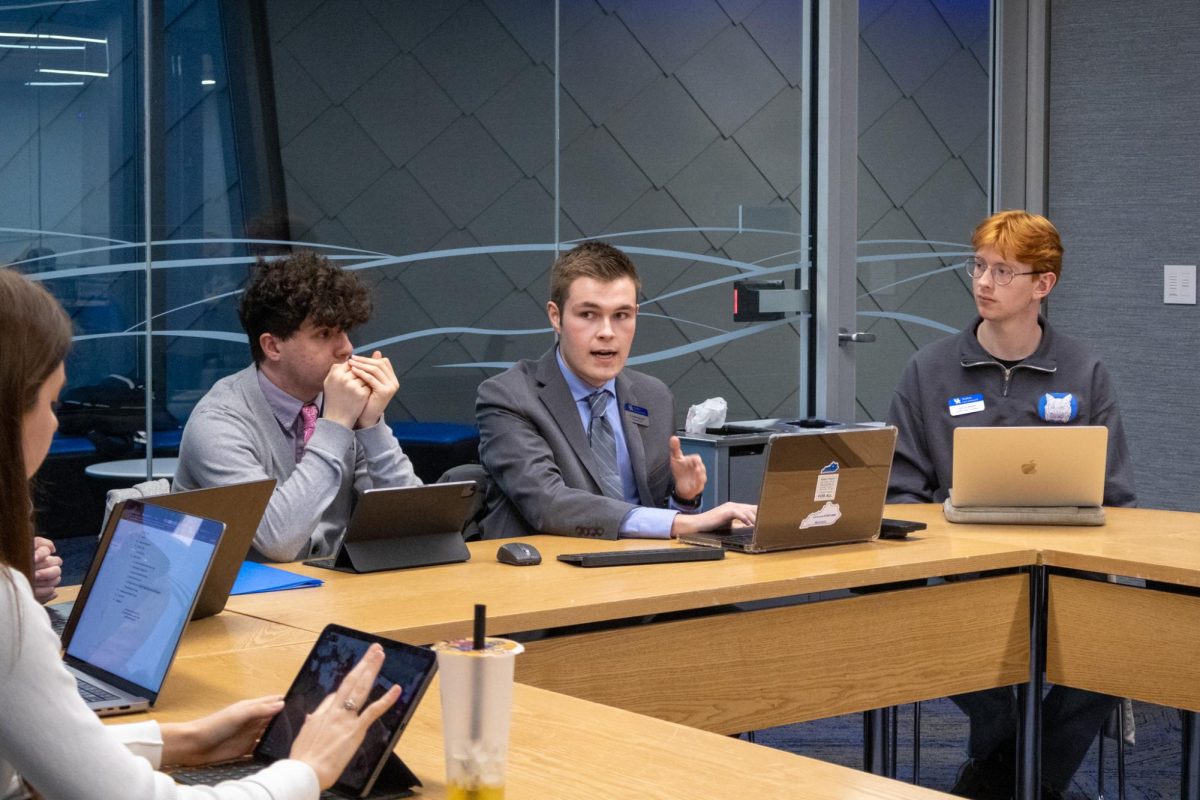
At a faculty senate meeting on Dec. 15, one faculty member asked if UK provided “the reasons for why we flag these for cancellation or review” to the OCR and if those reasons would be made publicly accessible.
“I cannot tell you if they were or weren’t,” Christine Harper, associate provost for academic relations, said. “I can tell you what was sent to them, what was posted that was sent to them. I’m getting out of my depth here in terms of that, because what was posted is what I can share.”
She said any arguments for organizations to maintain a relationship with UK and reasons why an organization was flagged are protected from public view under “attorney–client privilege,” which exempts confidential legal communications from disclosure.
“That would all be under attorney–client privilege,” Harper said. “So, what you saw (in the public report) would be things that are not under privilege, other things that were collected for the rationale.”
The faculty member asked if that would make UK the “client” and who from UK would have access to that “conversation/information.”
“I’m in a place where I don’t feel comfortable answering questions because it would just be conjecture on my part,” Harper responded.
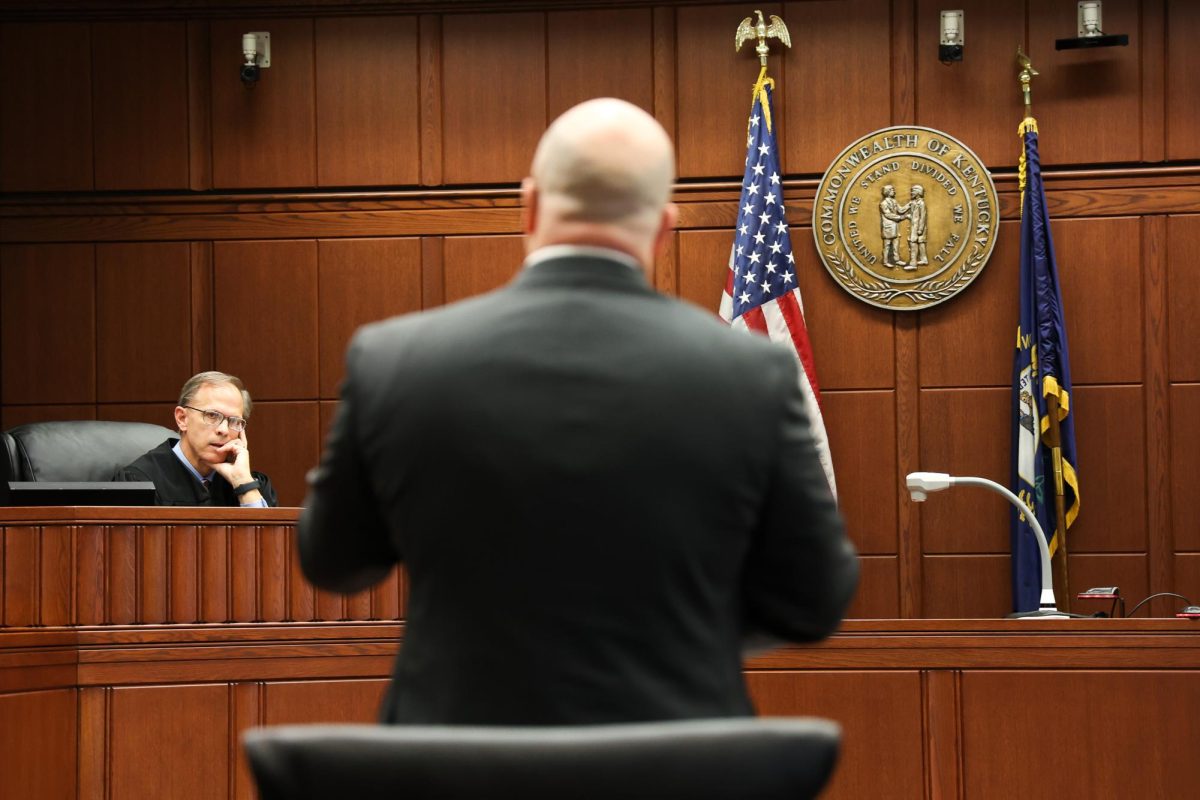
Media attorney Michael Abate challenged UK’s use of the attorney-client privilege exception, arguing the information was no longer protected if it had been shared with the federal government.
“It raises serious questions for the University to claim privilege over portions of a report it shared with a third party—in this case, the government,” Abate said in a text. “Attorney involvement in something does not make it automatically privileged, and sharing it with someone else typically waives any privilege. It’s not clear how the university thinks it can withhold this information from the public”.
The Kernel submitted an open records request to UK for the full report submitted to the Office for Civil Rights on Dec. 8, the day before Capilouto’s email.
The Open Records Office provided the same report as was in the email on Dec. 10. The Kernel responded, asking about the missing requirements, and was referred to Capilouto’s campus message from Oct. 1, in which UK first announced the resolution agreement.
This message linked the agreement, including Reporting Requirement 1, but did not explain its exemption from the OCR report Capilouto released on Dec. 9.
“If the federal government gives us its stance and we violate it, we run the risk of not being able to have any federal funding, whether that be research or student aid,” Harper said at the faculty senate meeting. “As the president has said in a number of these situations, we will continue to follow the law and do the best that we can to argue the case, and I think that’s what we are doing right now. “
In addition to raising questions about why specific groups were flagged, faculty members expressed frustration and concern regarding potential disruptions to their involvement with professional societies on the flagged list, specifically as it relates to promotion and tenure requirements.
A faculty member went on to request “a transparent dialogue” between the university and faculty, suggesting Zoom or a “town hall format for faculty to hear the process” and “talk about concerns or questions that they have” as the investigation continues.
“I can’t speak to that, but I can certainly raise that,” Harper said.
Smith, who listened to an audio recording of the meeting from a faculty member present, said she has received similarly evasive responses from university leadership.
“It’s easy to state everything is either preliminary or direct you to a frequently asked questions list that doesn’t answer the question. Everything is just really up in the air, and that’s really not a way to lead,” Smith said. “Leaders have to press through with concrete decisions. You still have a duty to those who are your constituents. A lot of I don’t knows are being given right now, and that’s just not satisfactory.”
Harper told attendees at the faculty senate meeting the timeline for the OCR investigation remains unclear.
“There will be a review once we hear back from the federal government, but we’re in a pause right now,” Harper said. “We submitted the response that was required, and now we are going to pause.”