


























































































































As the government shutdown enters its second month, questions remain about how long federal programs can operate without funding and what that means for college students who rely on them.`
What is a government shutdown and when did it happen?
The shutdown began on Oct. 1, after Congress failed to pass a budget agreement to fund government operations.
When this happened, agencies without approved budgets were forced to halt nonessential functions, which caused funding for several programs, including the Supplemental Nutrition Assistance Program, to become uncertain.
As of Wednesday, Nov. 5, the shutdown is now the longest in U.S. history, surpassing the 2018-19 shutdown during President Donald Trump’s first presidency, which lasted 35 days, according to Congress’s website.
As the shutdown continues, its impact has extended beyond federal employees to millions of Americans who rely on federal benefits for their food and other necessities.
According to CBS, 42 million Americans lost food stamp benefits on Nov. 1.
SNAP, formerly known as food stamps, provides monthly grocery assistance to low-income individuals and families, according to Kynect.
The U.S. Department of Agriculture oversees the program, CBS reported, which supports more than 555,000 Kentuckians or roughly 12% of Kentucky’s population.
SNAP benefits
The New York Times reported that, while a federal judge ruled the Trump administration must continue paying for food stamps during the shutdown, it is unclear when, or if, food stamps will reach the Americans who rely on them.
In response to possible SNAP interruptions, Kentucky Gov. Andy Beshear declared a state of emergency on Oct. 31.
According to an executive order signed by Beshear, $5 million in emergency funding from the state’s budget reserve trust fund was directed to Feeding Kentucky food banks.
“While the Trump administration said it couldn’t fund SNAP during the shutdown, two federal judges just said it can and should,” Beshear said in the press release. “It’s my job as governor to stand up for Kentuckians, and I am thankful today’s rulings were in favor of helping the more than 40 million Americans and almost 600,000 Kentuckians, many of whom are children, access benefits that will provide them food and prevent hunger.”
As of Friday, Nov. 7, the Supreme Court has temporarily halted the order that would have required the Trump administration to fund food stamps during the shutdown, according to the New York Times.
The ruling could have a ripple effect for college students, as a 2023 study found that 46% of University of Kentucky students were classified as food insecure, with 15% utilizing food assistance programs on campus.
The same study found that 7% of those students reported receiving SNAP benefits.
How does this affect students?
UK last issued an update about the shutdown on Sept. 30, the day before it began, via a campus-wide email.
“We expect a government shutdown that is short in duration to create minimal disruptions at the university,” UK President Eli Capilouto said in an email. “The impact of a prolonged shutdown will depend on many factors, including the length of time until a deal is reached in Congress and contingency plans for the agencies impacted.”
The “Monitoring Federal Changes 2025” website directs students with questions to [email protected].
The email referred the Kentucky Kernel to statements made on the “Federal Government Shutdown Frequently Asked Questions” website, where there is now a section about SNAP located under “other critical services to note.”
According to UK spokesperson Jay Blanton, the university is taking steps to assist students who could be affected by the shutdown.
“The University of Kentucky has long provided resources to support students’ basic needs through ongoing programs designed to help students facing financial hardship,” Blanton said.
Those programs include the Emergency Basic Needs Fund, Big Blue Pantry, the Swipe Ahead meal donation program, ONE Cafe and Campus Kitchen, according to Blanton.
The university is continuing to monitor the shutdown’s effects, Blanton said.
“As for the other sectors of the institution, at this point, it remains the case that the impact of a federal shutdown thus far has been minimal,” Blanton said via email. “We are, of course, continuing to monitor these issues and will keep the campus informed if and when that changes.”
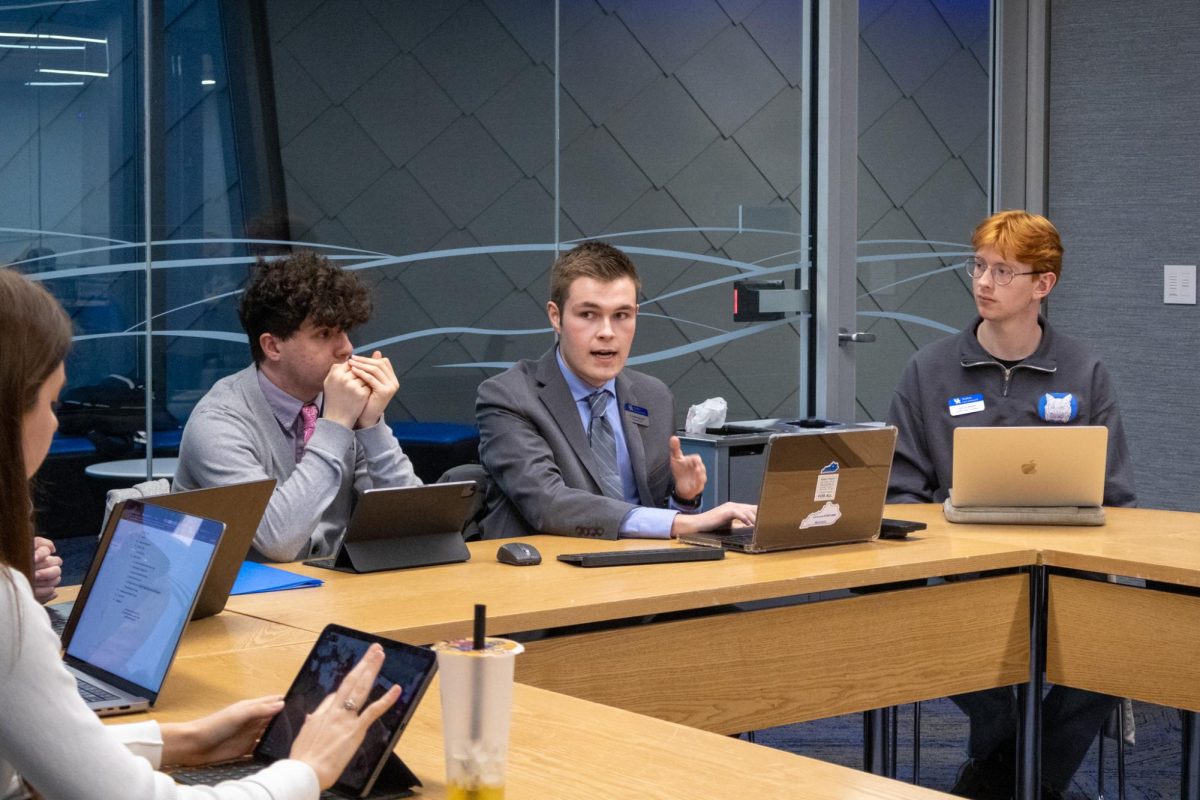
UK’s Young Communist League, along with other student organizations, is working to collect physical and monetary donations through a GoFundMe to “help support Lexington’s fight against hunger.”
According to Sophia Landfield, a junior majoring in sociology, gender and women’s studies and history, and vice chair of UKYCL, the GoFundMe has a goal of $1,000, and has already raised $200.
Landfield said that any leftover money will be donated to organizations in Lexington that work to combat food insecurity.
“With the onset of the government shutdown and people’s SNAP benefits being at risk and now frozen,” Landfield said. “We were thinking about how we can help people during this time.”
Landfield also said the SHARE Center is a resource that provides free groceries and freshly grown food in addition to FoodChain and Lighthouse Ministries.
“Even outside of how this (the shutdown) affects us, which it does,” Landfield said. “There are a multitude of reasons why we should care about things that don’t affect us as well.”Students facing food insecurity can find more information here.