

















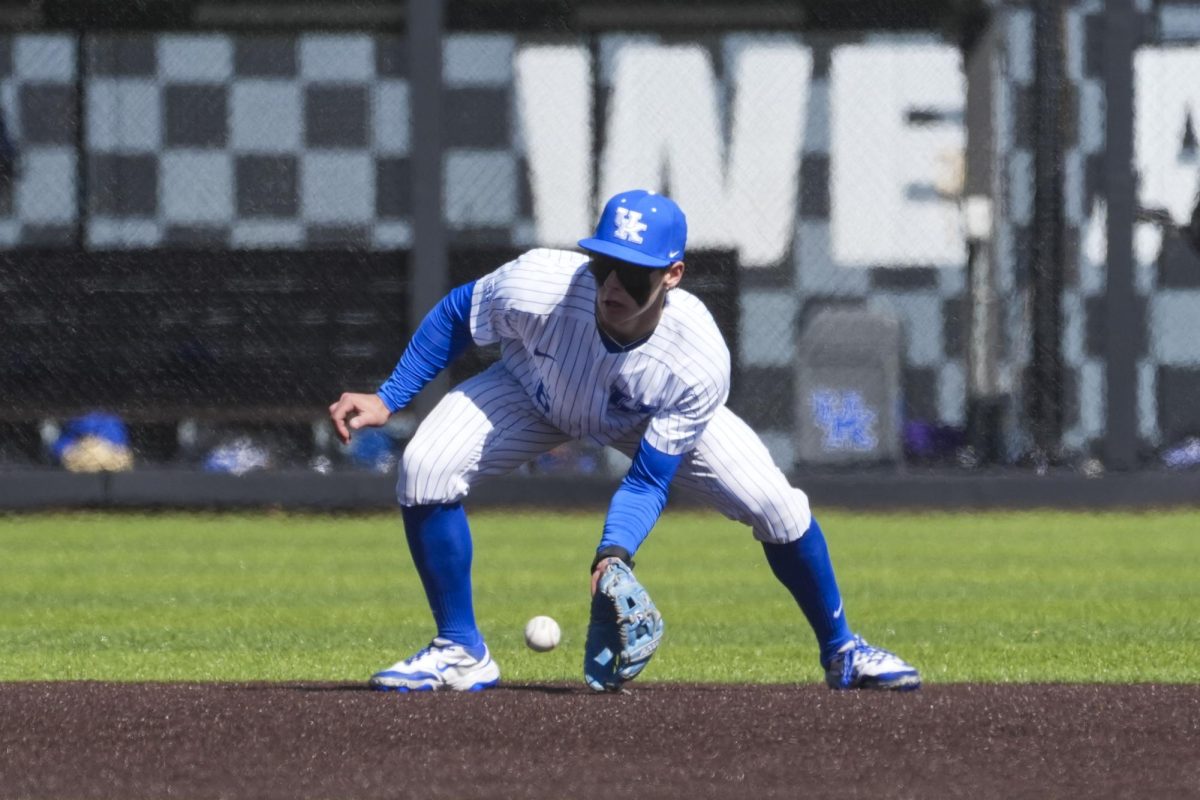








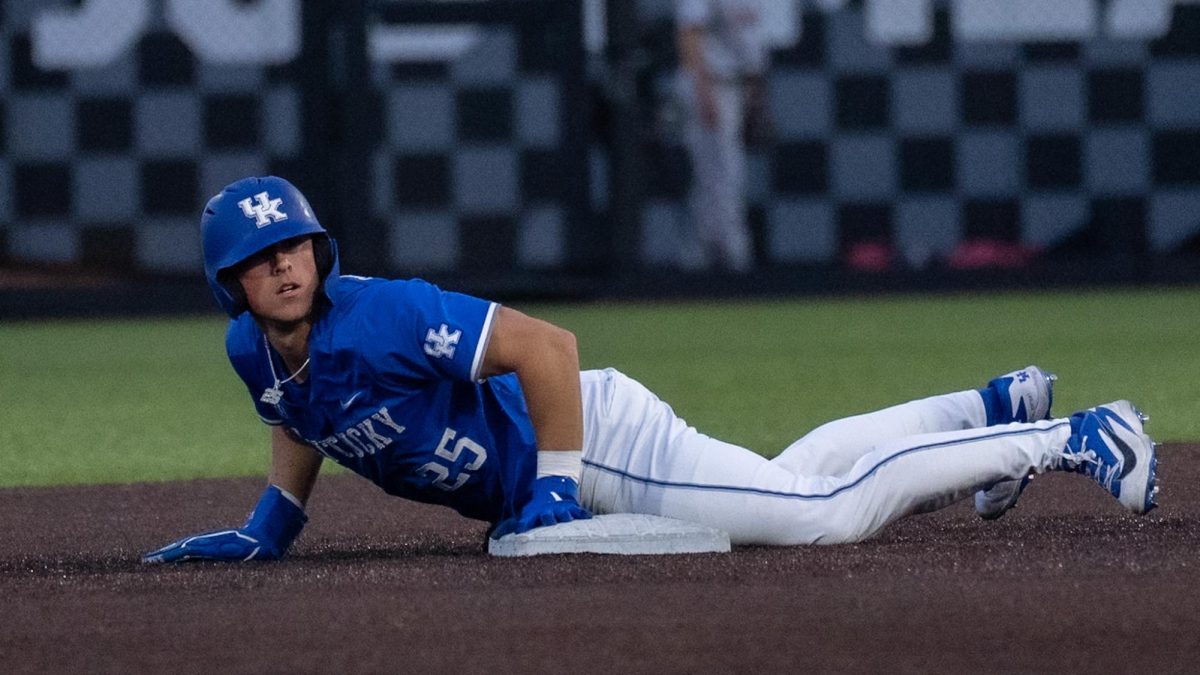



































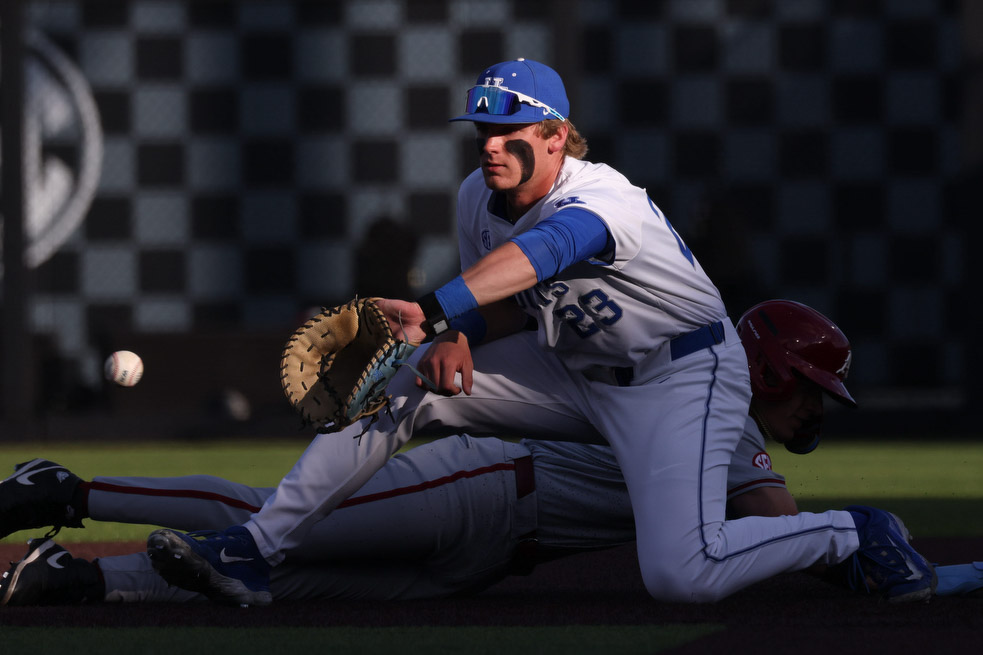























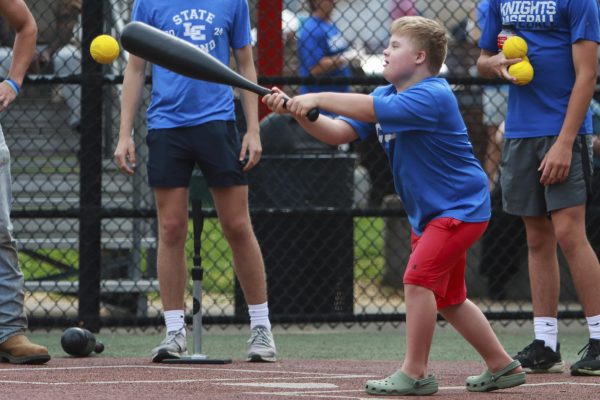
A boy stares down the pitcher in front of him, ready to swing the bat in his hand. The pitcher watches him closely and throws a pitch to him.
The crack of the boy’s bat as the ball makes contact and flies into the outfield can be heard for miles.
Cheers erupt from the crowd as the boy rounds the bases, high-fiving volunteers as he goes by, hitting a home run. In the bleachers, the boy’s mother beams with pride as she watches him.
CJ Grey, a player in the Toyota Bluegrass Miracle League (BGML), has been playing baseball since he was nine years old, according to his mother, Bambi Baldridge.
Baldridge said the league has changed her son’s life by providing a physical outlet that was not originally accessible.
Originally founded in 2006, the league allows adults and children with disabilities to play baseball every spring and fall, no matter their physical ability. Each game ends in a tie and every player scores.
For Grey and his family, finding the league was what they needed to strengthen their bond and find an accepting group where they could have fun. Being able to play baseball proved to Baldridge there are places where her son would be accepted for who he is, regardless of his disabilities.
“People with disabilities are just like you and I,” Baldridge said. “He (Grey) can still play sports and do things just like all the other kids.”
Baldridge said the league builds a strong community for the families that get involved. She has built lasting friendships with fellow parents who understand her. Baldridge explained the league also benefits volunteers and changes their outlooks.
“It teaches everyone else that everyone is the same. Even though you have a disability, you can still be an active member of society,” Baldridge said. “It opens people’s eyes, it makes us have more compassion for others.”
For Baldridge, the volunteers and coaches are a large reason why the league has such an impact.
Mark Richards, a head coach in the program, has been working with the BGML for five years, and said he plans to continue his coaching career for as long as possible.
For Richards, baseball is not just a game, but a way for the players to connect with each other.
“I have a player who does dance and there’s a player on the other team who is his dance partner, so whenever they play against each other it’s really adorable to see them interact,” Richards said.
Richards said he has three goals for his players: exercise safely, have fun and wear them out for the parents.
“I tire them out enough so that parents get a little bit of a break in the afternoon,” Richards said. “I also get tired out, it’s just really rewarding.”
Independence both on and off the field is Richards’ main goal, who said he works with every player on the team to develop their self-reliance.
“It’s motor skills, it’s teamwork, it’s paying attention,” Richards said. “Most of these players have been on the team for a while so they know what they’re doing.”
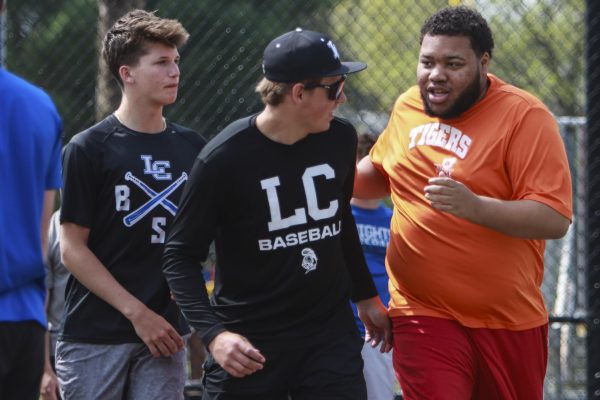
To encourage the development of these skills, Richards says he starts small with his players and builds them up.
“They were hitting off the tee and now they’re hitting (and) pitching, so they’re progressing,” Richards said.
Although getting players familiar with baseball and invested in the game is the reason Richards says he started his career in coaching, it’s not why he stayed.
For Richards, watching his players succeed and giving parents a break has become something he now values more than coaching itself.
“I love the kids, I love working with them,” Richards said. “We come back every season. You couldn’t stop us, it’s so rewarding.”
Another head coach in the league, Mark Thompson, uses baseball to connect with his community and make an impact on the players.
Thompson has worked in the league for over two years, and every year his goal is the same: to create a connection between the players and their parents.
No one at the park is worried about the score or how well the players hit, because the point is to have fun.
“I’m not out there trying to worry about skills or drills. I’m not trying to worry about getting a kid to the next level,” Thompson said. “Not everything has to be cutthroat.”
For Thompson, teaching children to be proud of themselves means more than winning does.
“I want them to know they can do other activities that non disabled people can do as well,” Thompson said. “I want parents to realize their kids matter.”