

















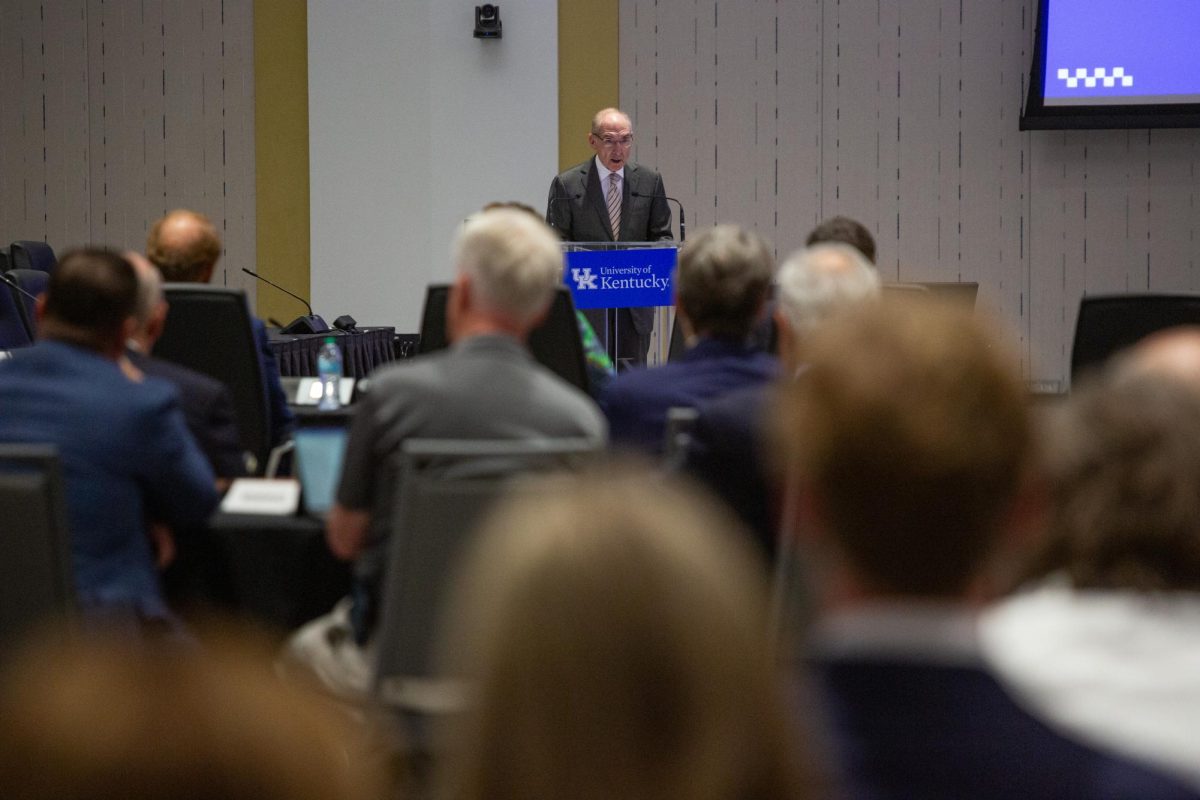
































































































A re-entry experiences photovoice exhibit was hosted by the University of Kentucky College of Social Work on April 2.
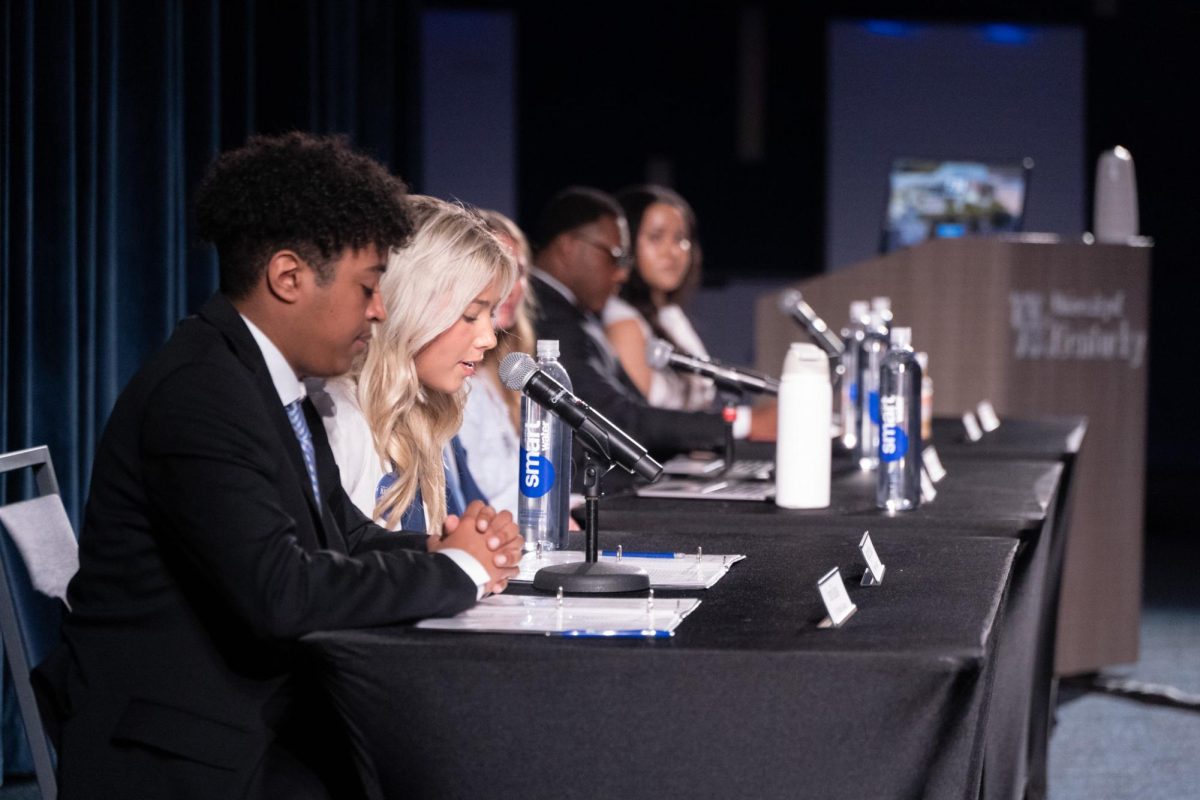
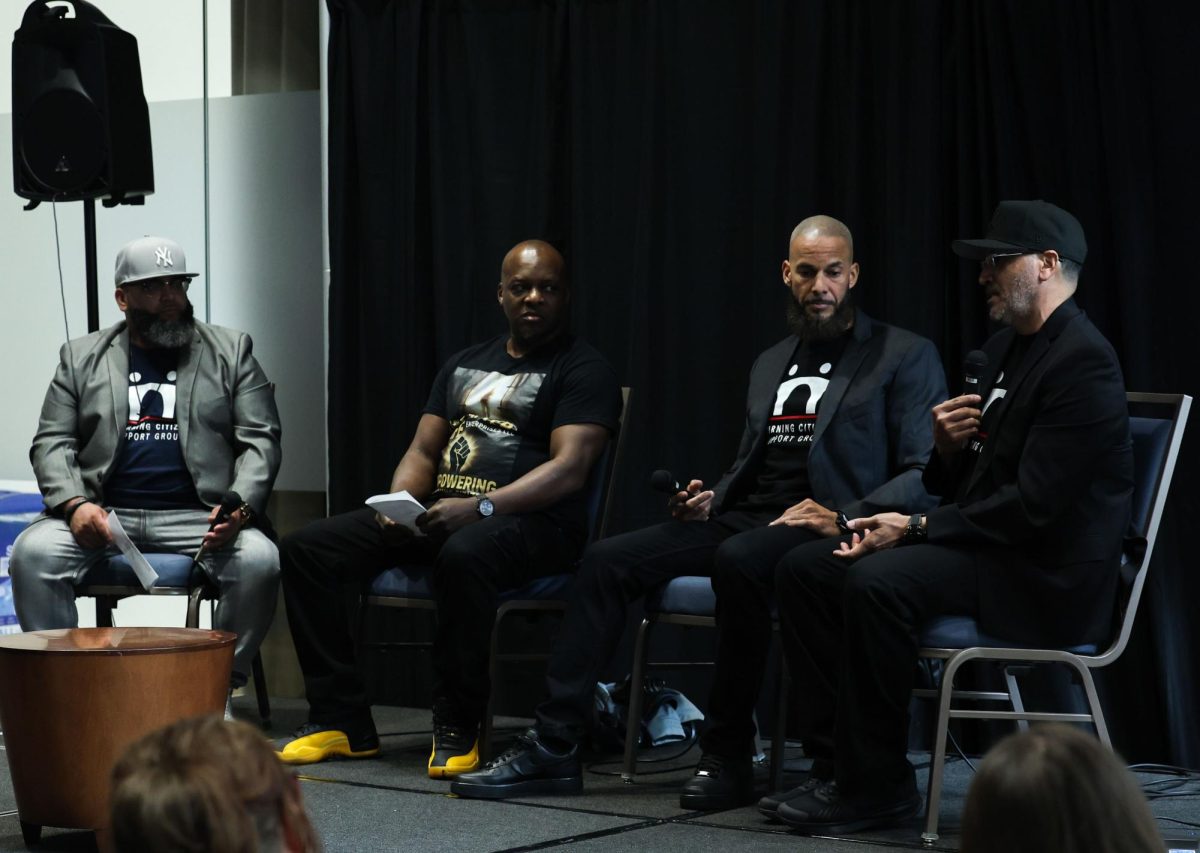
Panelists shared their re-entry experiences after years in jail through photos at the Lewis Honors College.
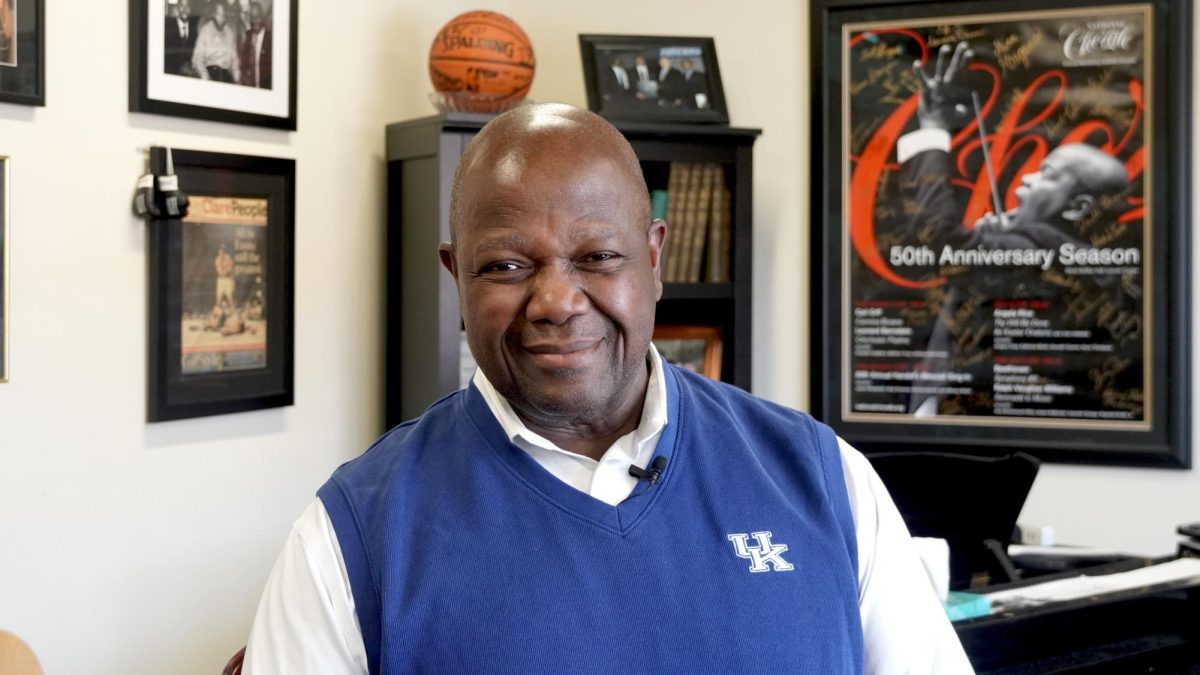
“A picture is worth a thousand words, and there is a story behind that,” criminal justice assistant professor Nicole McKenna said.
As one of the components of this re-entry experiences research, photovoice is an arts-based methodology in which participants respond to questions related to re-entry through photos, aiming to understand previously incarcerated people’s supports and challenges, as well as their trauma during incarceration.
“A lot of research is done on people, not with people,” McKenna said.
Efren Mercado, an outreach specialist for the Comprehensive Eviction Defense and Diversion Program and a New Jersey Scholarship and Transformative Education in Prisons (NJ-STEP) alumnus who served 30 years in prison as a juvenile, discussed the challenges of his re-entry journey.
During his time in prison, he was always told what to do and what not to do. He couldn’t decide when to eat or go outside.
“I dream of having my freedom and all those restrictions lifted for 30 years. But when you go home, you’re lost,” Mercado said.
Talking about the photos he took, Mercado said the research allowed him a space to tell his story. “It’s not just sunny days with a waterfal on a park, this is freedom for me,” he said.
Samuel Quiles, a Latino Action Network (LAN) Foundation Fellow and co-founder of New Jersey’s Coalition to Treat Kids Like Kids, said his journey after being released from jail was “very overwhelming.”
Without family support, living in a shared living arrangement and being a full-time student, Quiles still had to figure a lot of things out by himself, including getting an ID, a source of income and even how to navigate the mass transit.
When younger, Quiles said the school system punished and ostracized him due to his behavior by labeling him as emotionally disturbed and having a learning disability, even though he did not have one.
The photo of his bachelor’s degree in criminal justice from Rutgers University was very meaningful for him because it was his way to “challenge those systems and labels.”
Incarcerated at 19 and spending 31 years in prison, Jay Rutherford, who was wearing a “life after life” t-shirt, said his re-entry journey was overwhelming, but also about readjusting.
“You’re just coming out, you’re having a big out, but then you gotta reactlimate yourself back to your family … readjust to the social aspect of everybody texting and calling. It was a lot,” he said.
Rutherford said even though his mom came to prison to see him for a 45-minute visit, she didn’t know him.
“When you are coming out, you don’t know what you don’t know,” he said.
Rutherford talked about starting his own organization after being sentenced to a life sentence, in which he was able to empower his circumstances and show that the “past does not have to be a present.”
As participants of this research project, they are “putting a face behind the research” and showing a different aspect of imprisonment, according to Rutherford.
“I wanted to be part of it because I wanted to share the journey and let you know that we are not bad people, we just made bad decisions,” Rutherford said.
According to the manager for the Center for Justice and Economic Advancement at Jobs For the Future and the co-founder of the Transformative Justice Initiative (TJI) in New Jersey, who served almost 19 years in incarceration, Joel Negron, transparency is the key to changing the narrative about formerly incarcerated and even incarcerated people.
McKenna said this event is important to the community because it shows the humanity of people who are or have been incarcerated.
According to psychology junior Koree Wildy, she found the issues of reentry and institutionalization interesting, as formerly incarcerated individuals don’t have support after release.
“A lot of the speakers we had today were incarcerated at such young ages, they were juveniles, and they didn’t really get the chance to understand what to do and how to do it. So when they got out, there was a lot that they had to figure out,” Wildy said.
Law and justice freshman Sofia Sher said she remembered what the panelists talked about in her CJ 323 class about how rehabilitation does not exist in practice.
“You can’t be rehabilitated,” Sher said. “You just never got the chance to be yourself in the first place.”
Through this event and their research process, Quiles hopes to spread the message that transformation is possible and Negron talked about the importance of not conforming.
“They are more than the crime they committed,” McKenna said. “We always say, ‘you are more than the worst thing you ever did.’”