
Thrown in the deep end, two swimmers navigate life away from home

The rain was falling in Recife, Pernambuco, Brazil.
The tears of Caue Gluck fell just as steadily.
3:55.83.
The time lit up the board and all the 17-year-old could do was cry.
It wasn’t a personal best, but it was enough to take home gold in the 400-meter freestyle at the 2024 Brazilian Junior Interclub Championship.
One thing Gluck “always loved to do was swim in the rain.” As he stood behind the block, only moments before his race began, raindrops fell from the sky right on top of him.
“I just like inhaled and I was like, ‘Okay, it’s gonna be alright,’” he said.
Gluck took home first place in his favorite event, one he hadn’t lost in over three years, by just 16 hundredths of a second.
“That night wasn’t a day for me to swim fast. It was just a swim for me to win,” Gluck said. “I remember as soon as I saw that (time), I started crying so much. I only stopped crying when I got to the hotel later that night.”
____________________________________________________________________________________________________________
Tears also fell from the eyes of Fernanda de Goeji, a swimmer holding the emblem of the Brazilian Navy, from the same state as Gluck, Curitiba.
But she had another reason. It was all dark.
There was no crying in front of family and friends, but inside that airplane, all she could do was cry. That was far from her first flight.
She had already been to China, France, Mexico and Peru, to name a few.
But this time, it was her crossing the ocean into the unknown.
Her destination wouldn’t be another swimming championship, or a Chinese village with other athletes brimming with shops selling stuffed animals and souvenirs that wouldn’t fit in suitcases.
No sign of light.
“Then, when one of my coaches drove me to the dorms … I couldn’t see anything,” de Goeji said. “It was dark, I just went straight to my dorm.”
At this point, she was no longer alone.
Inside the car, her coach tried to start a conversation, but she couldn’t keep up. It wasn’t because she was tired. In fact, she didn’t know his language.
Even so, sitting in the passenger seat, she was excited to see what was ahead of her: Missouri.
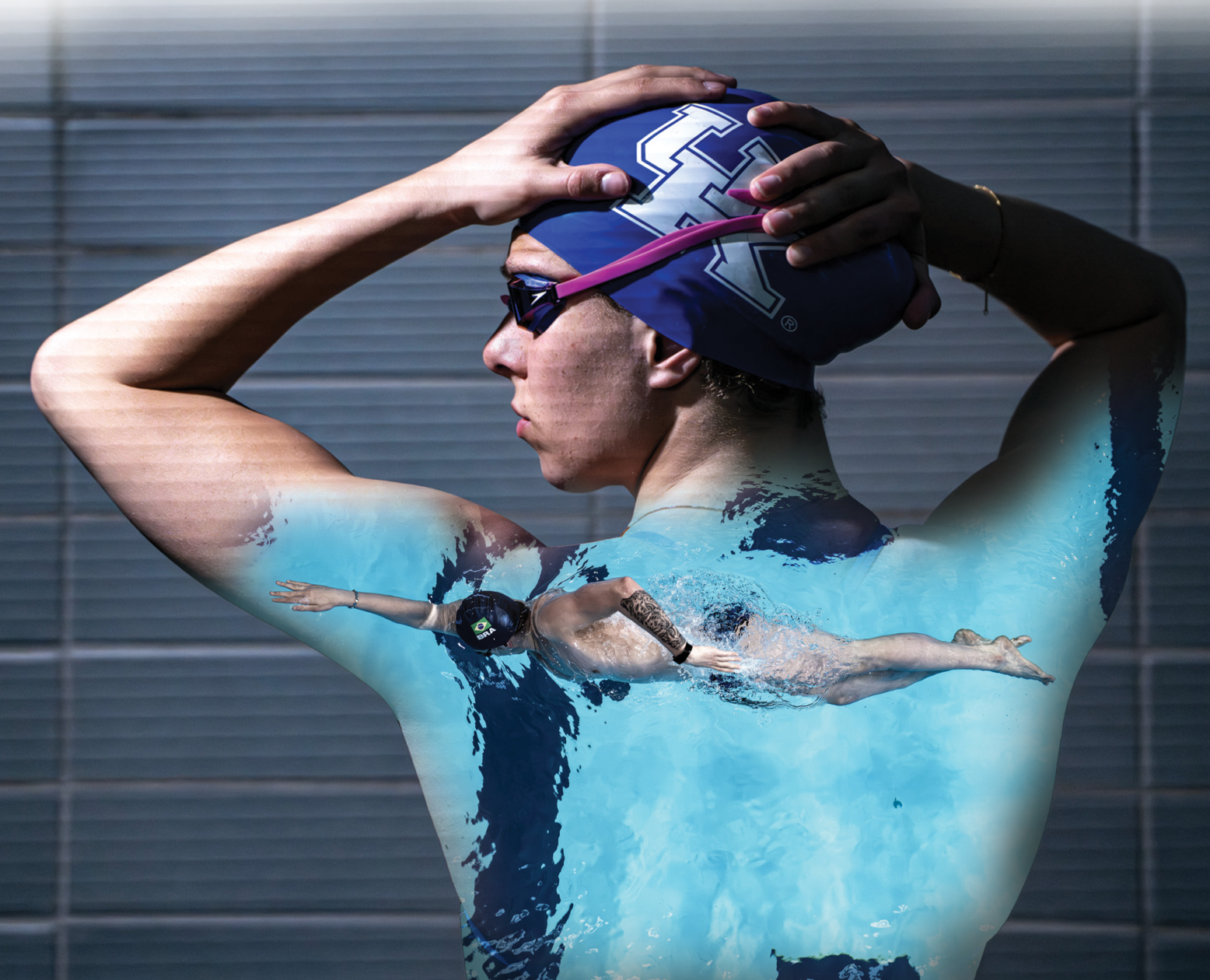
This was just the beginning for two Brazilians, two swimmers, navigating through two different journeys in and outside the sport, away from home.
From his eyes: A childhood dream
After competing in hundreds of races for Clube Curitibano, the Brazilian had officially swum his final competition for the club.
“It was a day that I will remember for the rest of my life. It wasn’t easy necessarily; it was stressful until the end, but the end was great. It ended the way it was supposed to end,” Gluck said.
One chapter of Gluck’s life was coming to a bittersweet end, but 4,700 miles away, a new chapter was awaiting him in Lexington, Kentucky.
It had been only four years after he began swimming at the competitive level that the Curitiba, Brazil, native had made up his mind, after one of his coaches introduced him to the Olympics and competing at the collegiate level in the United States.
“That was the plan since I was 11. I was gonna swim in Brazil until I was old enough to come to college here, so that was always something I was sure of,” he said.
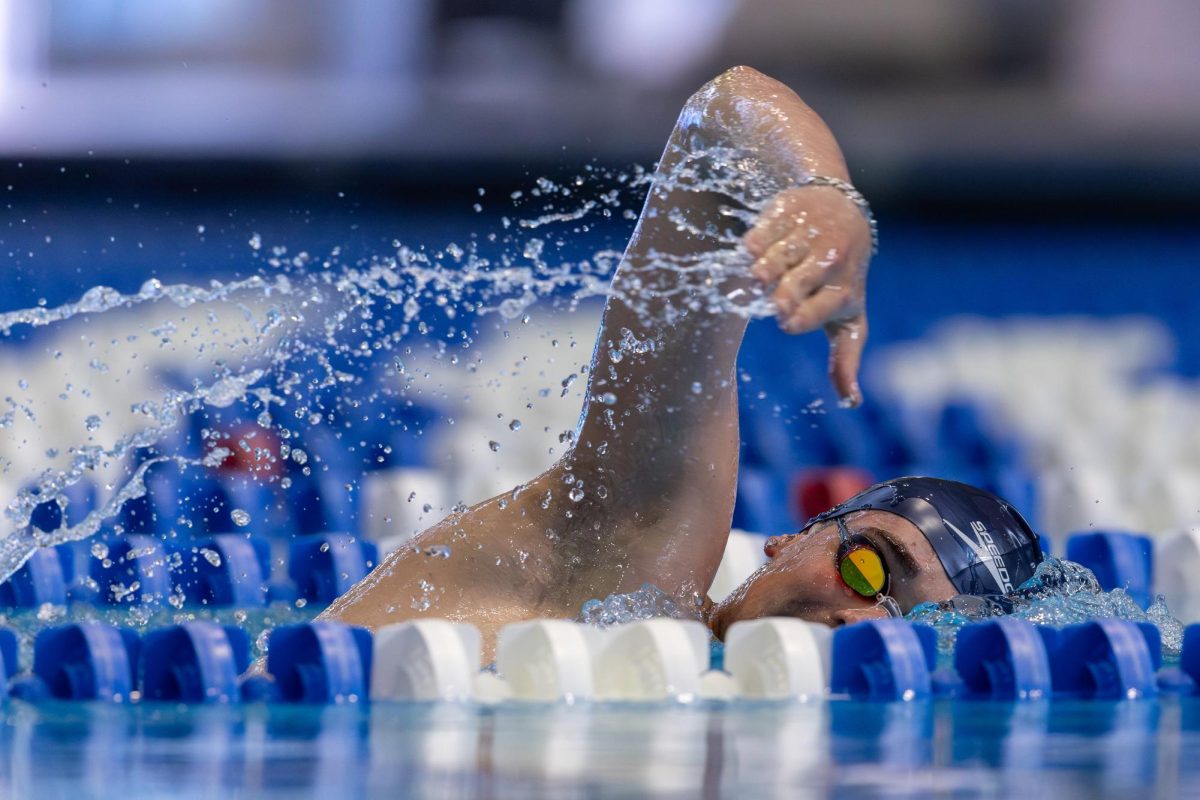
Since he could remember, sports had always been a part of his life. From a young age, he was doing everything from tennis to soccer to judo.
As he got older and the training became more intense, he was focused on just two: soccer and swimming.
Eventually, he had to choose just one, and swimming was his decision.
After going winless in individual medals through his first year and a half of swimming, only earning medals on relays, Gluck’s coach challenged him to practice more to improve.
Things began to finally click.
“In the very next like competition, after I started having more workouts a week, I got my first individual medal,” Gluck said. “ So at that moment, I was like, maybe if I put effort (in)to this, this might be for me.”
To this day, Gluck has no doubt in his mind that he made the right decision.
From her eyes: Far from being a childhood dream
Within minutes, reality sank in when she arrived at her dorm.
That same night, other members of her swimming team gathered in the hallway to greet her, telling jokes and chatting.
She, once again, could only remain silent, not understanding what they were saying.
She had found her place, but she was still lost.
“I was very depressed when I left Curitiba (Brazil), I left my family,” de Goeji said. “I never had a desire to come to the U.S. and be far away from my family. Never had this desire.”
Deciding to study abroad didn’t stem from a childhood dream, but from an alternative way to cope with frustrations.
She needed to be in a different atmosphere.
“Everything started after I didn’t make (the) Olympic Games in 2021,” de Goeji said.
At the beginning of 2020, her plans for a career as a professional swimmer seemed to be going smoothly.
She even did a month of altitude training in Mexico in preparation for the trials.
But the pandemic derailed all her plans.
“COVID canceled everything,” she said.
For the first time, as someone who, since childhood, couldn’t stay still and needed to be out of the house, she ended up spending six months without swimming.
In 2021, the pandemic still loomed, and the Olympics became a distant dream. She could no longer be trained by her coach either.
Her body needed movement, but her mind needed a breath of new air.
She needed a change.
Embraced by a new home
On Jan. 19, 2024, the 16-time Brazilian Junior National Champion and four-time South American Junior Champion officially signed with the University of Kentucky, fulfilling his lifelong dream.
For Gluck, competing at a high level was always the plan, but choosing Kentucky specifically came down to something simpler: the people.
During his visit, he said the connection with the coaching staff stood out immediately.
“I think the coaching staff here really cares about us, so that’s something that’s very important for me,” he said.
It was something Gluck valued a lot — knowing the people that he was going to work with cared about him as well.
Only three weeks after his final race in Brazil, Gluck was on a one-way flight to Lexington alongside his parents.
While most of his mind was filled with excitement and joy for what was ahead of him, there was a small part of him that was being left in his home country – his younger brother, Gael.
He said saying goodbye to him was by far “the hardest part,” as Gael was a part of every aspect of his life, even swimming for the same club.
School, lunch, practice and everything in between, the two were inseparable.
“We would spend all day together, and all the sudden I didn’t have him next to me anymore. So that was really hard,” he said.
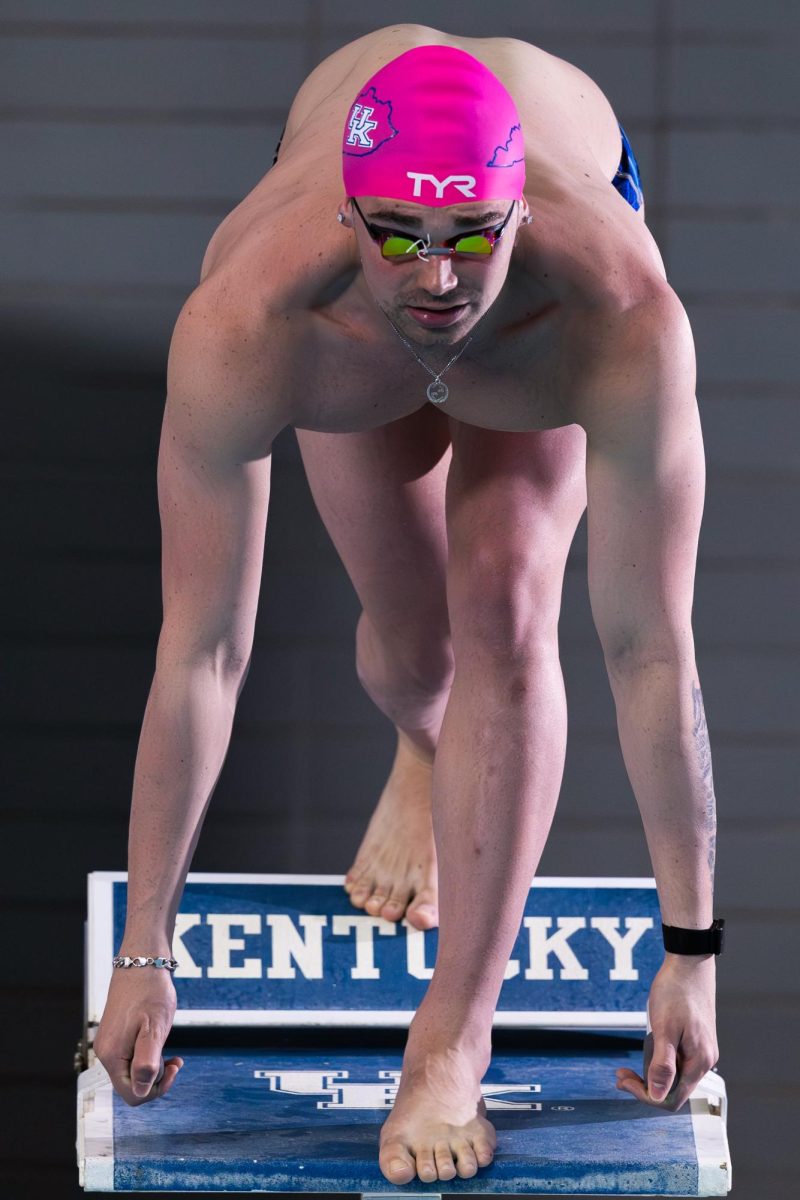
Luckily for Gluck, a brotherhood was awaiting him in Lexington.
He was surrounded by others just like him – athletes who had moved their lives across the world to fulfill a dream.
When he arrived on campus as a freshman, 10 members of the men’s swimming and diving team were international.
One of whom was Murilo Amatuzzi.
Amatuzzi, his new roommate, happened to be his teammate from back home as well.
Ten years of swimming together, on the same team, at the same club, with the same coaches.
By some miracle, Amatuzzi and Gluck would remain teammates in their first year of college.
While most people spend their first night at college feeling alone and missing their loved ones, Gluck felt as at home as he could be.
“I was without my parents, but I didn’t feel like I was by myself at all. He was really important for me in this process of adapting to living here. I don’t think I would have been able to do it without him,” Gluck said.
There was no home for her
“If I’m gonna be far away from my family, I’m gonna go somewhere that I can get a degree and actually have like a totally different scenario,” de Goeji said.
She said she didn’t even know which schools were better at swimming, but she knew she needed something new, even if it scared her.
“I didn’t visit Missouri, I had no idea what was the place or the city,” de Goeji said.
Many doors kept closing. The one that opened led her down a dark path.
At the airport on her way to Missouri, she also ended her relationship. She was alone, and there was no going back.
After all, it was her first time “living far away from my family, from my twin sister, that we would do everything together,” she said.
The longing for the smell of home, for having her sister by her side, and for not being able to be herself turned her time in Missouri into troubled waters.
In her first year, giving up wasn’t an option; she gave her all.
“I didn’t spend any time out of the pool,” de Goeji said. “I kept swimming.”
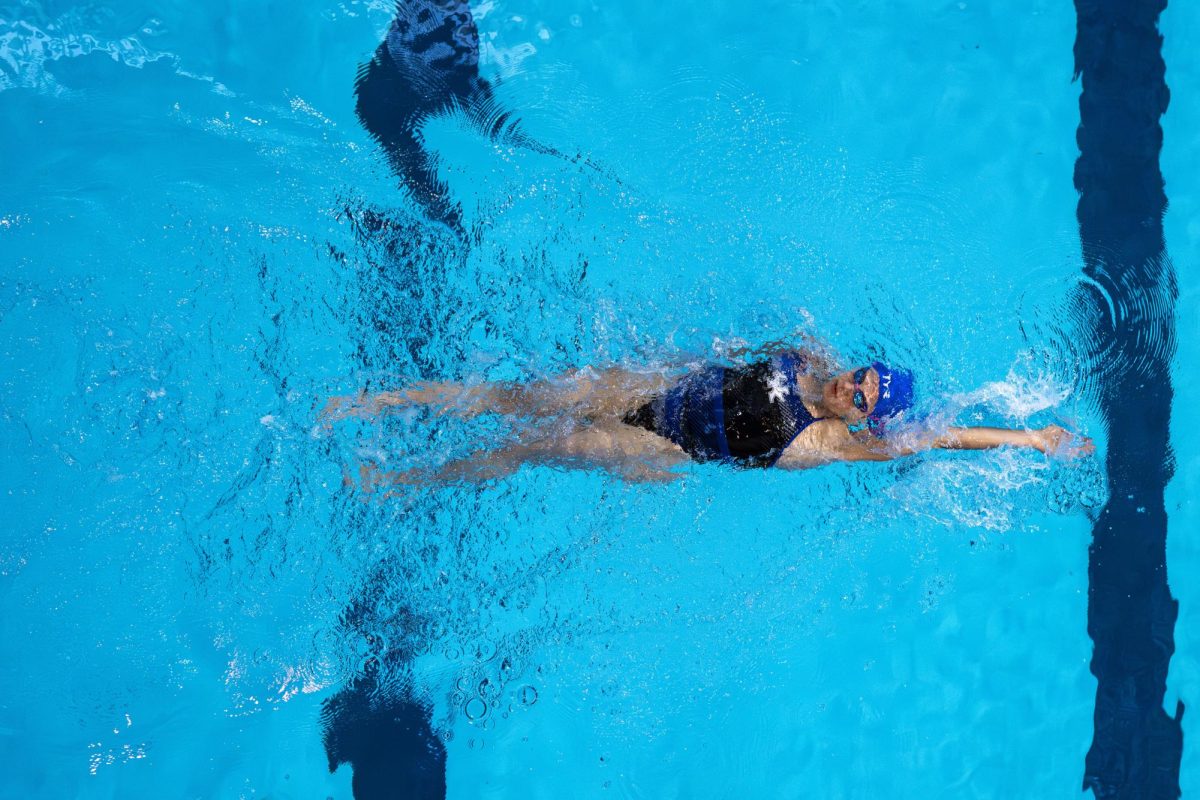
At the beginning of her second year, she went to nationals and made it to the Pan American Games in 2023.
The girl from Curitiba, who had found swimming as her passion since she was 7 years old, still strived.
But while she was on the Missouri team, for some practices, she said she was on her own.
“I went to (the) Pan American Games without a training plan, and I swam so bad,” de Goeji said.
Outside the pool, even after leaving her dorm and finding a house, nothing felt like a real home.
“If you’re not happy, you cannot swim fast,” de Goeji said.
Going to church on Sundays was her escape and her way of taking care of what shouldn’t be underwater — her mind.
After carrying the burden of not being able to be herself in a space where she didn’t belong, she decided to take a step back.
By the end of 2023, she returned to Brazil.
Building love for a culture in and outside his sport
As a sophomore, Gluck no longer struggles to feel at home in Kentucky.
While part of that comes with the experience of already spending a whole year away from home, another came with the family he had built in Lexington.
“It was so quick we got close – we are so close and it’s like family … that for sure makes it so much easier to not miss home so much,” he said.
That family and team element, which Gluck has now fully embodied, was something new to him at first.
It was the complete opposite of the culture of swimming he had grown up on in Brazil, one that was always focused on yourself and nobody else.
“Competing in Brazil for my club back there or even for the national team, it’s always like, it’s an individual sport. Like you’re racing for yourself and for your own result,” Gluck said.
Learning how to be a part of a team was unfamiliar territory for him, but it was something he was ready to take on.
He quickly realized that being a part of a team like Kentucky’s gave Gluck a bigger purpose, and in turn, the motivation to be better.
It wasn’t necessarily hard for him to adjust to the training style the team had, but it was something different than anything he had experienced before.
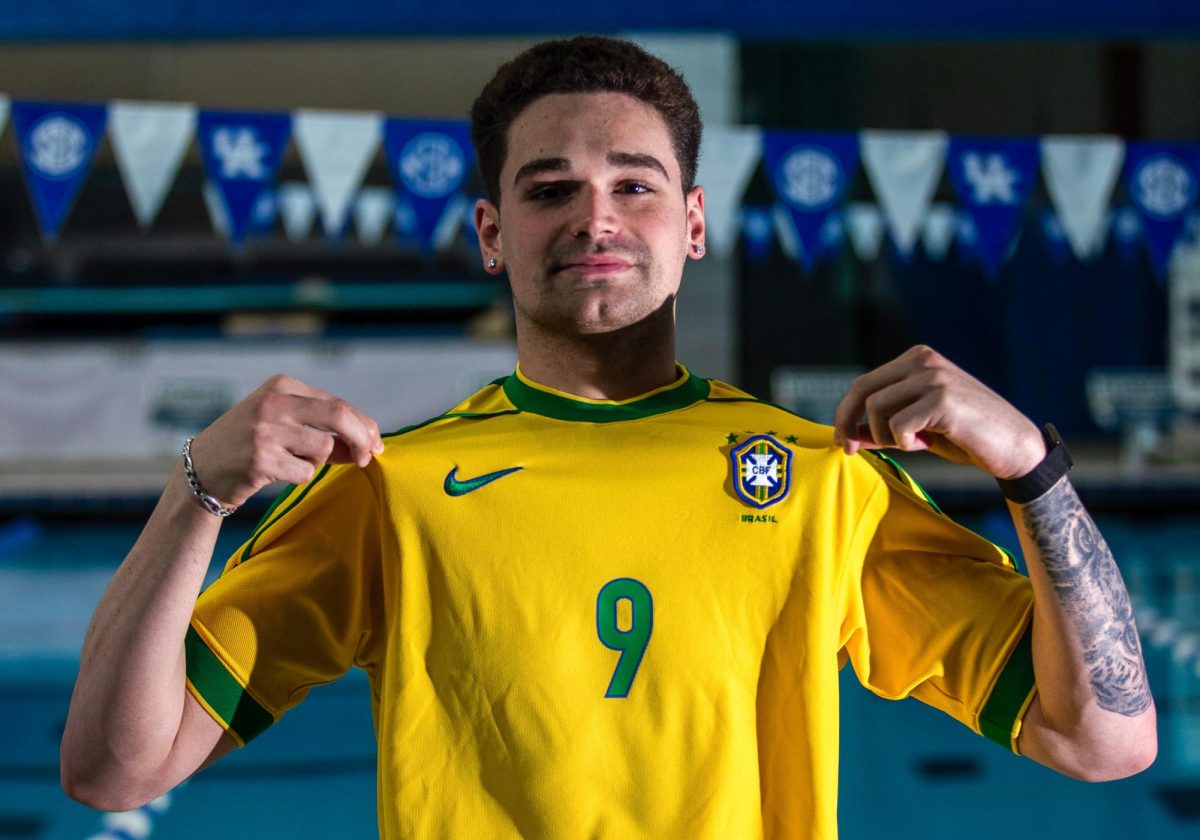
Back at home, Gluck was a part of a small club and worked with a small team, and all of a sudden, he was on a team made up of 72 athletes, 37 of them being on his men’s squad.
While it was overwhelming at first, having to learn how to practice with so many people alongside him, Gluck said it came naturally, and more importantly, it was for the better.
“You’re not racing for yourself, you’re racing for your team, for your teammates … I have no doubt that it’s made me a better swimmer,” Gluck said. “Like some days I get to practice and I’m tired and I see that I have so many teammates that are like fighting for the same objectives as me, and that just makes me better.”
That sense of collective competition was one of the reasons Kentucky stood out during Gluck’s recruitment.
Kentucky being a part of the SEC, which is recognized as the best conference in the country for Division I swimming and diving, was another big factor for Gluck.
He said the program was always looking to get better, faster and more competitive, which was something he was familiar with.
That level of competitiveness and the drive to always be the best is something that he said has always reminded him of home.
More specifically, it reminded him of one of his coaches from back home, who “had very high goals” for Gluck, which became one of his biggest motivations.
To this day, he continues his career with the same mindset that drove him back in Brazil.
“I believe that if you’re gonna have a goal, you should have a goal that’s hard to achieve, because why not? Since you already have a goal, like do something that’s hard, something that’s challenging,” Gluck said.
So she did: Embracing a challenge of retracing her path
Her return home carried another burden, despite the relief of knowing her destination.
“I was so sad about myself, ‘of’ being in that place, in depression, leaving what I was … (what) I set my mind to do, but I couldn’t do it anymore by myself,” de Goeji said. “I really needed to take this time.”
At first, the feeling of going back left her feeling lost.
“I didn’t know what I wanted to do,” de Goeji said. “I didn’t want to swim anymore.”
Even the place where she was born, Curitiba, reminded her of memories she didn’t want to relive.
That’s when another change put her back on track.
She moved to Minas Gerais, another state in Brazil, to join the Minas Tênis Clube.
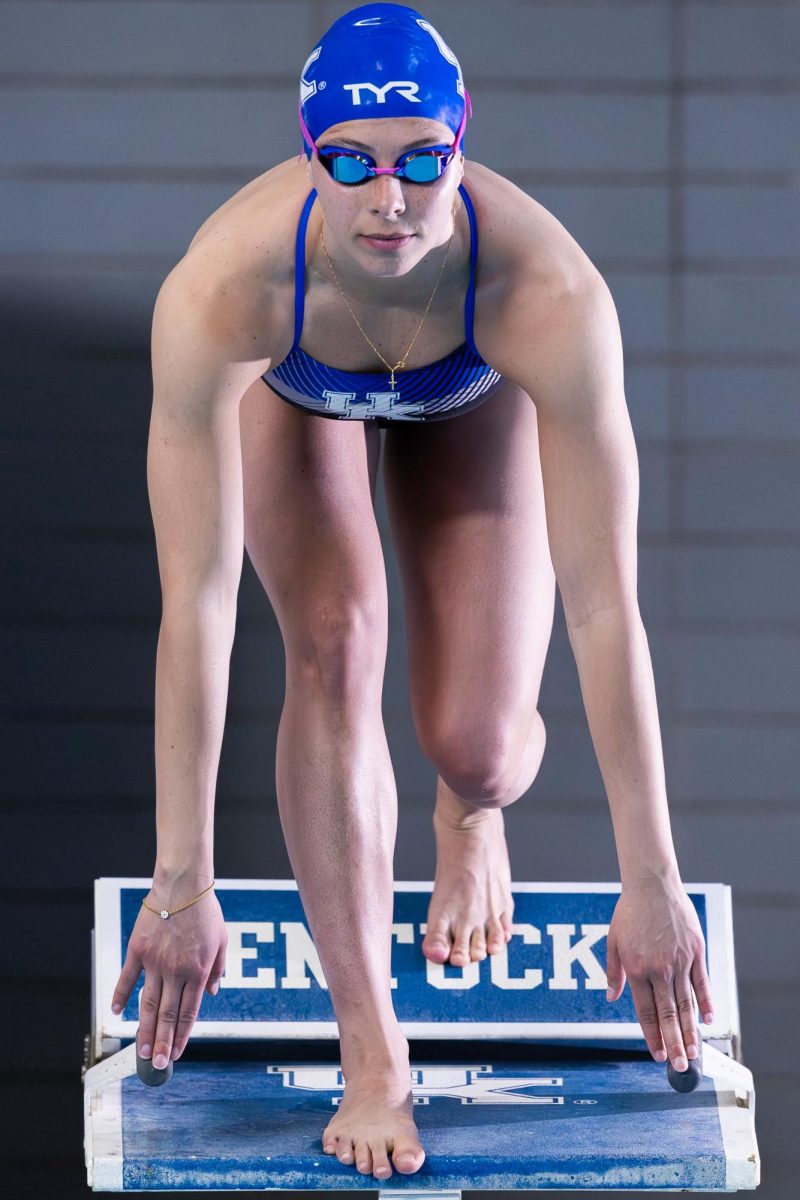
“It was actually good for me,” de Goeji said. “New place again, new club, new friends.”
One friend in particular made her realize how much the ups and downs of her time away had helped her grow.
Nicolas Albiero, a Brazilian-American and “a three-time member of the U.S. National Swim Team,” went to Brazil to train for the Olympics to represent Team Brazil.
Directly from Louisville, Kentucky, his home for a year was the Minas Tênis Clube, the same one where she reconciled with herself.
By that time, among everyone at the club, she was the only one who knew English. Now, she was no longer alone.
“I saw myself a lot in him,” de Goeji said.
She said he didn’t speak Portuguese and didn’t know anyone. He was going through the same feeling of displacement as her.
Her return to Brazil at that time in that specific club wasn’t an accident after all.
“I decided in my mind to be the best friend I could be to him,” de Goeji said. “I would translate, I would be with him all the time, and I would do everything to help him.”
She knew firsthand what it would be like not to have that.
When Albiero arrived in Brazil, everyone at the club was on break, so people went home, and she didn’t want him to be alone.
“I invited him to my house without barely knowing him to stay with me ‘in’ a week,” de Goeji said.
Being in a home was all they both needed.
“The feeling of going back to my house was not good, but then I really found joy again,” de Goeji said.
This friendship changed everything, both inside and outside of swimming.
“I had another reason to be at the pool, to be in this world of swimming, because I had a very good friend with me,” de Goeji said.
During that same period when they were close, building a friendship that lasts to this day, she decided to continue her search for other schools in the United States.
That path no longer frightened her.
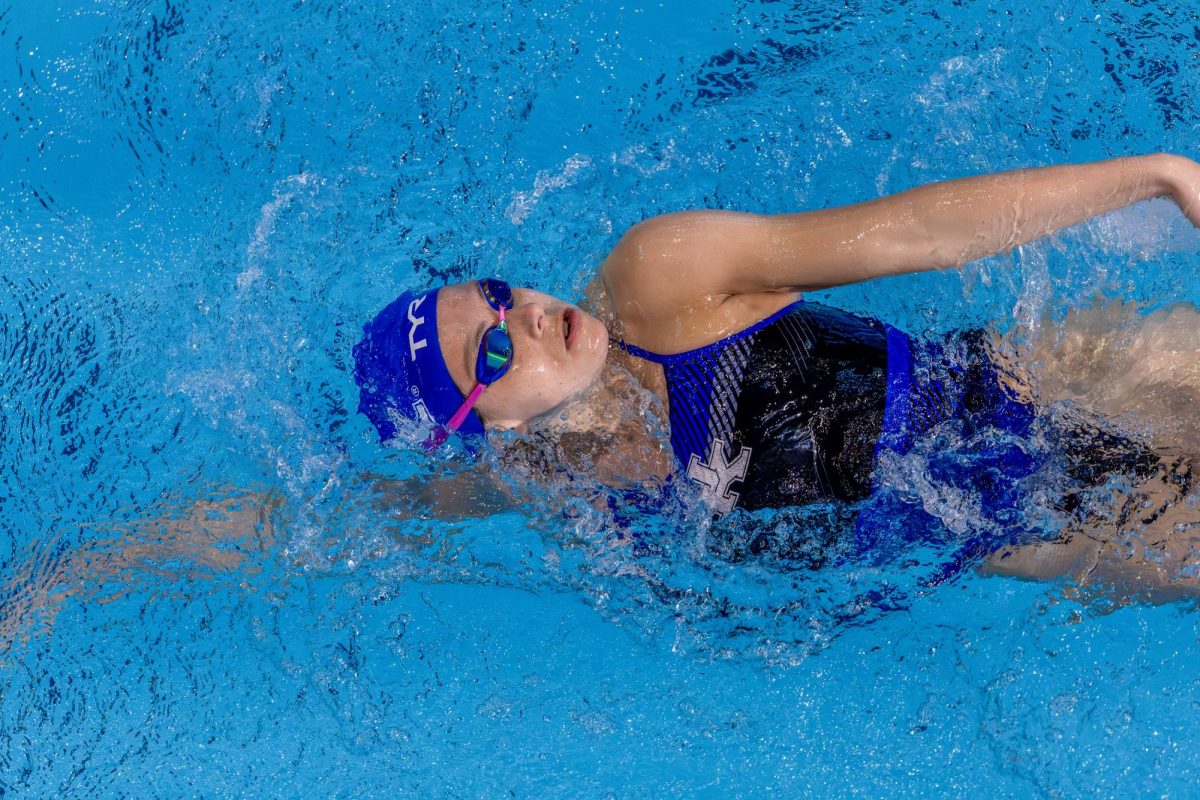
This came into life when, in a conversation with her friend, Albiero suggested the unexpected.
“There’s Kentucky,” Albiero told her. In a few months, he would return home.
“You could just move to Kentucky, and we would be an hour from each other,” he told her.
He said he knew a coach from the University of Kentucky who used to be in Louisville.
“I can send your contact to him,” she said when recalling what he told her. “So, he did it.”
Before long, she was on a call with Colin Faris and Caitlin Hamilton, UK associate coaches at the time.
The next day, on the other end of the line was Bret Lundgaard, UK head coach of swimming and diving.
On the third day, “I committed to Kentucky,” she said.
Besides being an hour away from her friend, she would also be close to her childhood best friend, Gustavo Saldo, a Brazilian native who also swims for the University of Louisville.
The pieces that were once scattered then fell into place.
Meanwhile, her parents, who don’t speak English and “don’t know anything about the world here,” had only one response — to support her.
“My mom has a very strong faith,” de Goeji said. “So, (she) always put in the hands of God and prayed and support(ed) me in anything I decided to do.”
At this point, the only weight she carried was her luggage.
Aiming high, driven by the same old passion
Since he was just a kid receiving his first-ever individual medal, Gluck had always dreamed big.
While the sophomore continues competing amongst some of the best in the country and around the world, Gluck’s long-term goals remain unchanged.
The next being one most competitive swimmers spend their whole lives working toward .
“I have the dream to be an Olympic athlete,” Gluck said.
He said he hopes to achieve it in just two years from now in the 2028 Olympics in Los Angeles, but if not, he will try one final time in 2032.
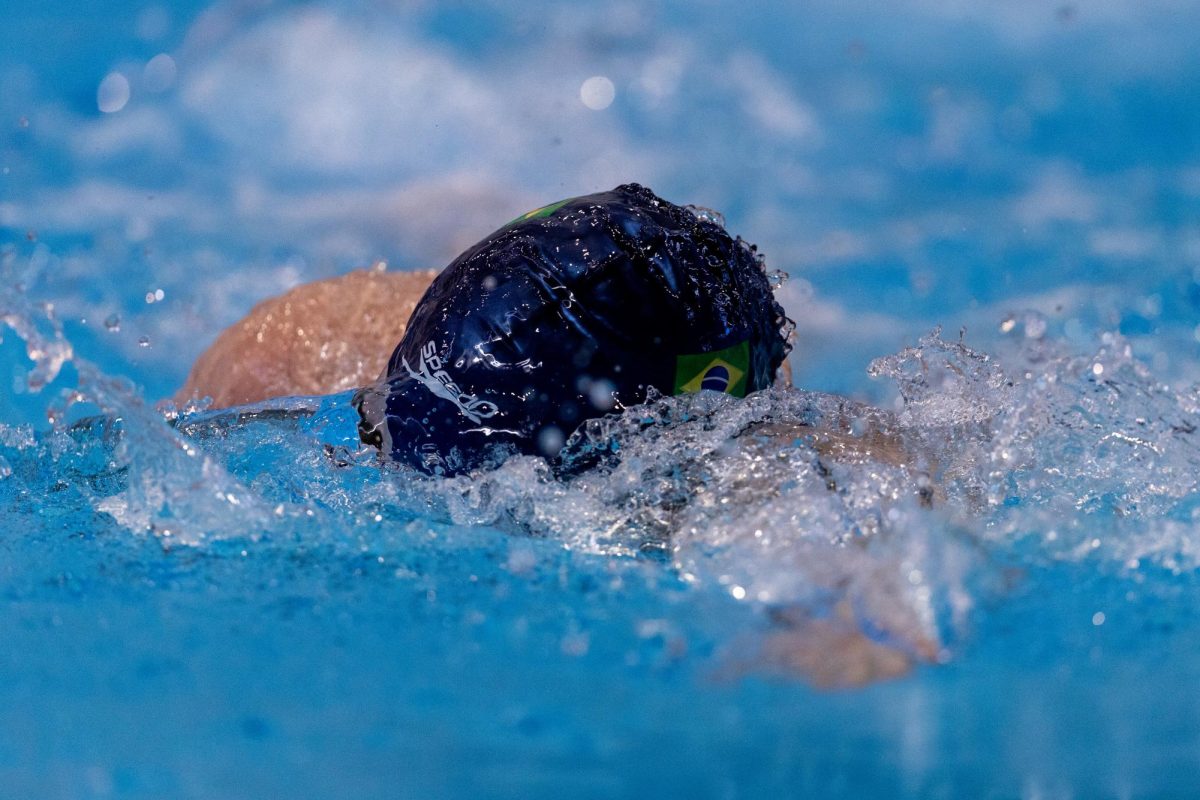
Gluck’s dreams go outside of the pool as well, as he works toward a degree in civil engineering, following in the footsteps of both his father and grandfather.
“I really like numbers. I really like math. I like physics. It’s a little bit weird, I know, but that’s what I like,” he said.
There’s no question that his passion and strength in numbers have helped him in the pool.
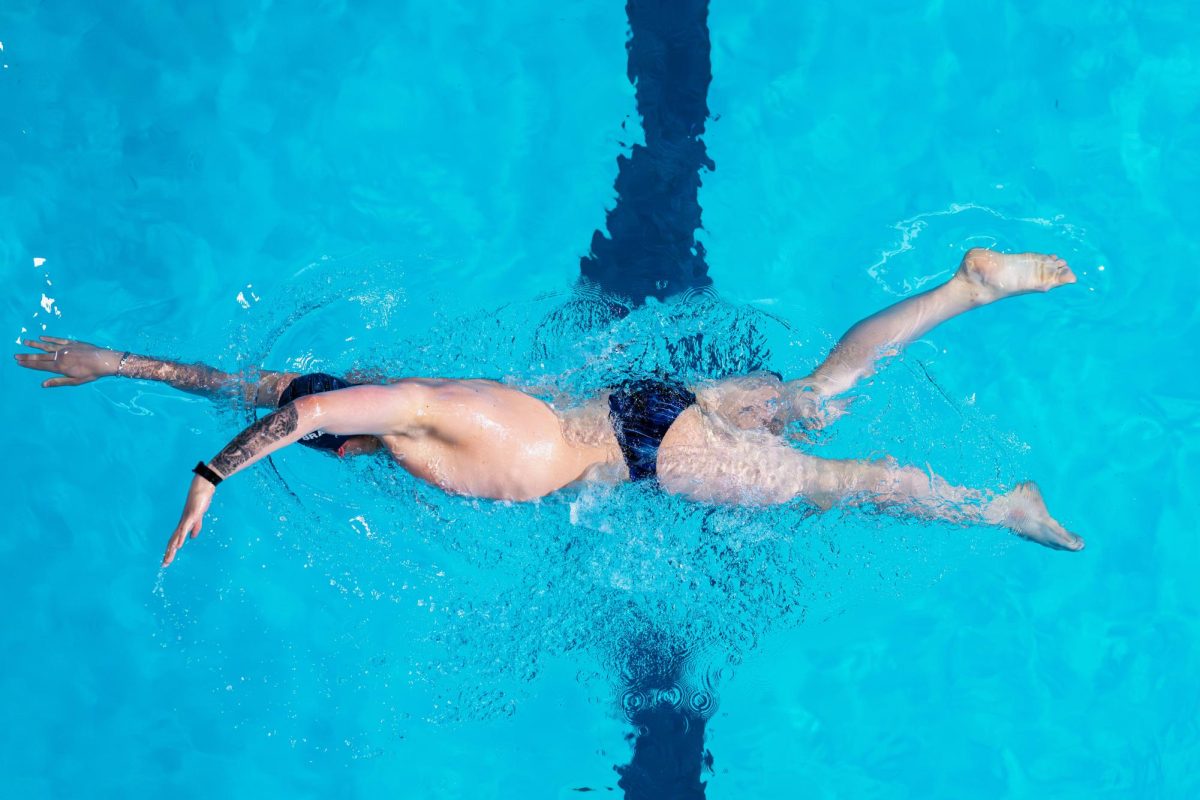
“I am very methodic(al) in the way I swim. I know all my stroke counts by every lap, my underwater kicks … I’m sure that being good with numbers helps me to be a faster swimmer,” he said.
Gluck said sometimes, when he takes a breath and is able to look up at the board during a race, he can tell exactly where he is in the pool just by the time.
Whether it’s in Brazil, Kentucky or somewhere in between, the pool has always been a place Gluck feels the most at home.
The water is the same, the standard is the same and the goals he sets are always ones he is willing to give everything to achieve.
Nearly 4,700 miles from the pool where he swam his final race for Clube Curitibano, Gluck continues to pursue his dreams, both in the pool and outside of it.
Navigating a dream in calmer waters
It was all sunny.
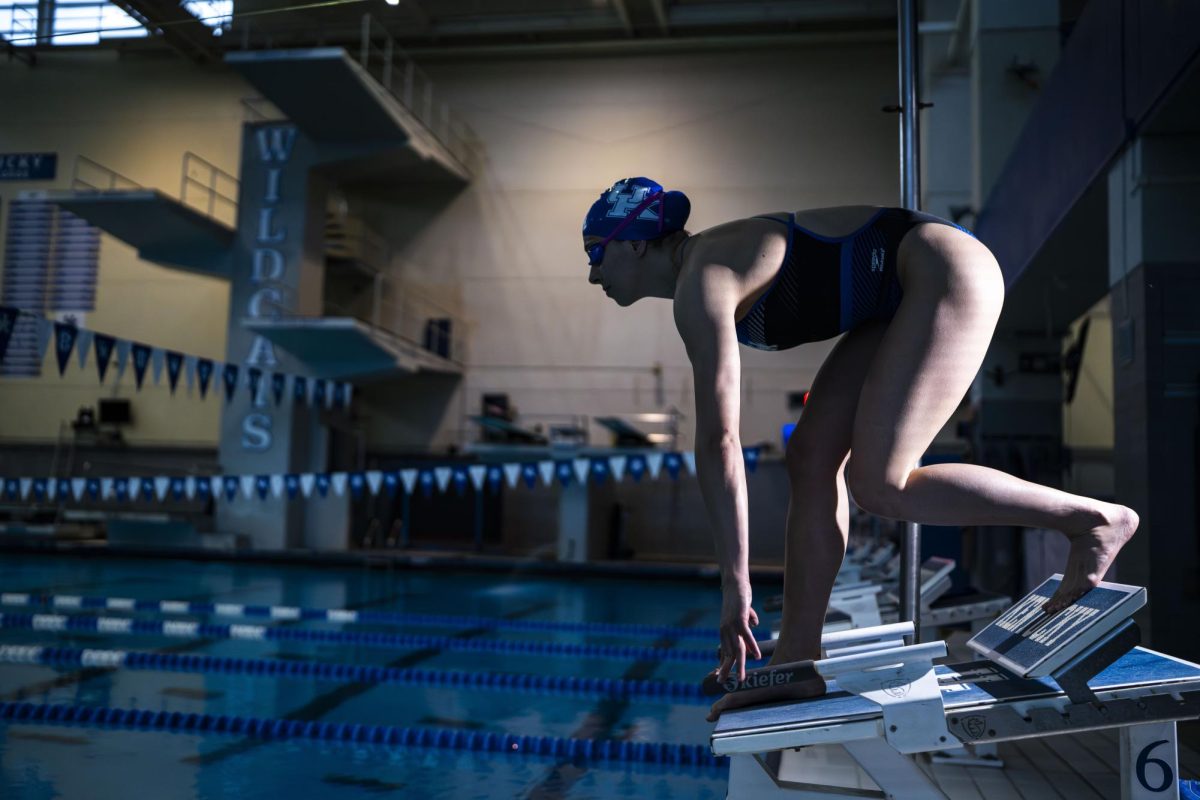
When she arrived in Lexington, she only had time to grab her lunch and go straight to the meetings on UK’s campus to “be cleared to swim.”
Throughout the day, she met her roommates and felt that “they were happy to see me,” she said.
As someone who had always been the only girl in the group, being part of a women’s team, especially with athletes from different countries, gave her a new perspective.
“The funny thing is all my good friends here are all internationals,” de Goeji said. “I laugh a lot about the other internationals trying to speak English, because I know my English is not good.”
Cultural barriers persisted, but they didn’t prevent her from finding joy even in challenges.
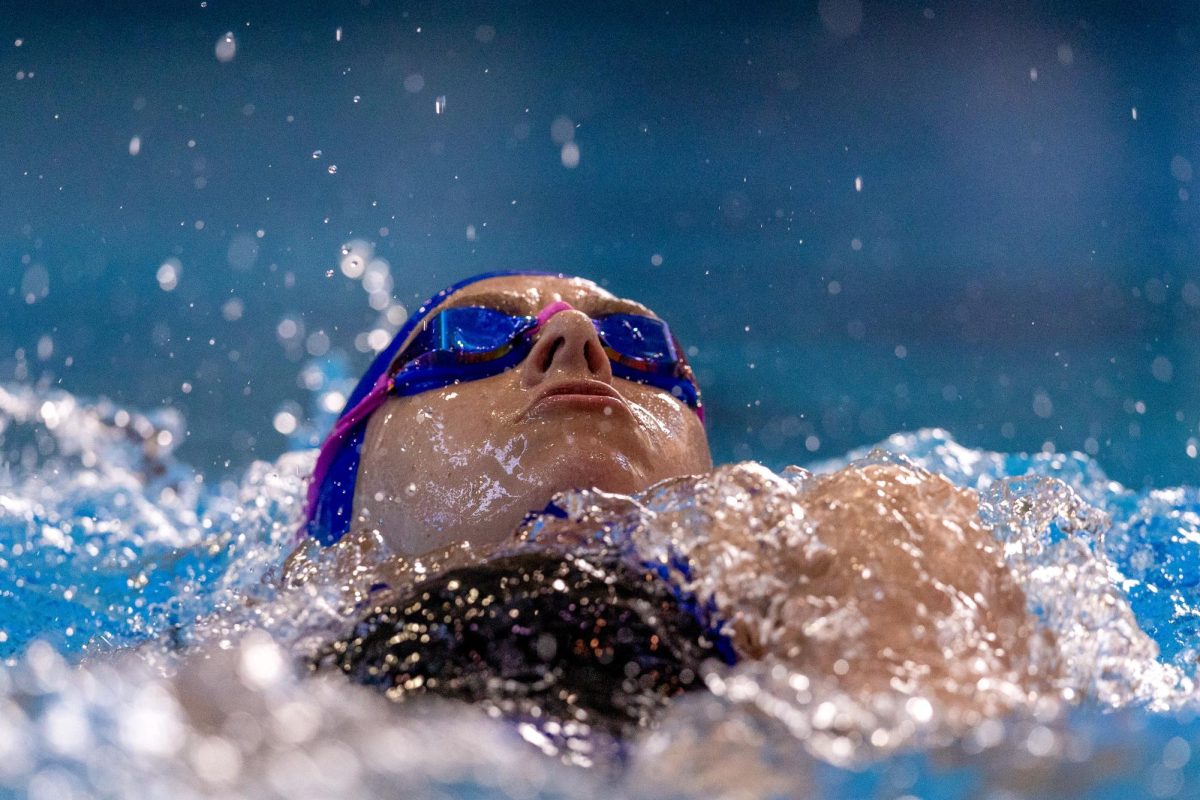
In Portuguese, she can be who she truly is, speaking “bad words” and having a closer connection with her coach and the people around her, she said.
“In Portuguese, I would sing, people would sing with me in the warm-up,” de Goeji said. “I would make jokes, I would not be quiet the entire time.”
Being trained in English forces her to be more formal and limits how far her excitement can go, she said. But over her time at UK, she said she learned to understand “different ways to see the environment around me.”
Even after swimming in pools that surpass physical barriers, in opposite temperatures, altitudes and hemispheres, what keeps her on or off balance is her mental state.
“For me, there was no difference … practicing in Brazil or in the U.S.,” de Goeji said. “It’s more, like, the people around me that I miss (and) being myself.”
Now, there’s only one more class left to finish her time at UK as an animal sciences major.
Until recently, her plans involved staying active in swimming to try for the 2028 Olympics, but another direction has taken shape.
Other passions that still accompanied her through her degree made her look at the future from a different viewpoint than expected.
Beyond the sport, she sees herself managing a farm and caring for horses — another element that greatly excited her when she discovered more about Kentucky.
“The plan outside (of) swimming is (to) get an internship, see if I can extend my visa and stay here as long as I can, get as much experience as I can,” de Goeji said. “If I need to start cleaning stalls, I must start it like that.”
Between cold and warmer waters, swimming was the point of equilibrium that kept her close to the inner child, who only needed to be outside.
Far from home, de Goeji learned the need to be away from troubled waters and be close to herself — her true refuge.





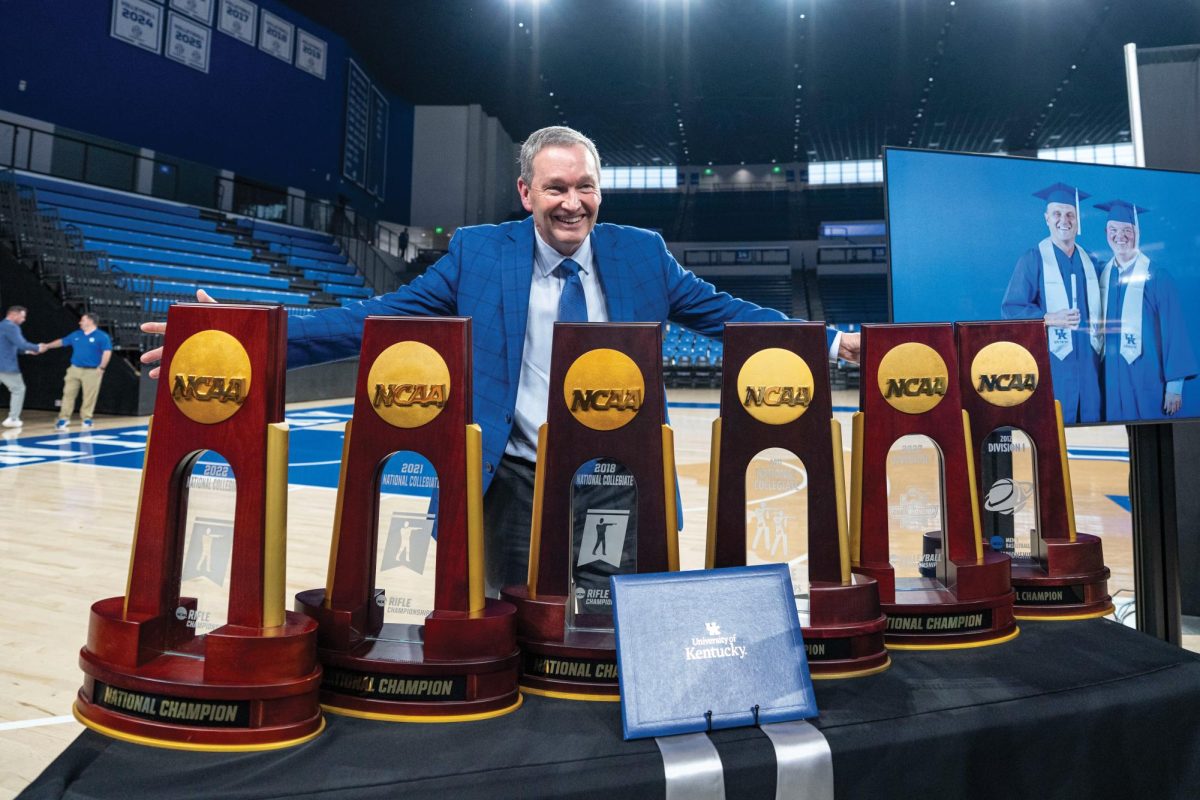

My name is Quézia Arruda, a senior in journalism at the University of Kentucky coming from Rio de Janeiro, Brazil. While at UK, I have worked as a reporter for the Kentucky Kernel since my freshman year and am currently an assistant features editor.
I love long-form feature writing and am passionate about out-of-the-box nonfiction narratives on a wide range of issues.
I am passionate about international affairs and cross-border narratives. My biggest goal is to become an international correspondent and find stories to tell no matter where I am
